

Badwater Basin Death Valley: How Far Should You Walk?
/This post contains affiliate links, which means that at no additional cost to you if you click on one of the product links, we may earn a commission.
Badwater Basin was the one place I absolutely didn't want to miss during our trip to Death Valley National Park. I'd seen so many photos of its beautiful white salt flats and unusual geometric patterns, and I couldn't wait to experience them in person.
The only problem? We were visiting in late September, when daytime temperatures were still reaching around 106°F. If we wanted to spend any time walking across the salt flats, we knew we'd have to get there early.
My boyfriend, Tyrone, and I left our hotel before sunrise and arrived at Badwater Basin around 6:50 AM. It was already about 80°F, but the surrounding mountains were still providing plenty of shade.
What started as a simple early morning walk turned into one of my favorite experiences in Death Valley. And the biggest surprise was how much more beautiful the salt flats became the farther we walked.
What Makes Badwater Basin So Special?
Badwater Basin is one of Death Valley National Park's most famous attractions, and for good reason. At 282 feet below sea level, it's the lowest point in North America.
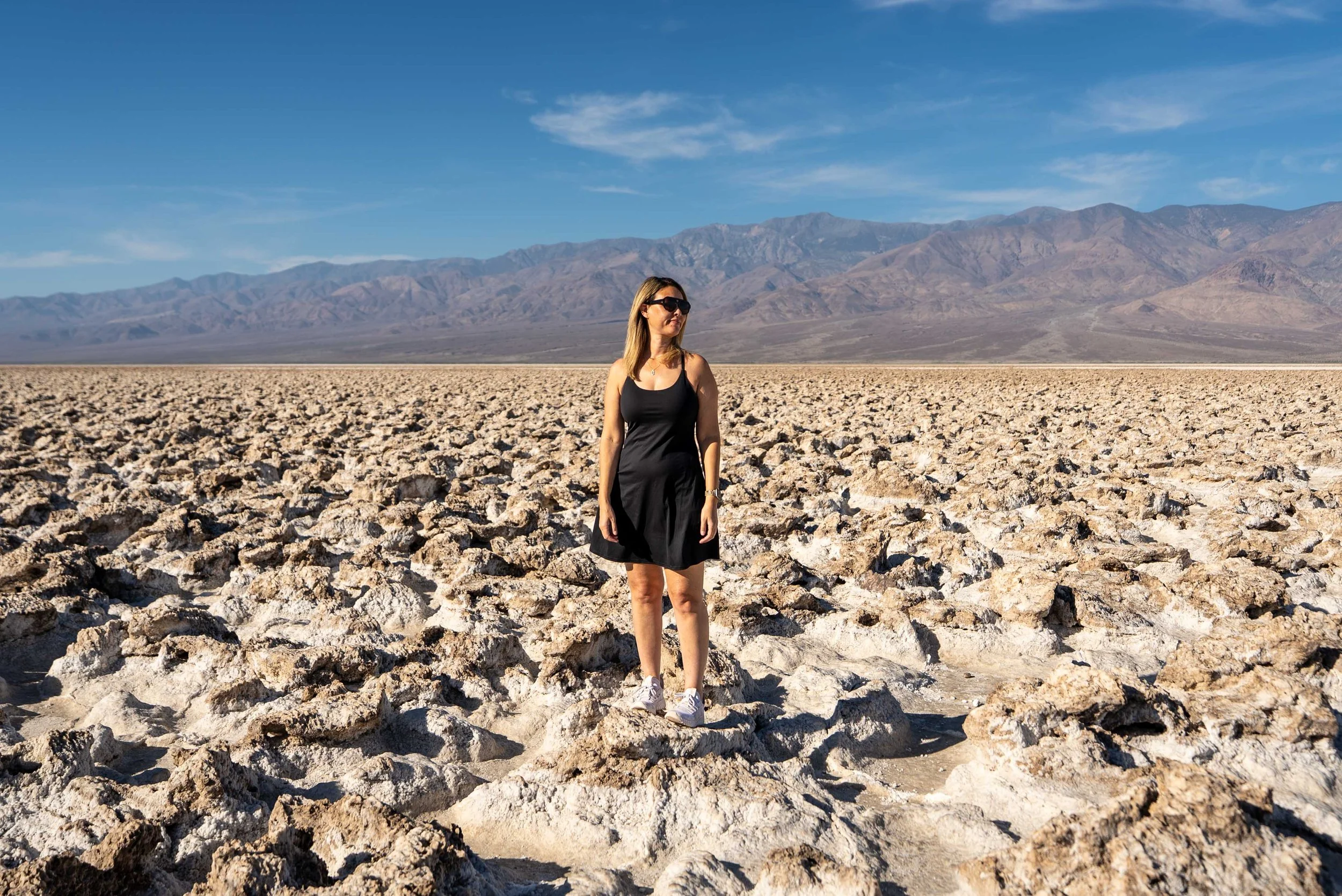
The landscape is unlike anything I'd experienced before. Instead of sand or ordinary dirt, the ground stretches out into a vast expanse of white salt, surrounded by rugged mountains.
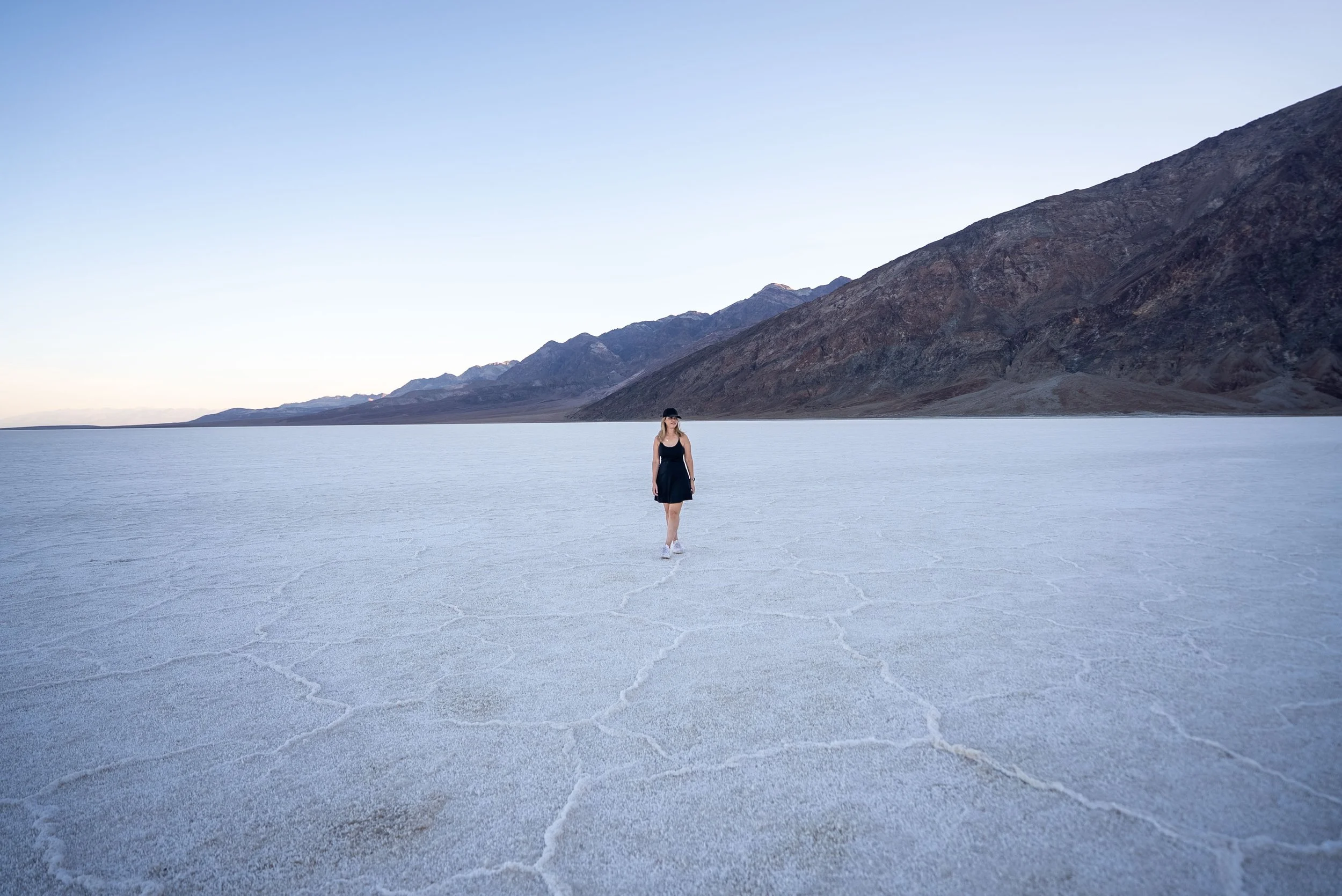
Exploring Badwater Basin at sunrise
The salt flats are part of an ancient lakebed. Over thousands of years, water collected in the basin and eventually evaporated, leaving behind minerals and salt. The repeated cycle of moisture and evaporation helps create the fascinating geometric patterns that make Badwater Basin so recognizable.
Most of the salt here is sodium chloride, the same type of salt we use on our food. But when you see it forming ridges and crystals across the desert floor, it looks almost like ice.
One of the most interesting details is the small sea level sign mounted high on the mountainside near the parking area. Looking up at that sign while standing 282 feet below it really puts the elevation into perspective.
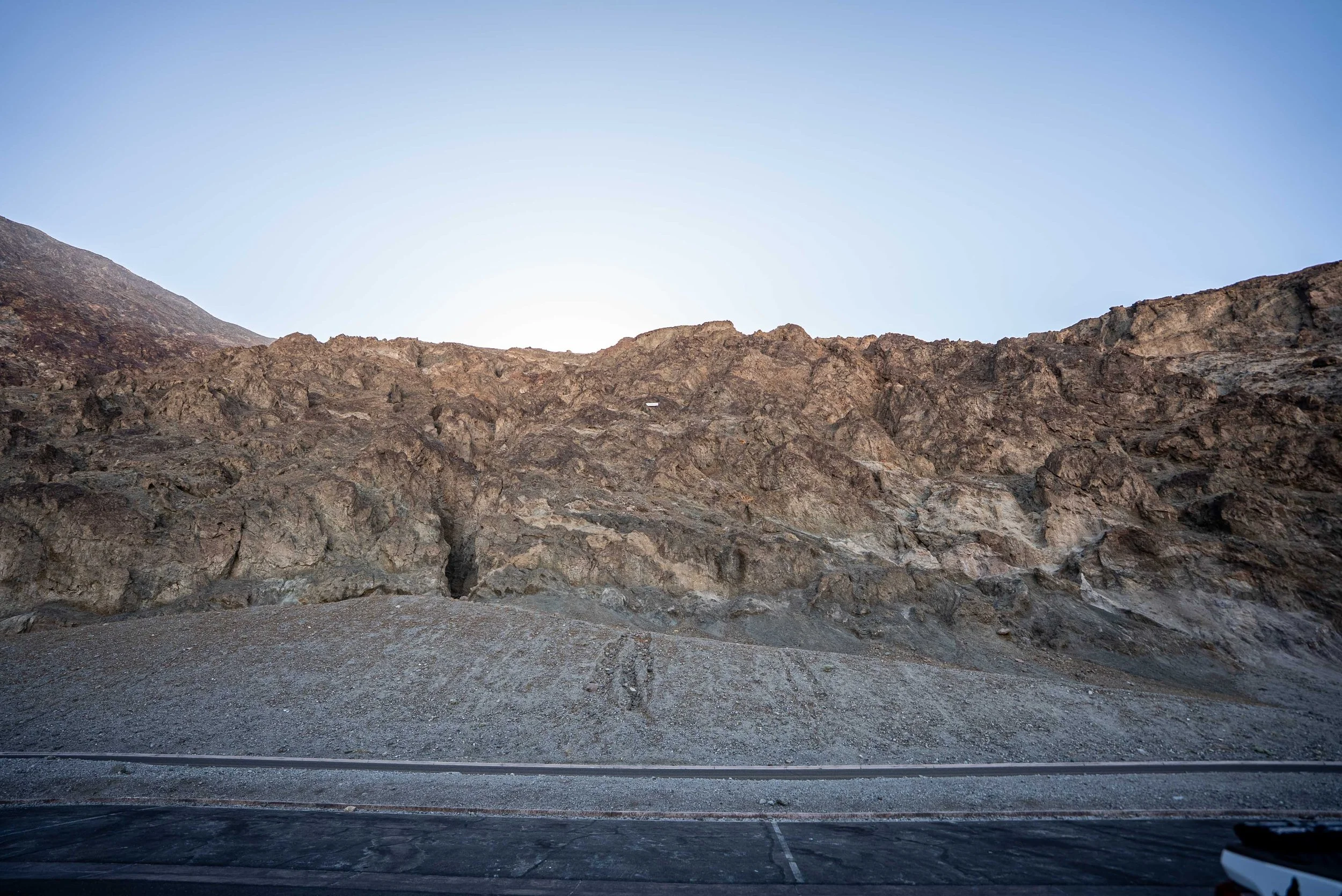
Early morning shade from the mountains
Arriving at Badwater Basin Before Sunrise
We left our hotel around 6:35 AM and reached Badwater Basin shortly before 7 AM. Even though the temperature was already around 80°F, the air felt comfortable enough for walking, especially while the mountains were blocking the direct sunlight.
There were a few other visitors around, but it wasn't particularly crowded. We stopped to look at the informational signs, used the restroom near the parking area, and headed toward the salt flats.
The salt near the boardwalk
A short boardwalk leads from the parking lot toward the basin. Once we reached the end, we stepped directly onto the salt-covered ground.
I immediately noticed that some areas were a little damp, which surprised me. I'd imagined the entire surface would be completely dry and crusty.
At first, the salt formations weren't quite what I'd expected from the photos. There were small bumps and crystals, but the dramatic geometric patterns I wanted to see weren't very noticeable yet.
So we kept walking.
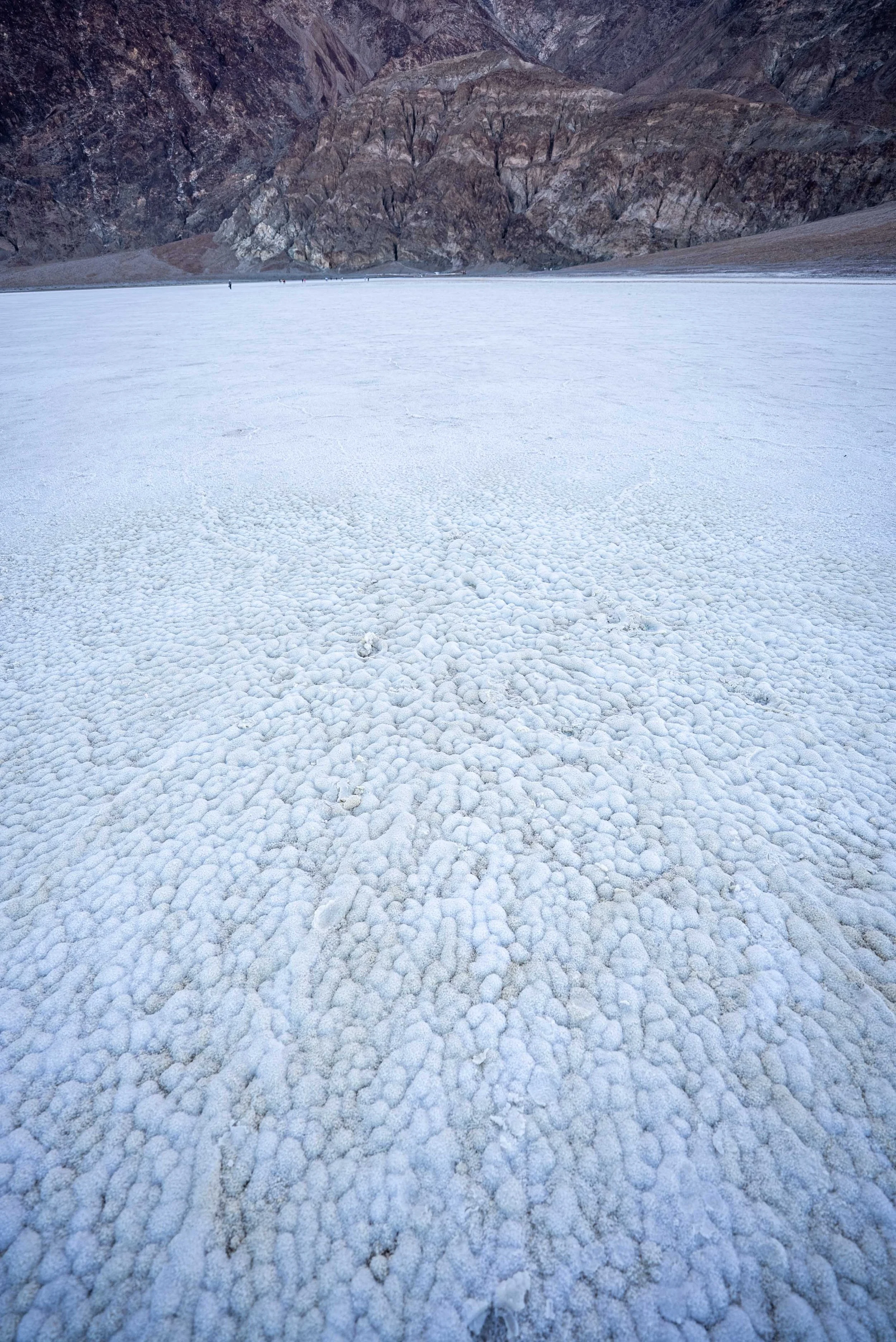
Salt as far as you can see
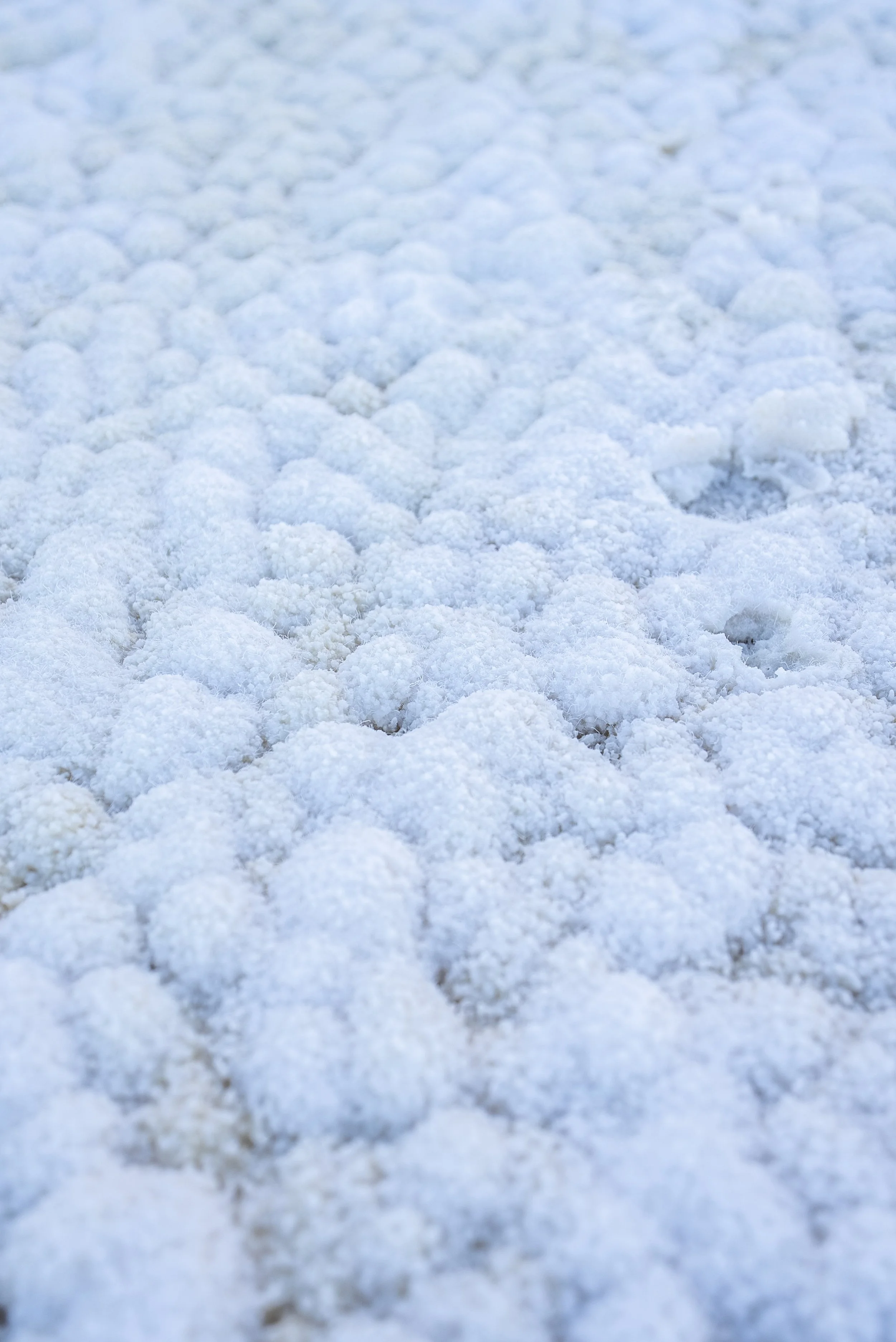
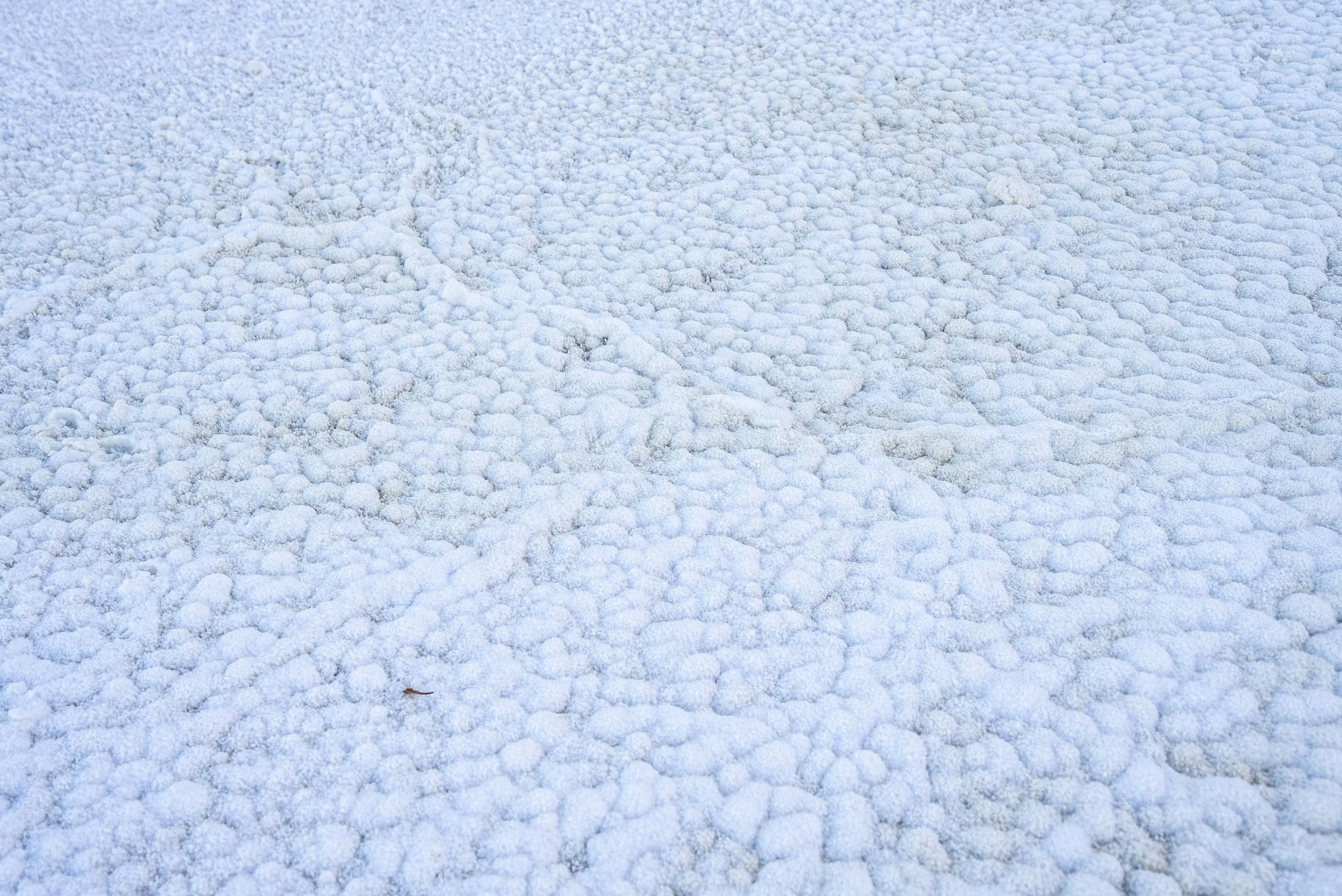
Up close with the salt crust
How Far Should You Walk at Badwater Basin?
This was probably the biggest thing I learned during our visit: don't assume the best salt formations are right next to the parking lot.
We noticed that many visitors stopped fairly close to the boardwalk, took their photos, and headed back. There's nothing wrong with doing that, especially if you're short on time or visiting when it's hot.
But we wanted to see those beautiful salt polygons, so we continued farther into the basin.
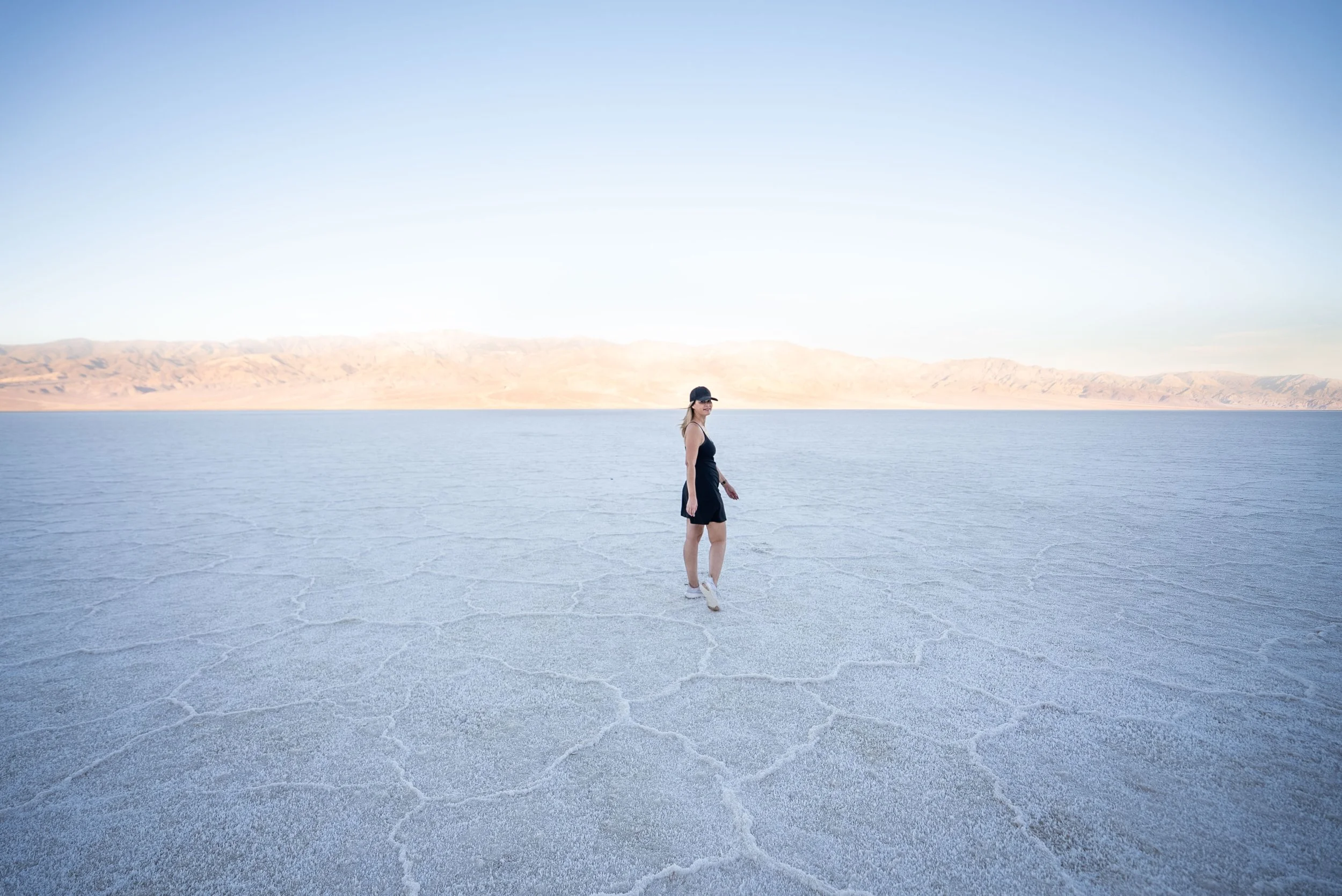
Keep walking past the crowds
As we walked, the ground gradually changed. The small crystals became more pronounced, and we started noticing raised ridges, intricate cracks, and geometric shapes spreading across the surface.
Eventually, we reached the kind of formations I'd been hoping to see.
It took us roughly 15 minutes of walking beyond the boardwalk to reach an area we really loved. We weren't walking particularly fast, and we stopped along the way to look at the salt and take pictures.
You don't necessarily need to walk the entire commonly described two-mile round-trip route to enjoy Badwater Basin. The distance to the most interesting formations can vary depending on surface conditions, and you can turn around whenever you feel you've seen enough.
For us, walking a little farther made an enormous difference.
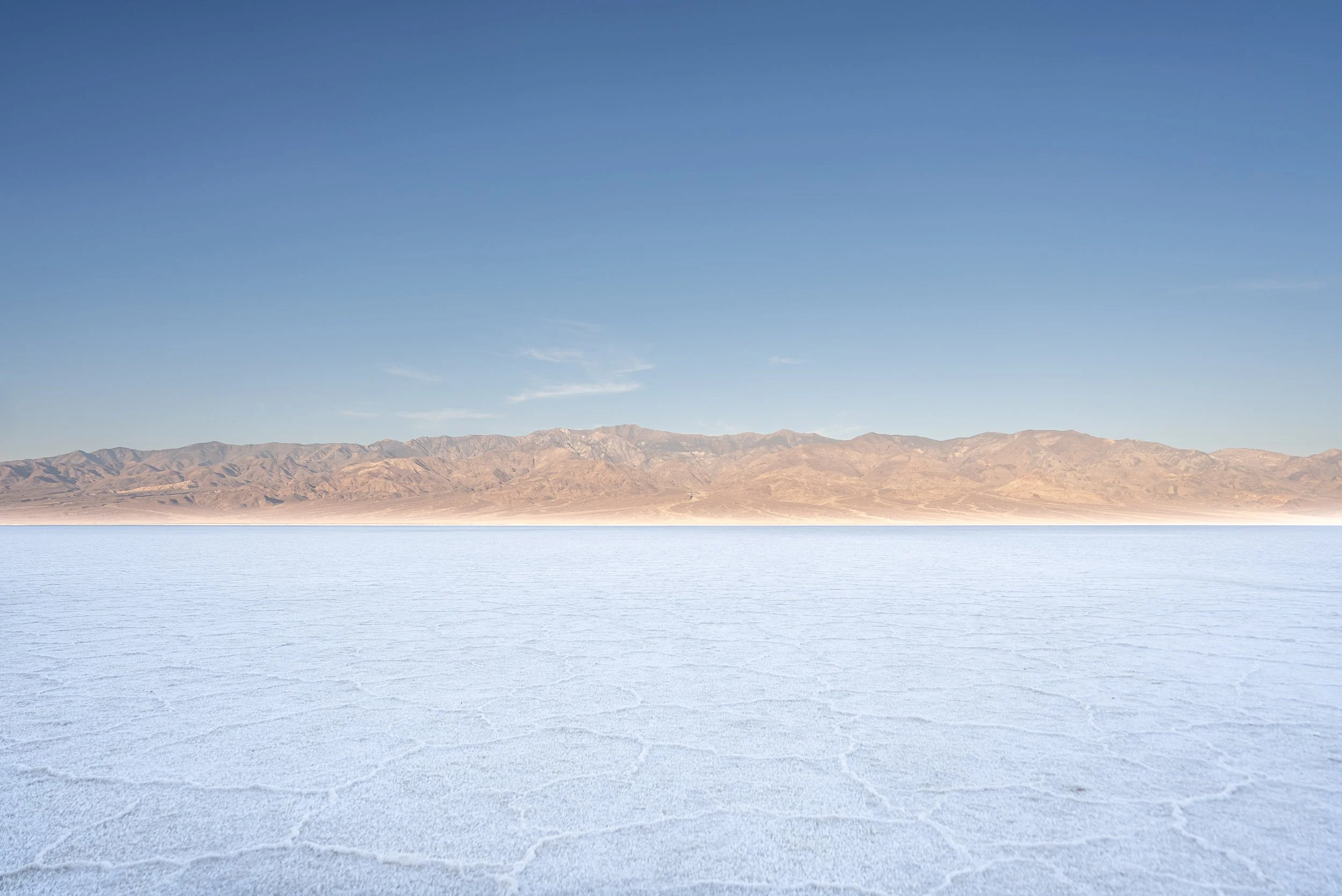
The formations are worth the walk
The Most Surprising Part Was Having the Salt Flats to Ourselves
As we continued walking, I kept looking back toward the parking lot and realizing how far away everyone else was.
Most of the visitors we'd seen earlier had stopped long before reaching our area. Eventually, Tyrone and I found ourselves standing in the middle of this enormous white landscape with practically nobody around.
It was incredibly peaceful.
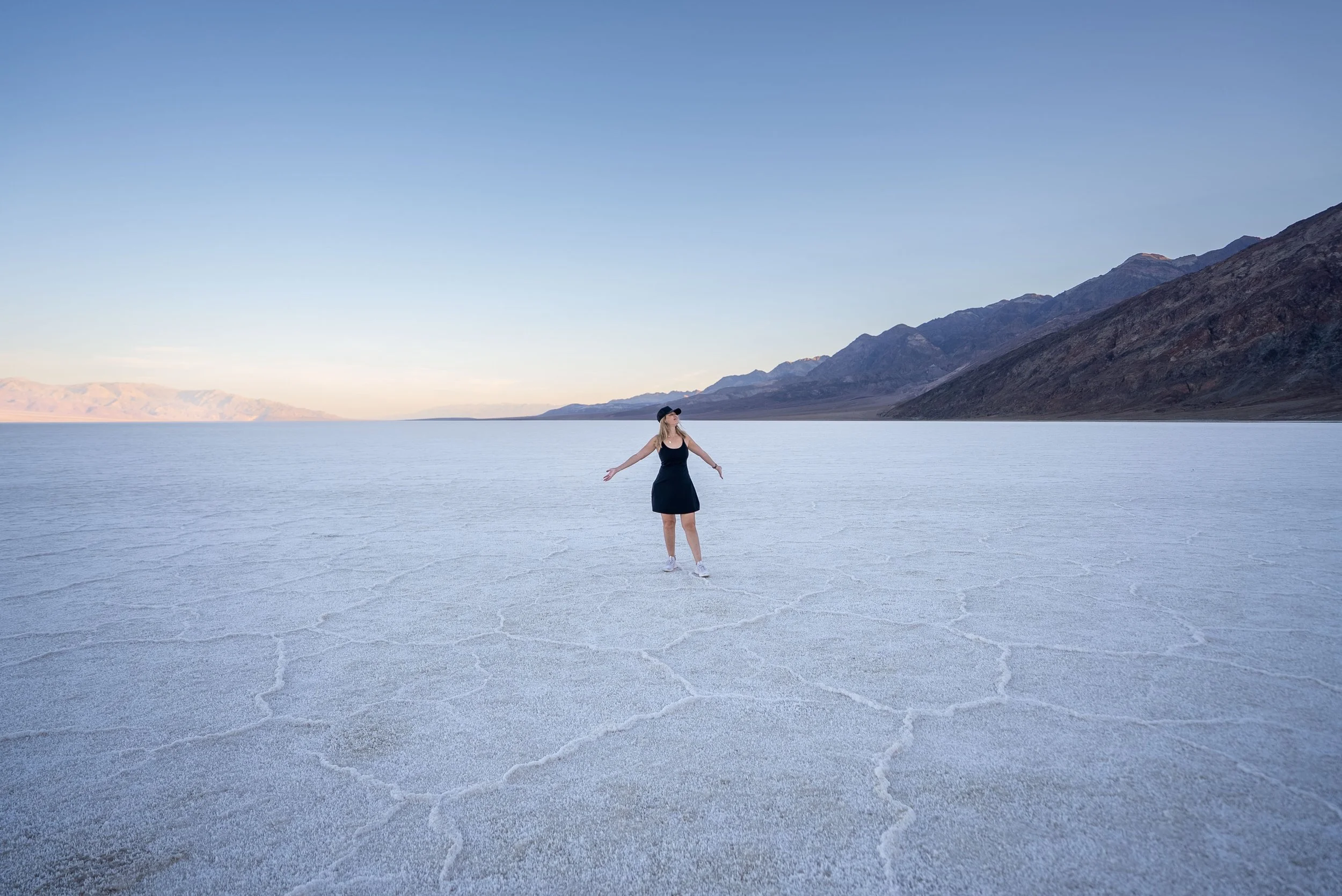
Having the salt flats to ourselves
The mountains looked almost unreal against the salt flats, and the only sounds we could hear were the breeze and the crunching beneath our shoes.
We ended up spending around 30 minutes in that area, taking photos, filming, and simply admiring the scenery. I kept finding little details in the salt that I wanted to examine more closely.
Some crystals looked like tiny icicles, while others formed raised edges and delicate patterns. We even noticed a dragonfly caught among the salt crystals, which was fascinating to see up close.
I remember thinking that I could have stayed out there forever.
It was one of those travel moments when you stop worrying about getting to the next attraction and just appreciate where you are.
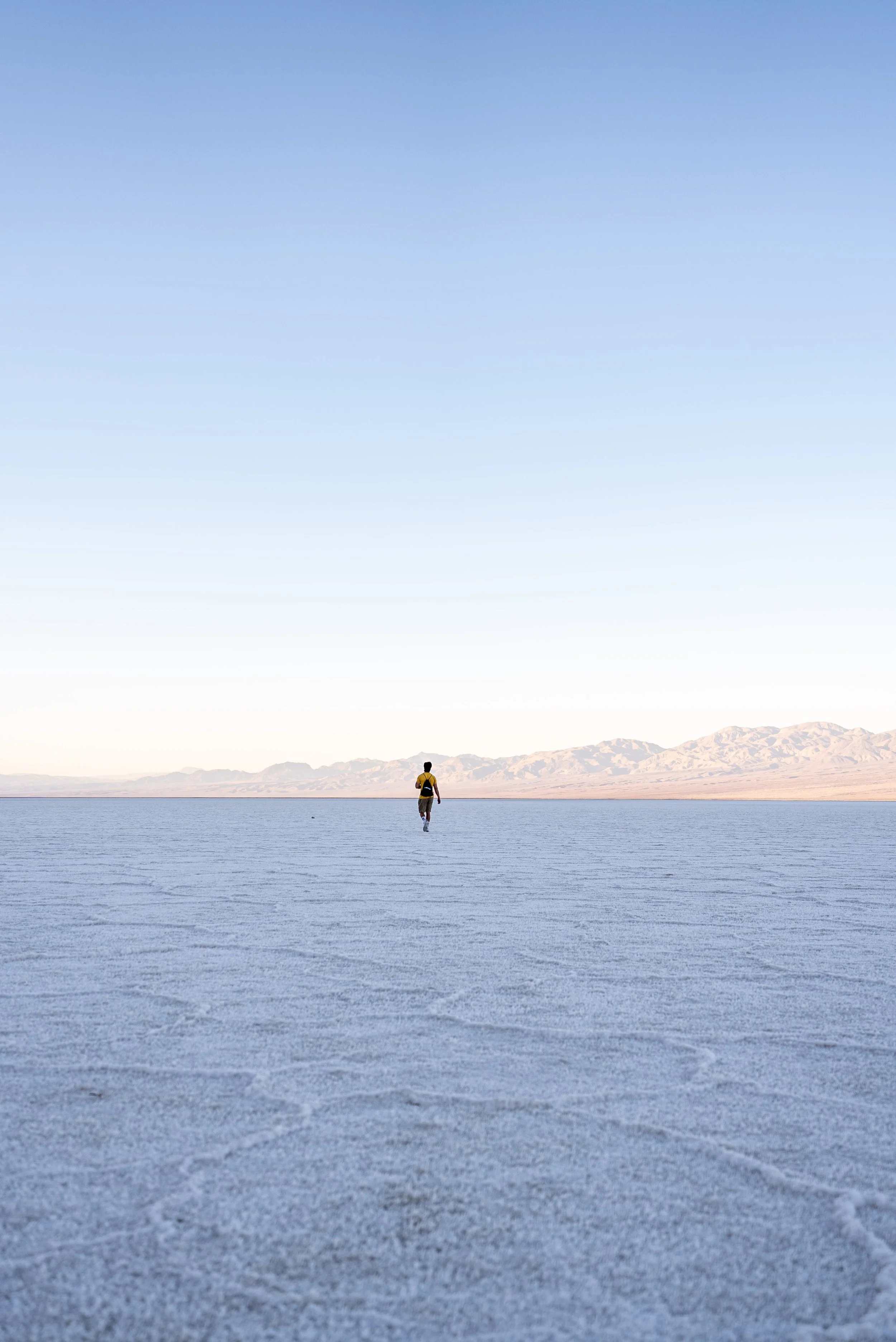
Just us and the salt flats
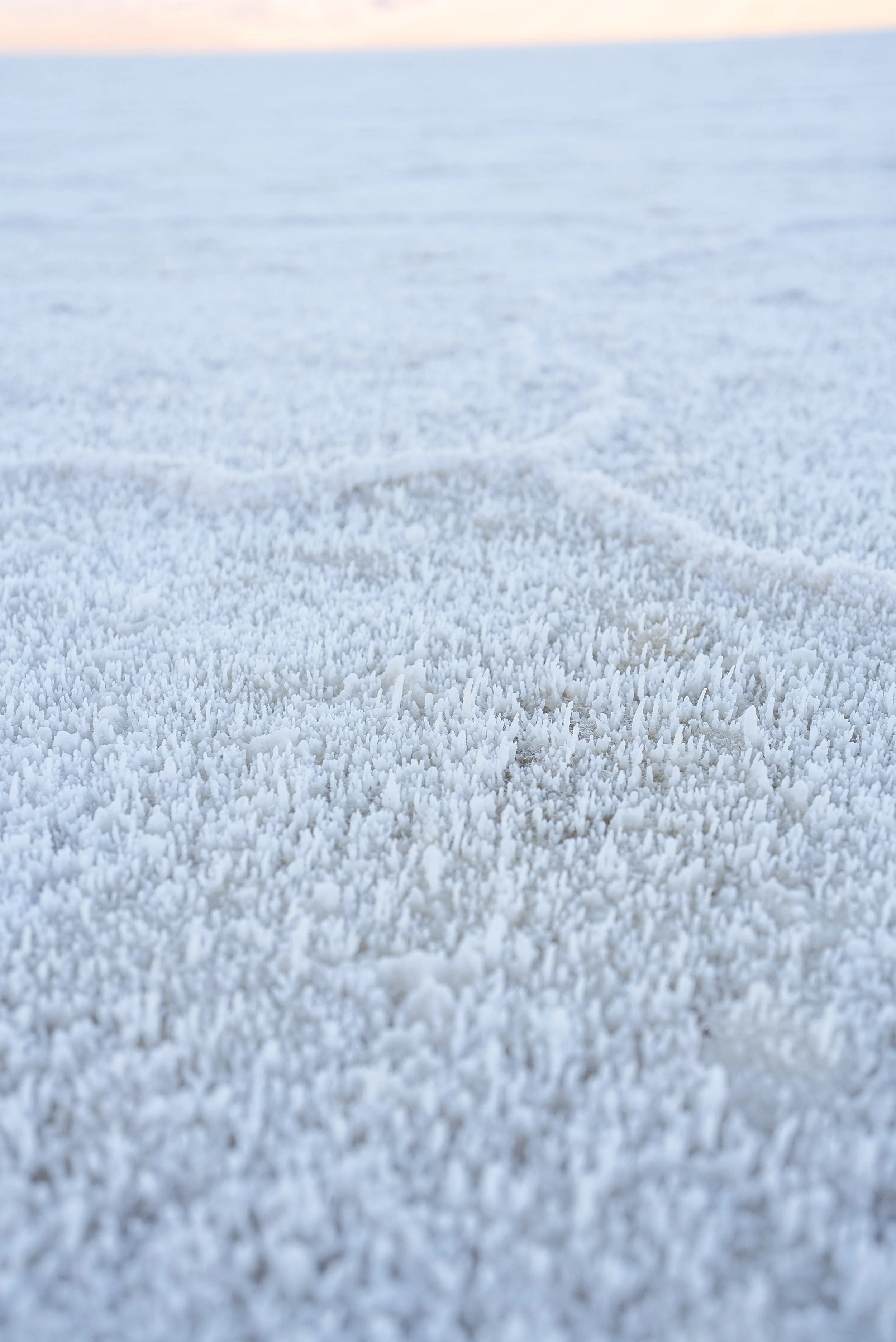
Salt crystals up close
Is Walking on the Salt Flats Difficult?
I was pleasantly surprised by how manageable the walk felt.
The area we explored was mostly flat, without steep hills or difficult climbs. I'm not someone who regularly does strenuous hikes, so I appreciated being able to enjoy such an incredible landscape without tackling a challenging trail.
However, flat doesn't necessarily mean effortless.
The salt surface is uneven in places, with hard ridges, loose crystals, and occasional damp areas. I definitely recommend wearing comfortable, closed-toe walking shoes with decent traction.
It's also important to remember that there's almost no shade once you're out on the open salt flats. A walk that feels easy at 7 AM can become much more demanding as the temperature rises.
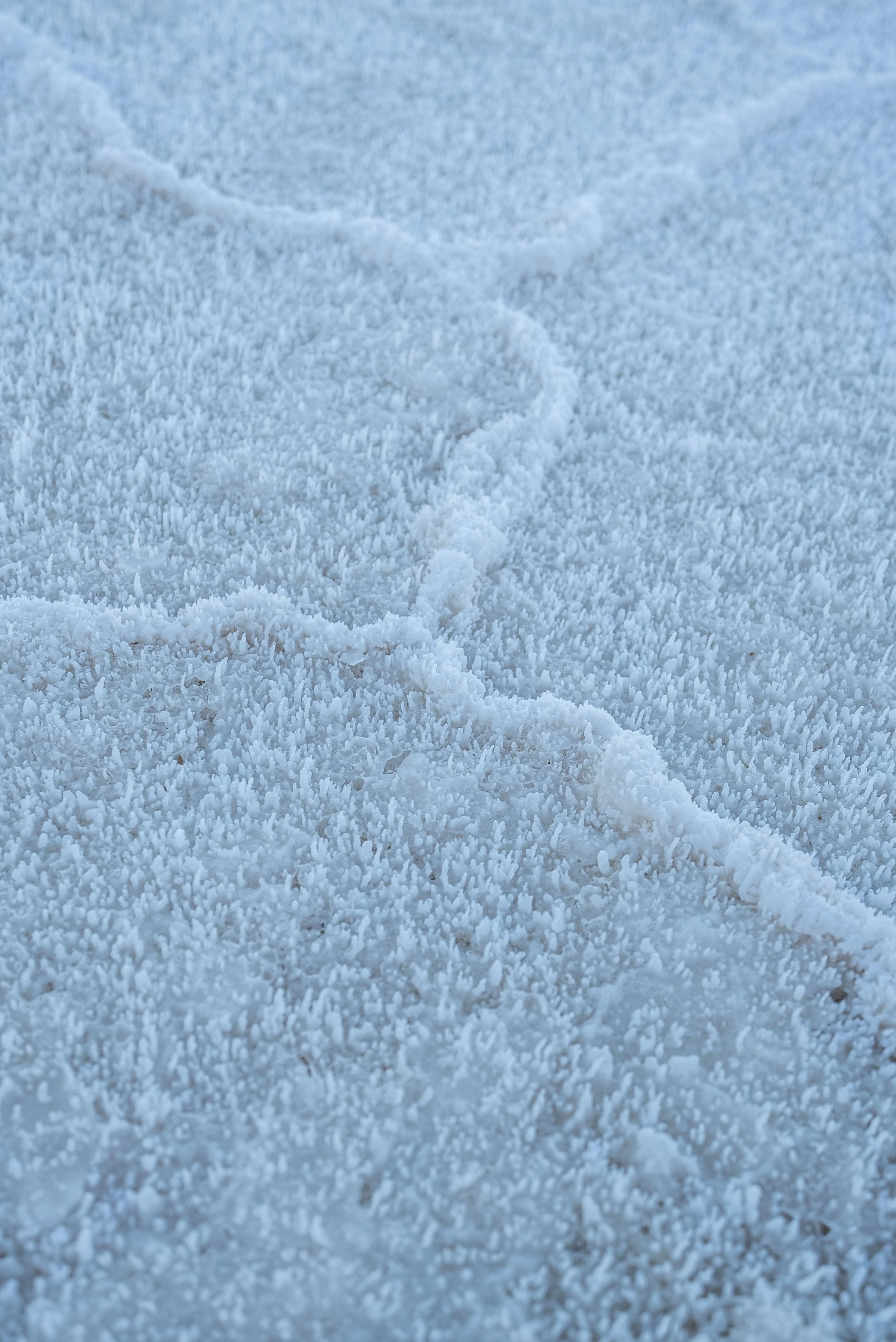
The raised salt ridges
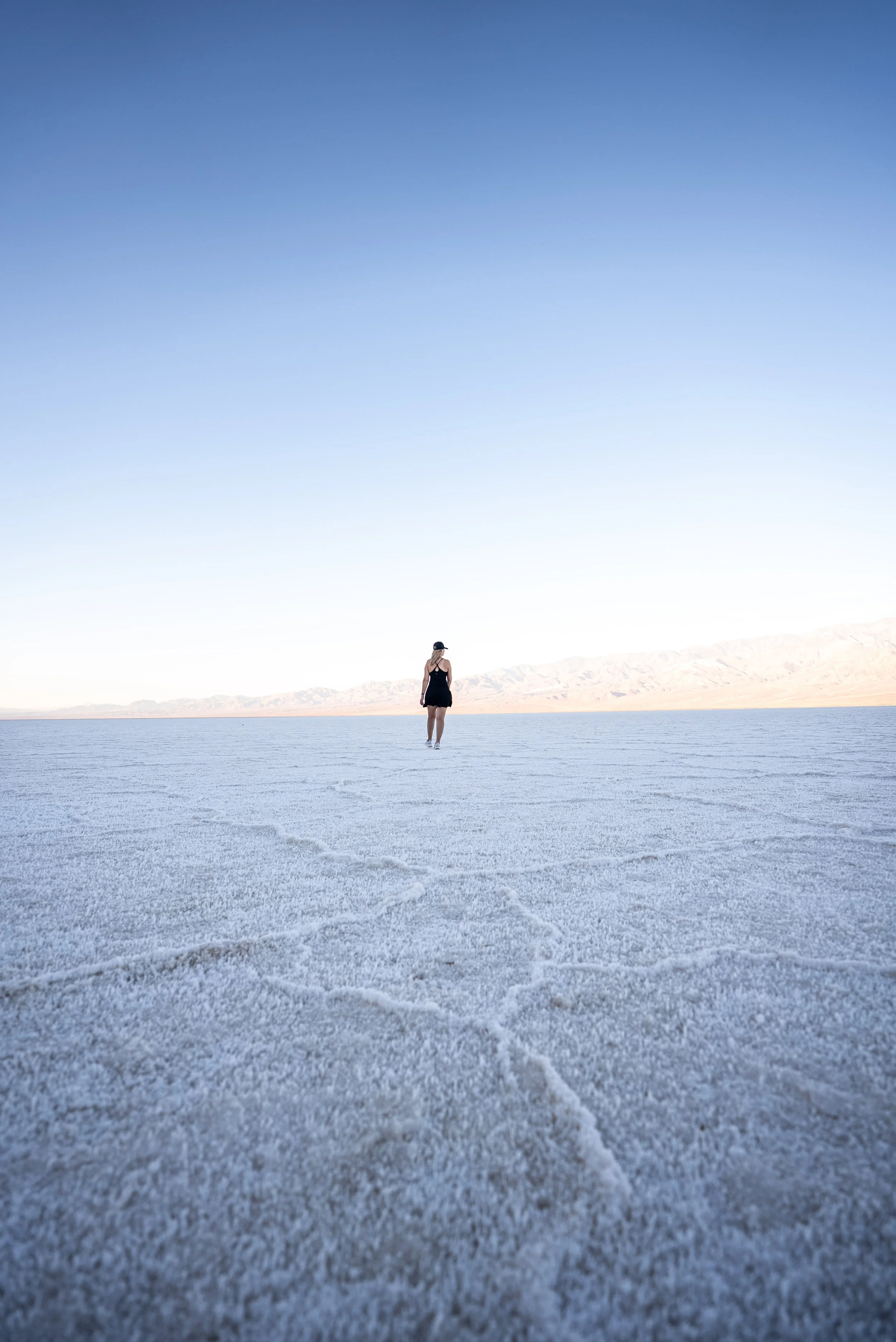
An easy, mostly flat walk
The Best Time to Visit Badwater Basin
If you're visiting Death Valley during the hotter months, timing is everything.
We arrived around 6:50 AM in late September, and I was initially worried that even that might be too late. The temperature was already around 80°F, and we knew it could climb above 100°F later in the day.
Fortunately, the surrounding mountains kept much of the basin shaded for longer than I expected.
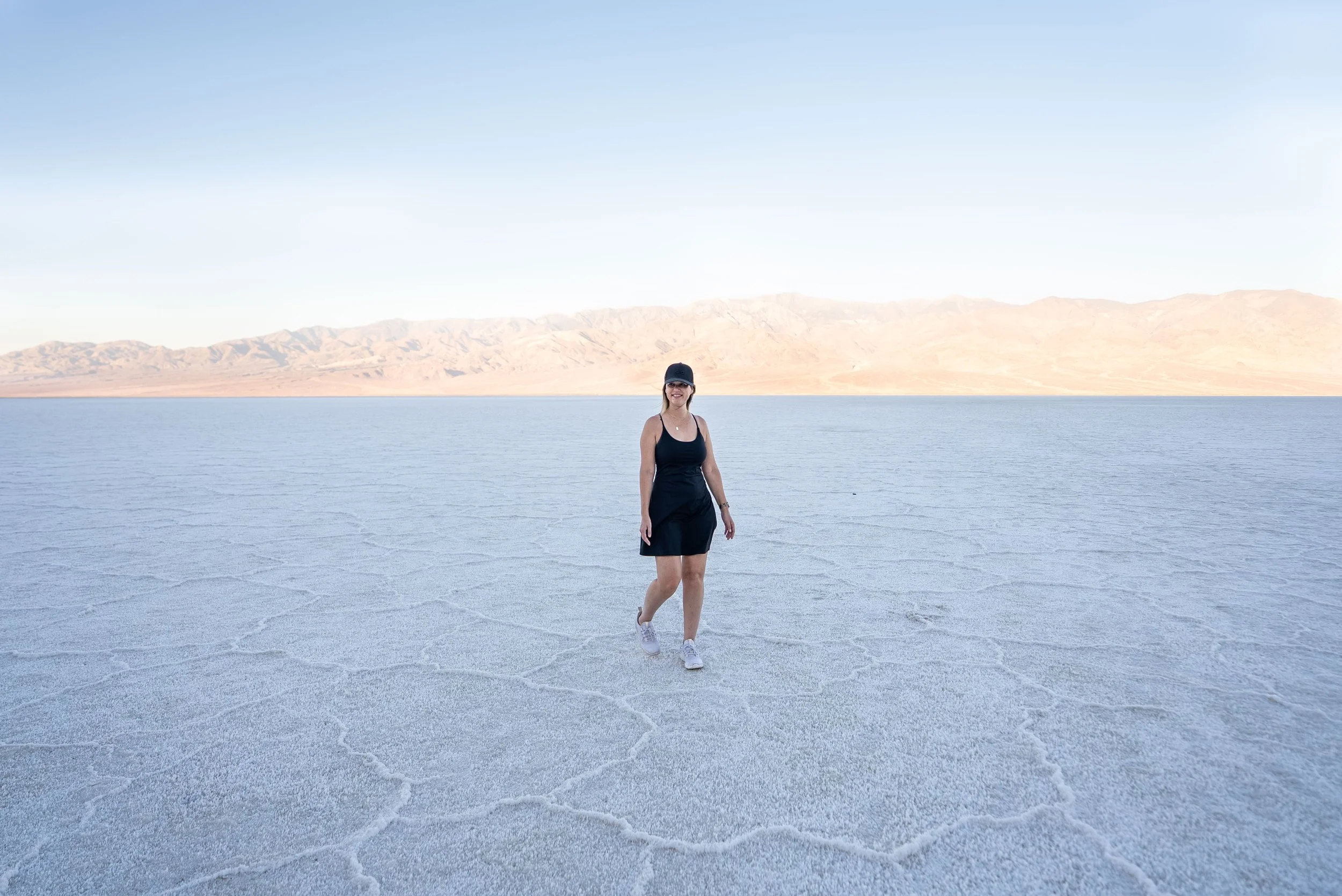
Early morning is the best time to go
Even around 8 AM, we were still enjoying some shade, and a light breeze made the temperature feel surprisingly comfortable. I remember being amazed that it could feel so pleasant when we knew the afternoon would be brutally hot.
One thing I noticed, though, was that the shaded salt flats looked darker in our photos. As the sunlight began reaching the basin, the white salt became brighter and the landscape looked completely different.
For photography, there's a trade-off. Early morning shade can be comfortable and atmospheric, while direct sunlight can make the white salt and geometric formations stand out more clearly.
If you're visiting during extreme heat, follow the National Park Service's current safety guidance rather than relying on our experience alone. Conditions can change quickly, and longer walks across the exposed basin may not be safe.
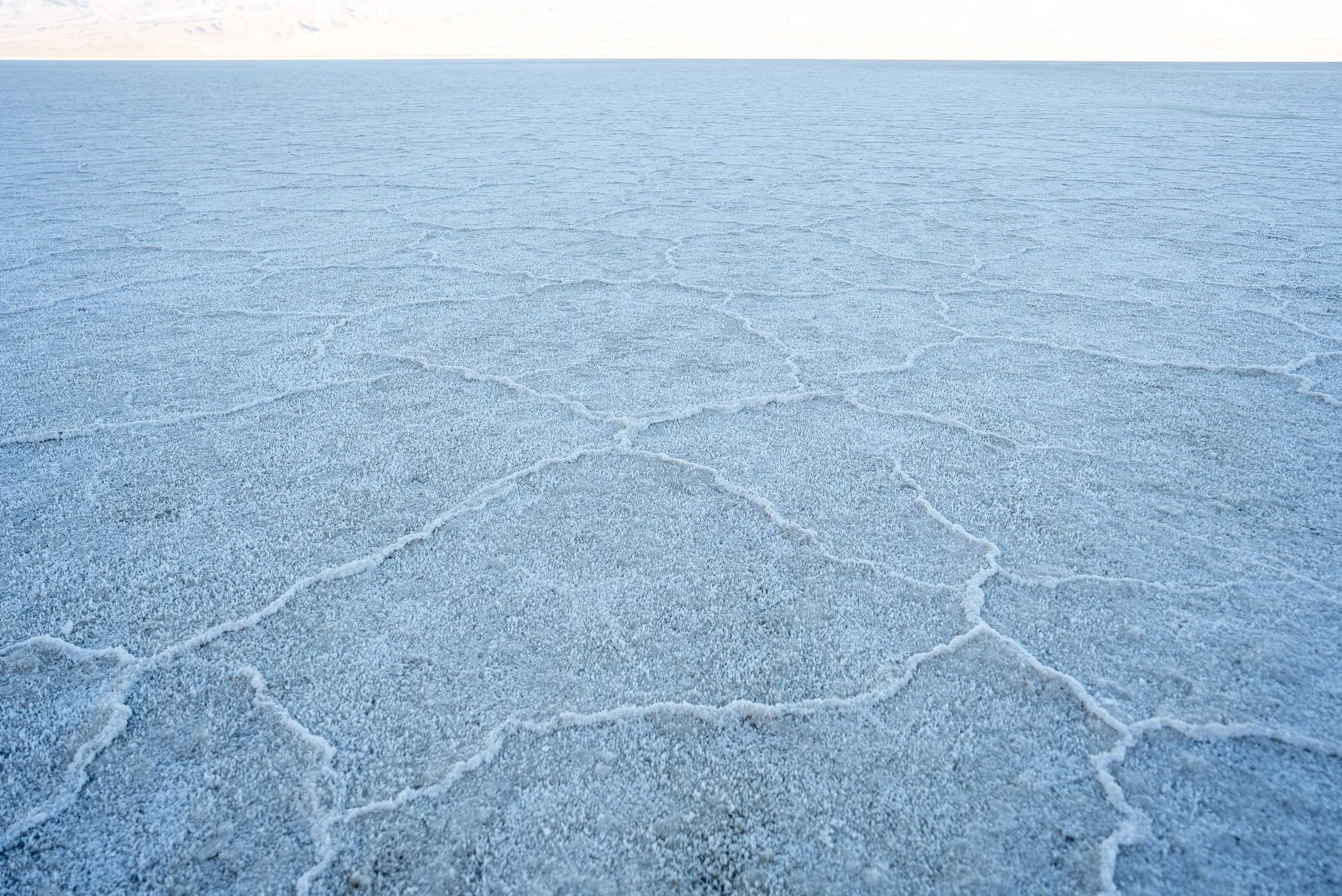
Hexagon patterns across the basin
Tips for Visiting Badwater Basin
After our visit, there are a few things I'd recommend to anyone planning to explore the salt flats.
Arrive Early During Hot Weather
This made the biggest difference for us. By arriving before 7 AM, we were able to walk comfortably while much of the basin was still shaded.
Walk Farther If Conditions Are Safe
The salt formations became much more interesting the farther we walked from the boardwalk. If the weather is mild and you're comfortable walking, it's worth continuing beyond the busiest area to see how the landscape changes.
Wear Light-Colored Shoes
One thing I recommend is wearing white or light-colored sneakers when walking across Badwater Basin. The salt can leave a white, powdery residue on your shoes, which is much more noticeable on darker colors. Light-colored shoes won't prevent the salt from getting on them, but they'll hide the residue better. Just make sure they're comfortable and have good traction for walking across the uneven salt formations.
Bring Plenty of Water
Even if you're only planning a short visit, bring drinking water. Badwater Basin is extremely exposed, and the heat can become dangerous quickly.
Protect Yourself From the Sun
A hat, sunglasses, and sunscreen are especially useful once the sun rises above the surrounding mountains. There's very little natural shade out on the basin.
Give Yourself Time to Enjoy the Details
Some of my favorite moments came from slowing down and looking closely at the salt crystals. The textures and formations are much more interesting when you're not rushing through.
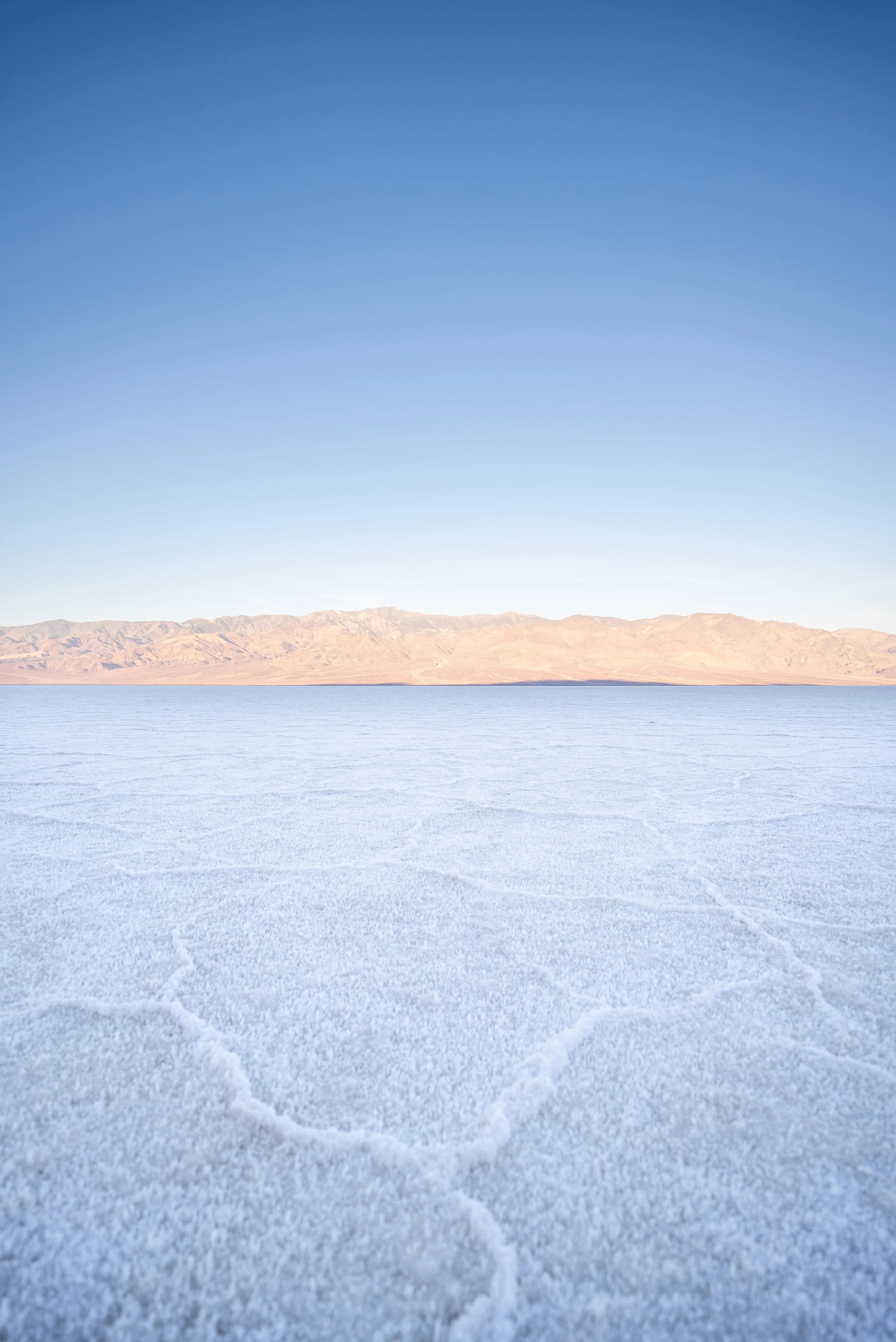
Arrive early during hot weather
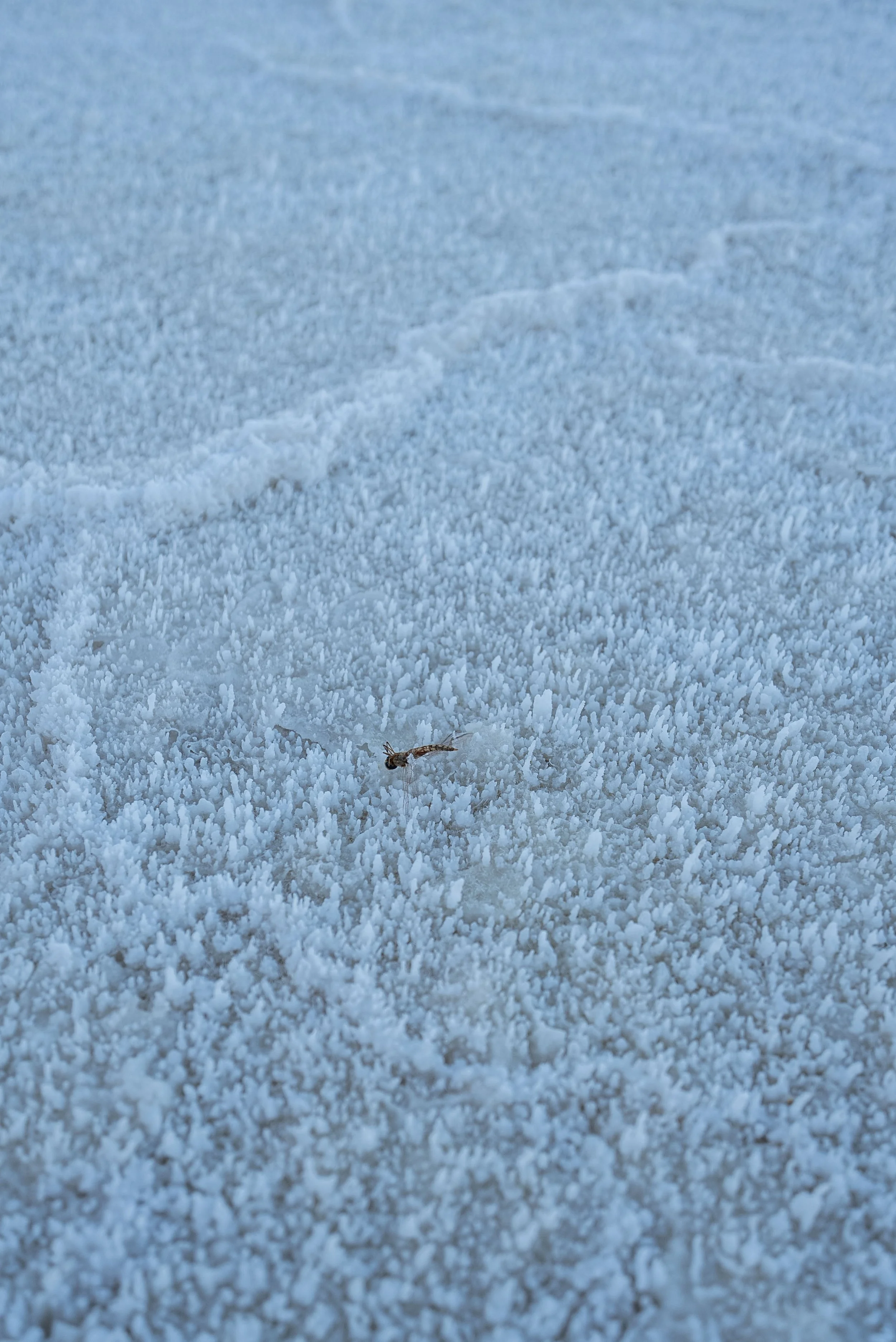
Dragonfly trapped in salt
Is Badwater Basin Worth Visiting?
Absolutely. In fact, it ended up being one of my favorite places in Death Valley National Park.
I expected the salt flats to be beautiful, but I wasn't prepared for how peaceful and fascinating they would feel in person. The farther we walked, the more interesting the formations became, and finding ourselves almost completely alone in such an enormous landscape made the experience even more memorable.
If you're visiting Death Valley, I would definitely make time for Badwater Basin. You don't have to walk far to appreciate the scenery, but if the conditions are safe and you're able to continue beyond the boardwalk, I think you'll be glad you did.
For us, those extra minutes of walking made all the difference.
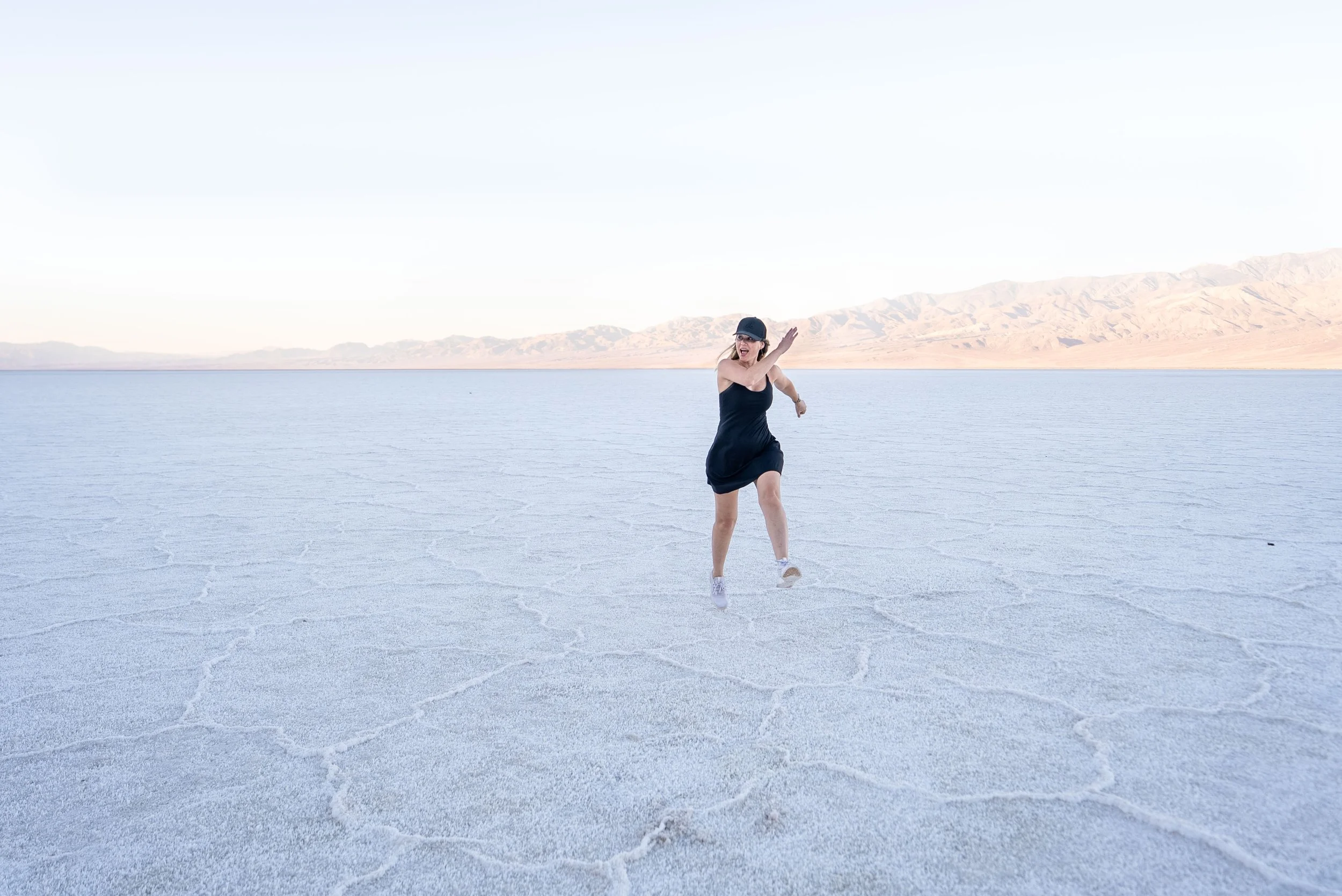
One of my favorite places in Death Valley
Badwater Basin FAQs
-
You can enjoy views of the salt flats near the parking area and boardwalk, but the more recognizable salt polygons are generally farther out. We walked about 15 minutes beyond the boardwalk before reaching formations we particularly loved.
-
I'd allow approximately 30 minutes for a quick visit near the boardwalk or 60 to 90 minutes if you want to walk farther, take photographs, and enjoy the scenery. We spent extra time exploring the formations once we reached a quieter area.
-
Yes, it’s very easy. The route is mostly flat, but the salt surface can be rough and uneven. The bigger concern is exposure to extreme heat, particularly during warmer months.
-
Yes, visitors can walk onto the salt flats from the designated access area. Be mindful of the fragile formations and follow posted park guidance.
-
Yes, there were restrooms near the parking area during our visit. Don't count on finding facilities once you've started walking across the basin.
-
Yes, but September can still be extremely hot. During our visit, daytime temperatures were reaching around 106°F, so we planned our walk for early morning. Always check current park conditions and heat warnings before heading out.





















Badwater Basin was at the top of my Death Valley wish list, but I didn't expect the best part to be farther from the parking lot. Here's what we discovered walking across the salt flats before sunrise, including how far we walked, what the salt formations looked like, and tips for planning your own visit.