

Twin Falls, Idaho: The Road Trip Stop That Completely Surprised Me
/This post contains affiliate links. This means that at no additional cost to you, as an Amazon Associate, we earn from qualifying purchases.
When I planned the road trip from Glacier National Park to Las Vegas, Twin Falls was simply a convenient overnight stop to break up the long drive. I figured we'd spend maybe an hour checking out the bridge and Shoshone Falls before moving on. I couldn't have been more wrong.
What I discovered was a vibrant, dog-friendly town with world-class BASE jumping, stunning waterfalls, and the kind of authentic experiences you can't plan for. Twin Falls completely exceeded my expectations, and now I'm already planning a return trip.
About Twin Falls: An Underrated Idaho City
Twin Falls is located in south-central Idaho, roughly halfway between Boise and Salt Lake City. The city was founded by I.B. Perrine and was named after the twin waterfalls on the Snake River (though one of the original twin falls is now mostly submerged by a dam). Twin Falls thrived due to an innovative irrigation project that transformed the desert into productive farmland, and agriculture remains important to the local economy today.
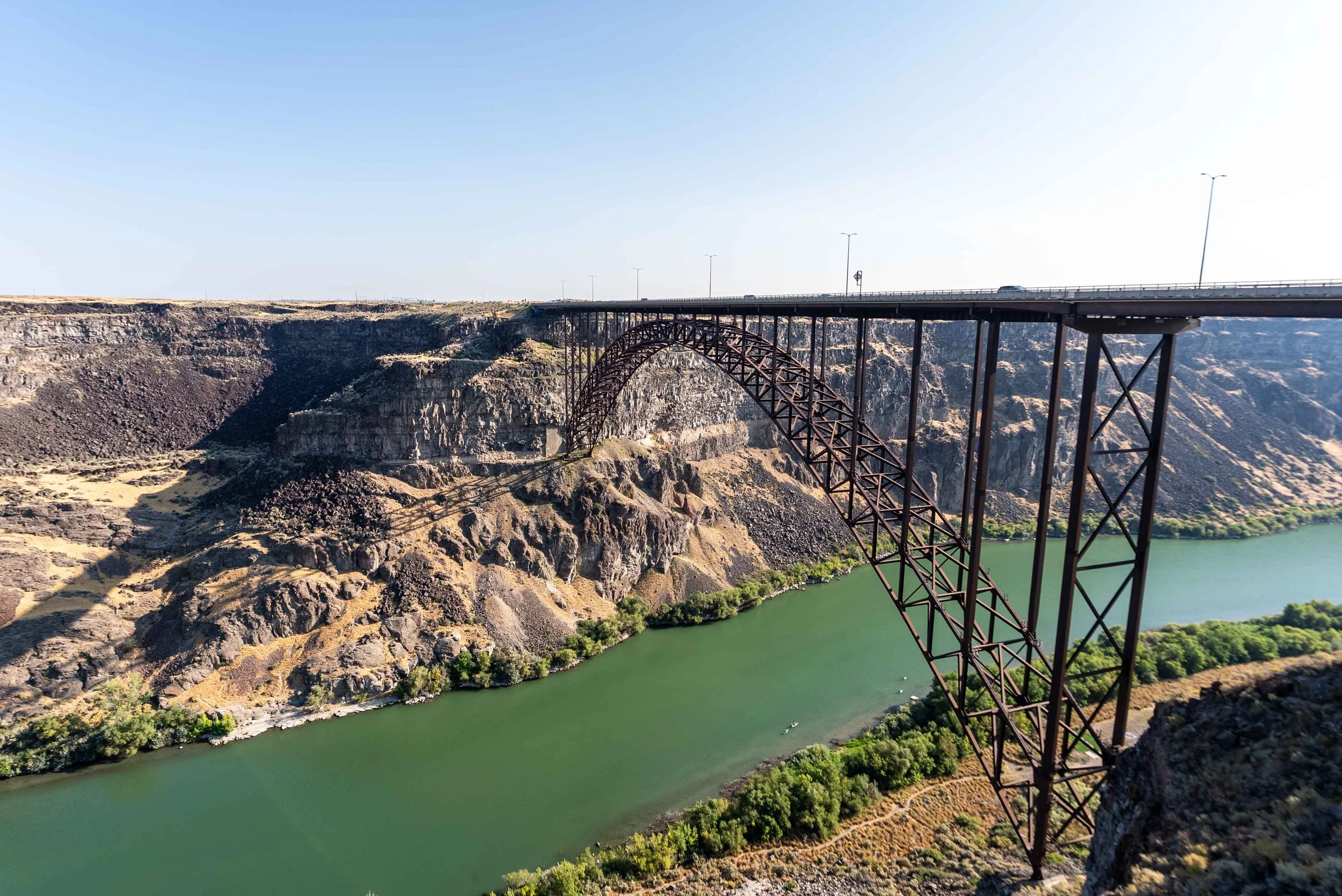
The Perrine Memorial Bridge
Quick facts about Twin Falls:
Population: approximately 53,000 residents
Elevation: about 3,700 feet above sea level
Founded in 1904
Idaho's eighth-largest city
Twin Falls is known for its strong outdoor recreation culture, easy access to scenic viewpoints, and surprisingly relaxed pace for a city surrounded by dramatic natural features.
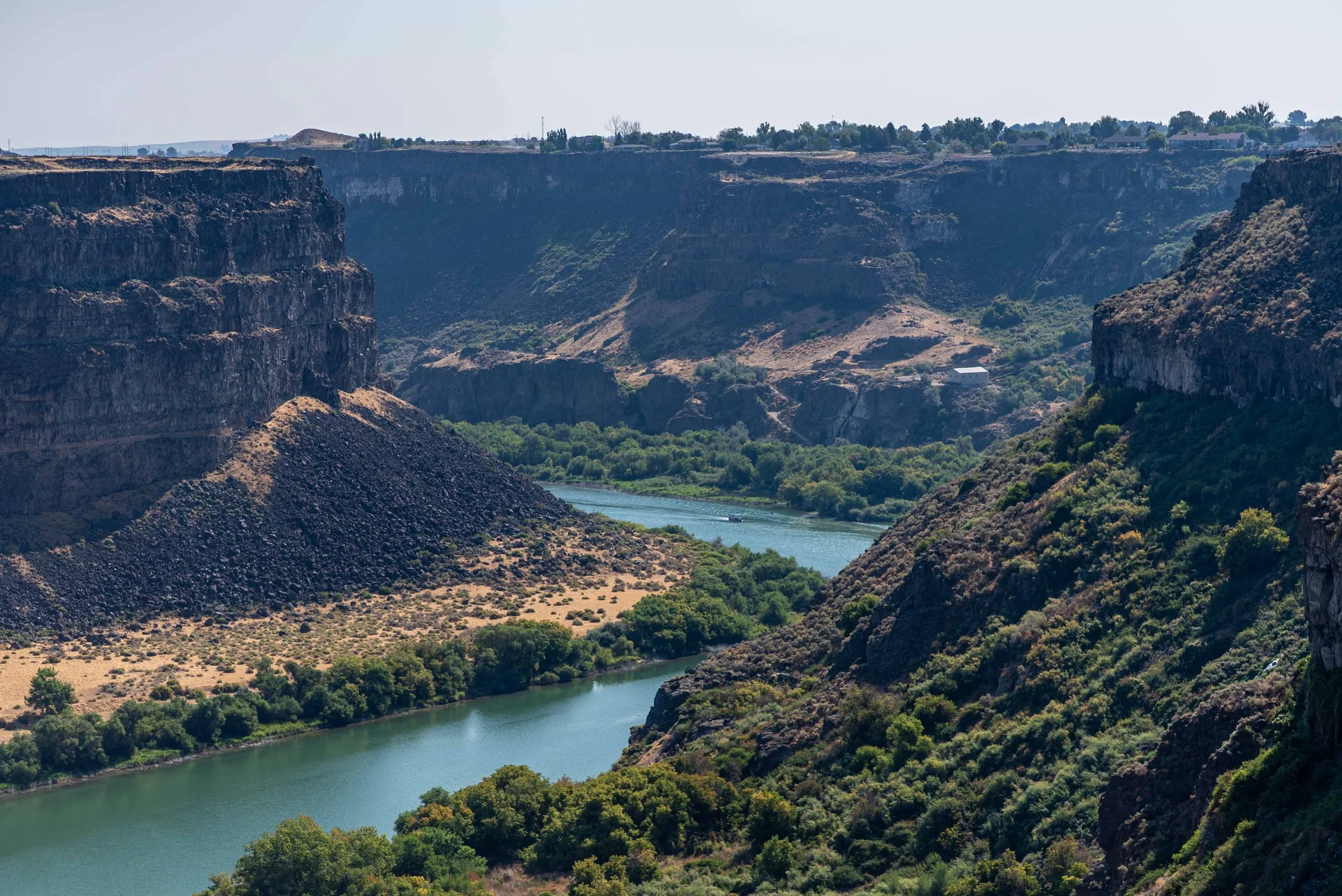
Beautiful scenery around Perrine Bridge
The Perrine Memorial Bridge: A BASE Jumper's Paradise
The Perrine Memorial Bridge was our first stop, and honestly, I thought we'd just look at it and leave. But as soon as we arrived, I noticed something unusual: people on the grass meticulously folding what turned out to be parachutes. That's when I realized we were about to witness something incredible.
Understanding BASE Jumping: The Ultimate Extreme Sport
BASE is an acronym that stands for:
Buildings
Antennas
Spans, meaning bridges
Earth, meaning cliffs
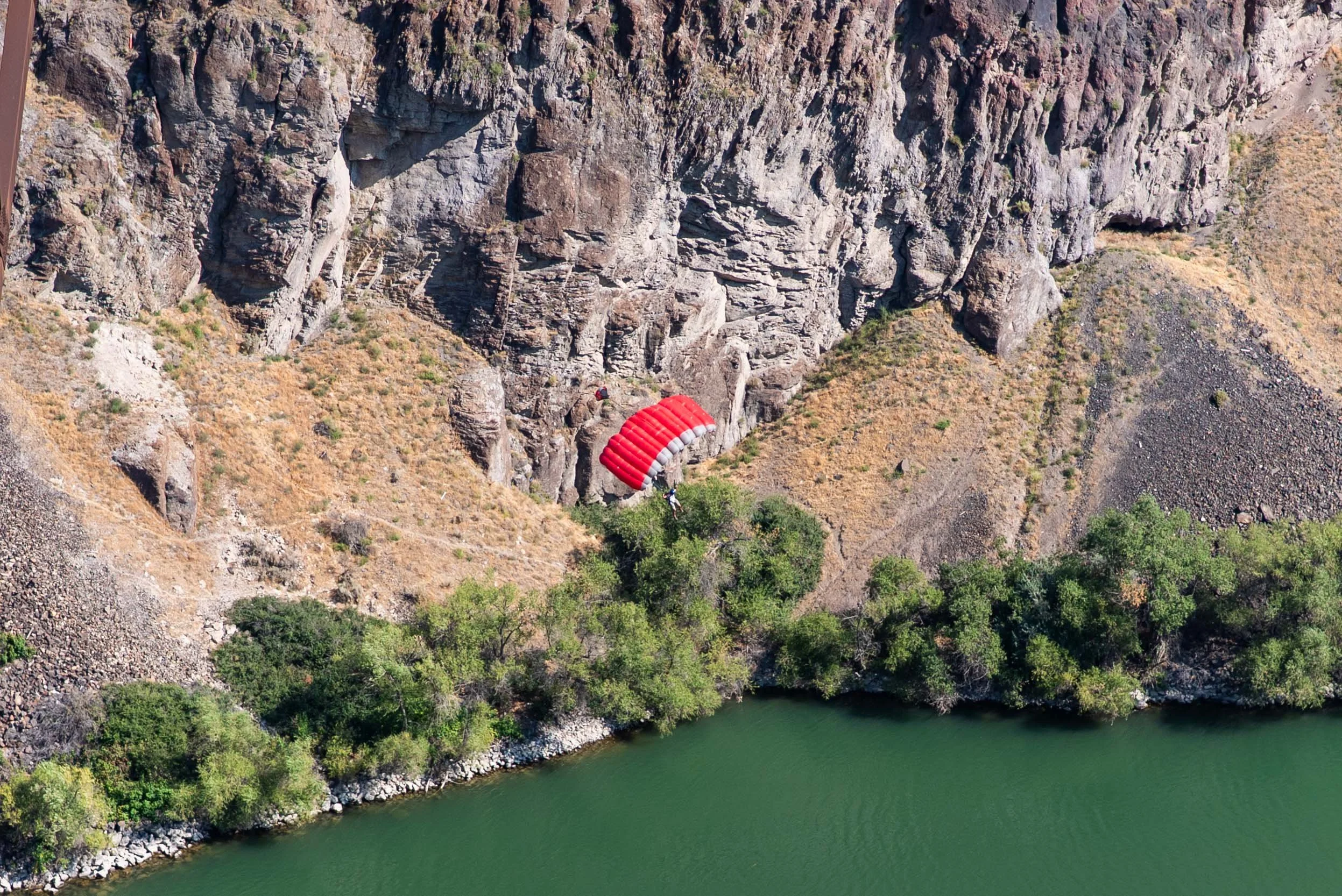
BASE jumper over Snake River Canyon
Unlike skydiving, where jumpers exit from aircraft at high altitudes with plenty of time to deploy parachutes, BASE jumpers leap from much lower heights, giving them only seconds to react.
The sport is incredibly risky. According to research, BASE jumping has a fatality rate estimated at about 1 death per 2,300 jumps, making it significantly more dangerous than skydiving, which has approximately 1 death per 500,000 jumps. The margin for error is razor-thin: jumpers typically have only 3 to 5 seconds from exit to deployment, and malfunctions can be catastrophic at such low altitudes.
Despite the risks, BASE jumping attracts thrill-seekers from around the globe who are drawn to the pure adrenaline rush and the technical skill required to execute a successful jump.
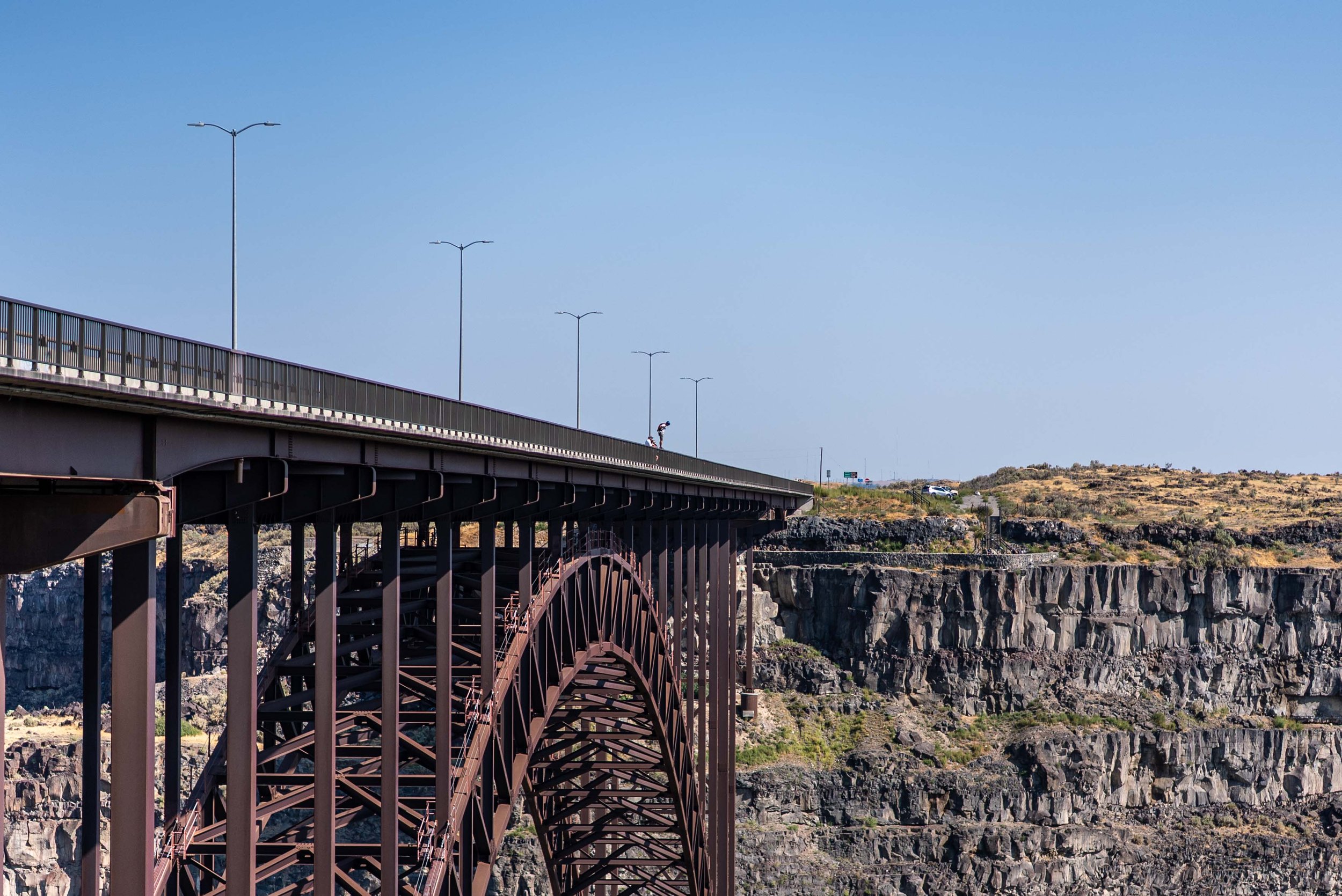
BASE jumper getting ready to jump from Perrine Bridge
Why BASE Jumpers Love Twin Falls
As I explored the interpretive signs along the bridge, I learned something fascinating: Perrine Bridge is one of the only places in the United States where you can BASE jump year-round without a permit, 365 days a year. This makes it a mecca for BASE jumpers from around the world who come here daily to practice their sport.
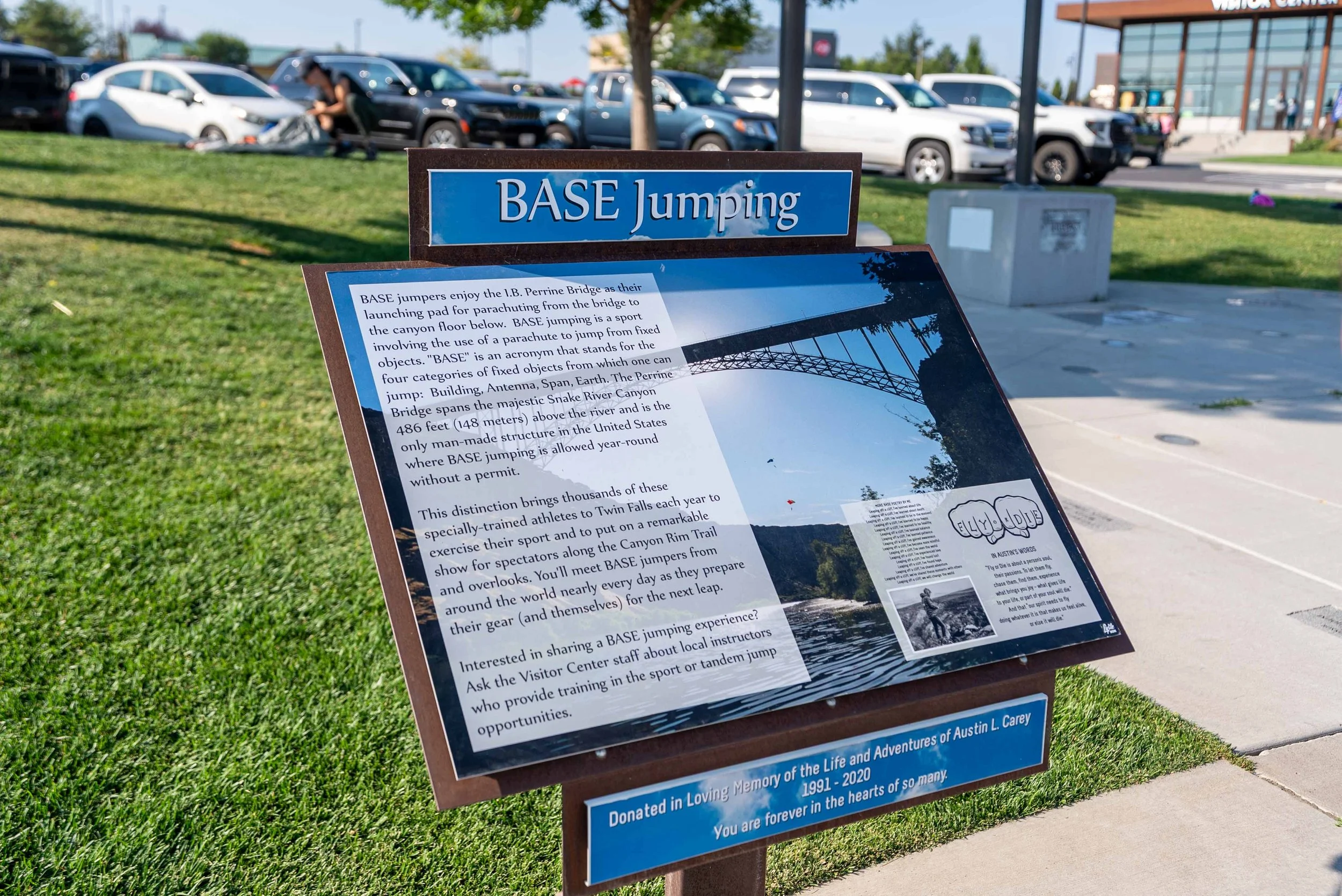
The Perrine Memorial Bridge is an impressive structure in its own right. Completed in 1976, it stands 486 feet (148 meters) above the Snake River Canyon and spans 1,500 feet in length. At the time of its construction, it was the highest bridge in North America and remains one of the highest in the United States. The bridge replaced an older cantilever bridge and cost approximately $9.5 million to build.
I met a friendly local named John who shared even more amazing facts. His friend Jonathan Cox holds a Guinness World Record for completing 102 BASE jumps in just 24 hours from this very bridge! As long as the wind conditions are good, you'll see BASE jumpers here any day you visit.
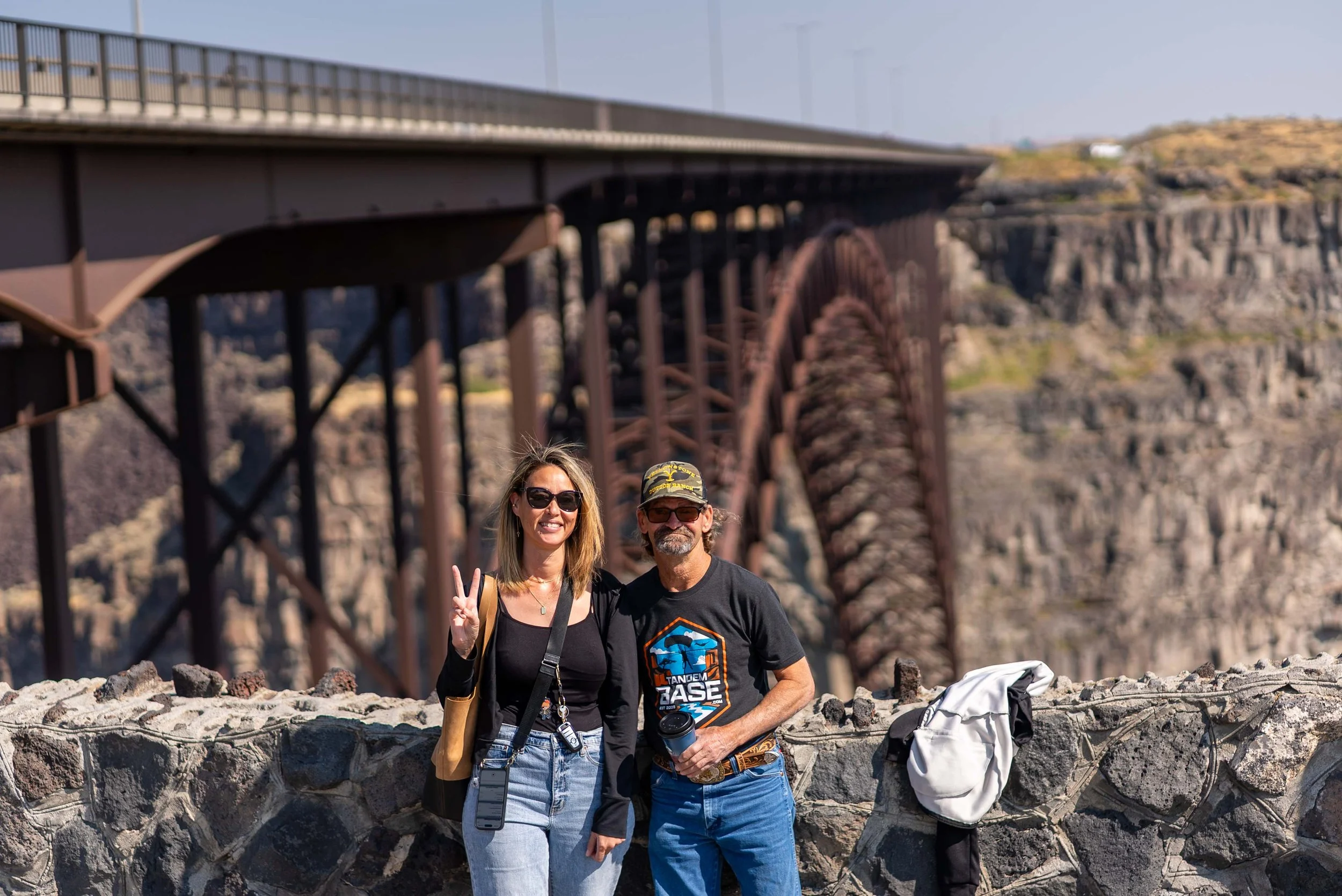
My new friend John
Watching the BASE Jumpers in Action
What struck me most was watching the jumpers prepare. I saw a group of about seven people on the grass, meticulously folding and packing their parachutes for over an hour. The level of detail and precision was incredible. Everything had to be perfect, and for good reason given the sport's inherent dangers.
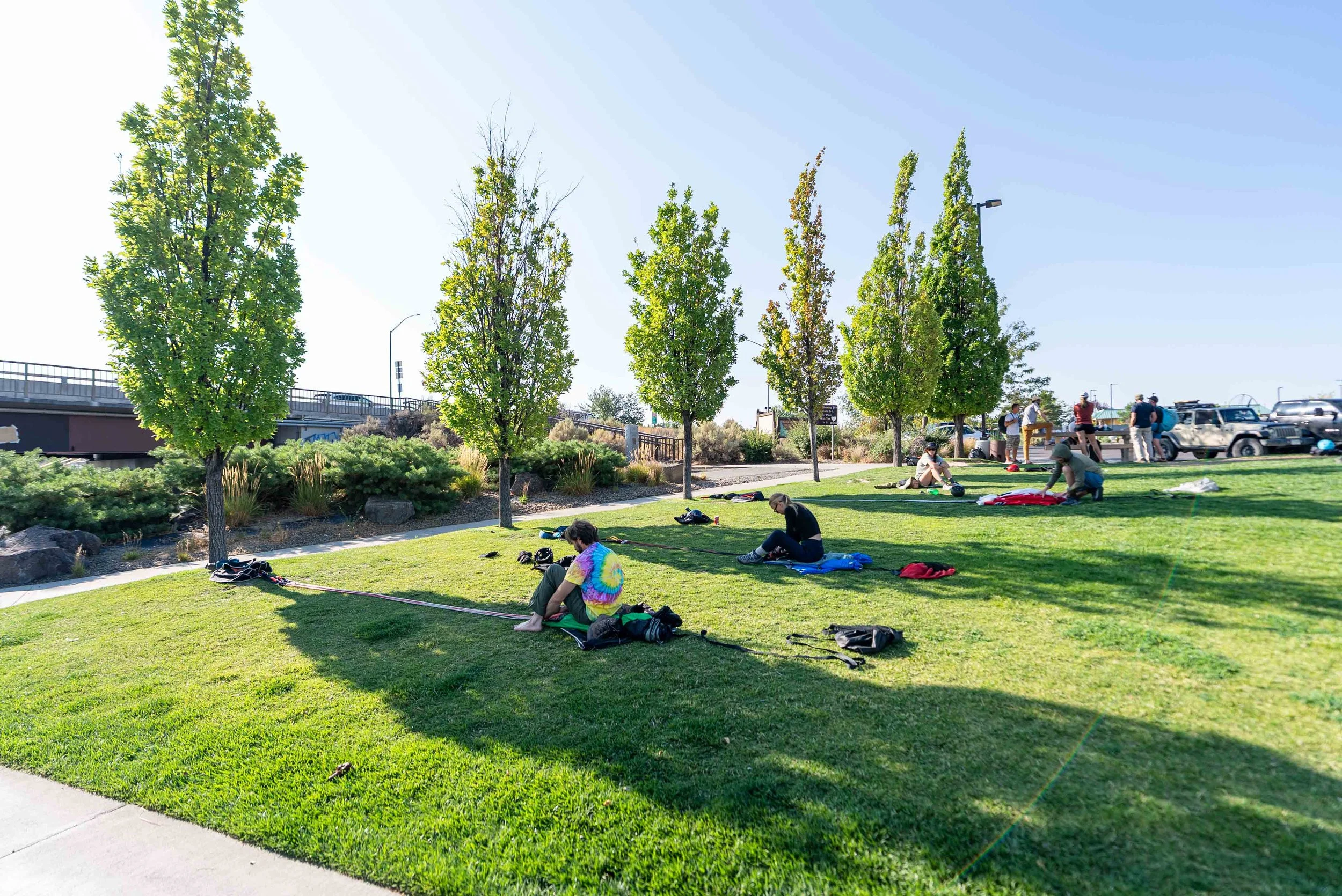
BASE jumpers preparing their parachutes
I decided to walk up onto the bridge walkway to get a jumper's perspective, and let me tell you, it gave me a whole new level of respect for these athletes. The bridge rattles from passing cars and trucks, it's windier up there, and you have to climb onto a ledge before jumping. They've even installed grip tape on the jumping spot because the surface is so slick. The whole area is covered in stickers from BASE jumpers, creating this cool community vibe.
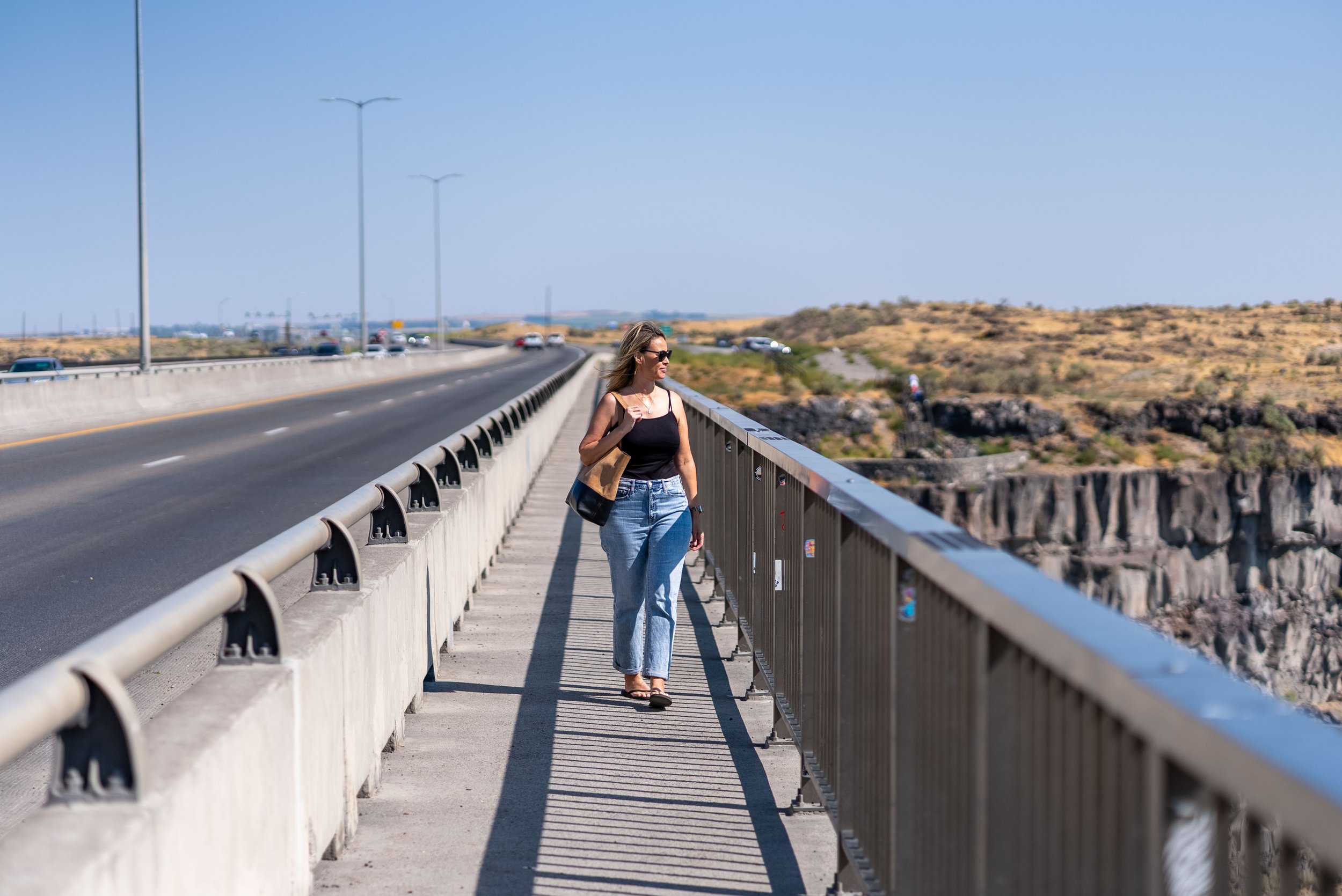
Walking across the bridge to get a glimpse of what it feels like as a BASE jumper
One guy did multiple backflips on his way down. You could tell from the moment he walked up the stairs that he was full of confidence, just heading up there to have fun. Other jumpers were visibly nervous (as anyone would be!). One woman spent an hour and a half preparing her pack but ultimately decided not to jump due to wind conditions, though her boyfriend went for it without hesitation.
I watched five to six jumpers during my time there, and all of them landed safely in the grass or bushes near the water. It was absolutely thrilling to witness.
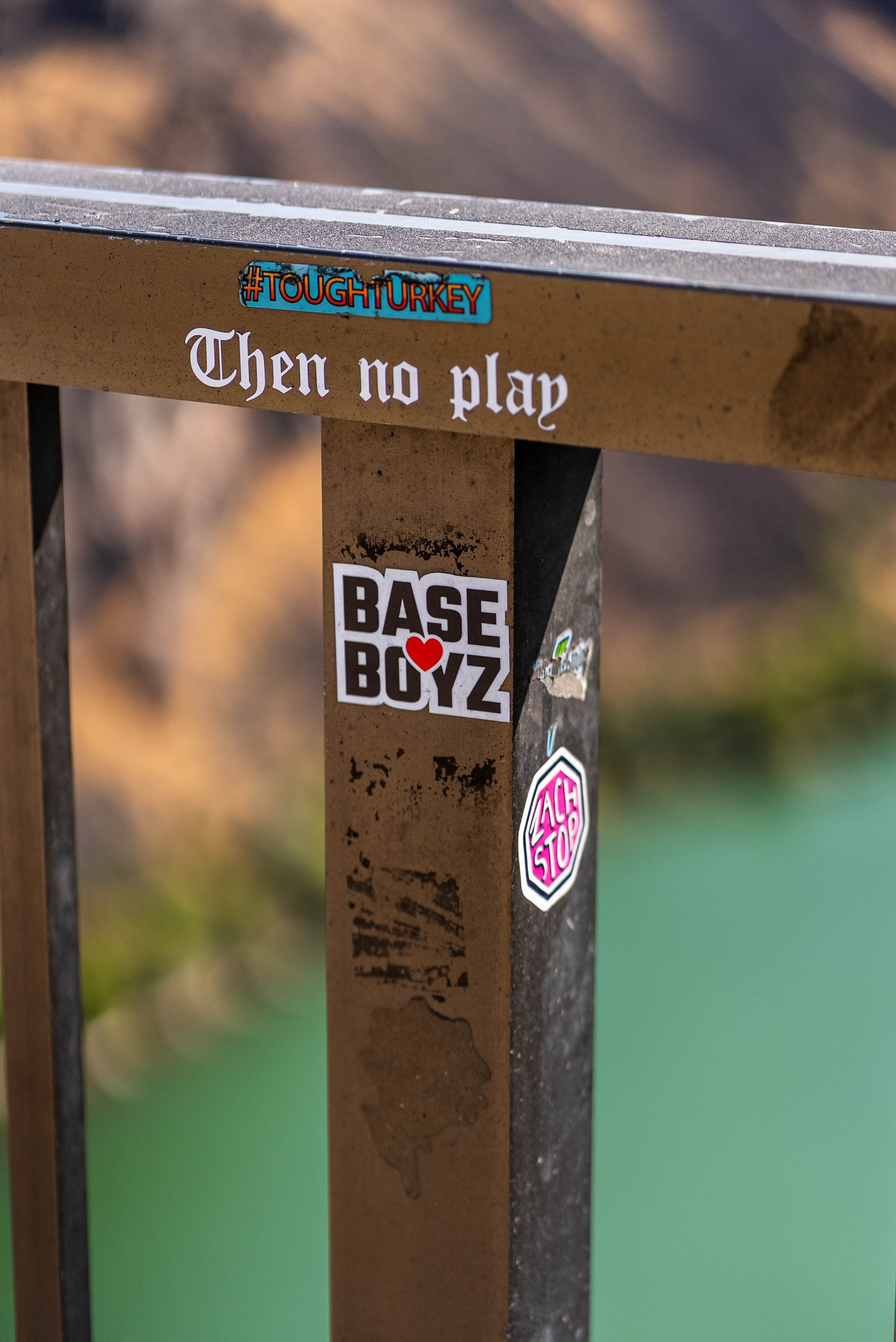
BASE jumper stickers on the bridge
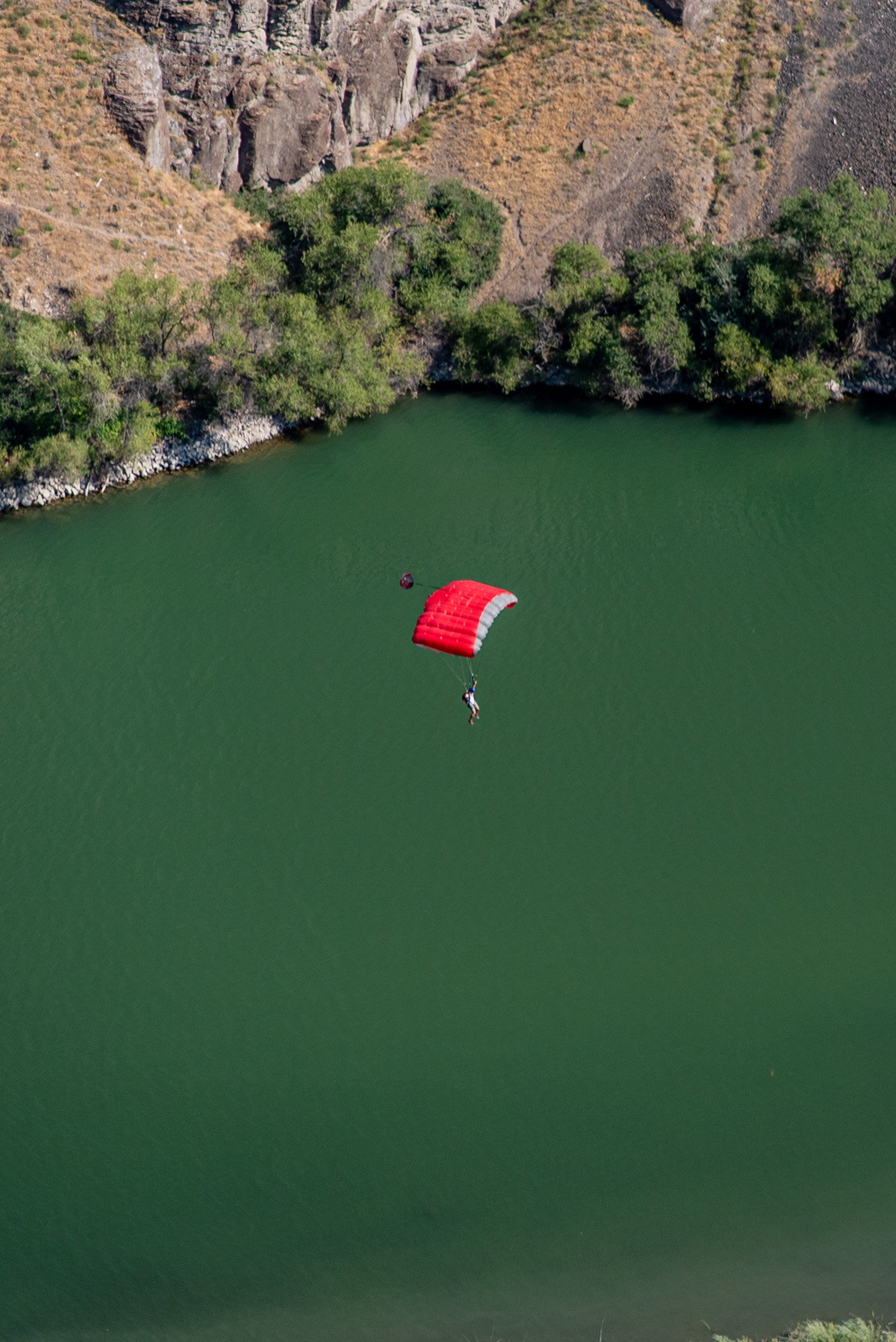
These BASE jumpers were incredible to watch
The History Behind Perrine Bridge
I learned so many fascinating facts about this bridge from the interpretive signs and from talking with locals. It's named after I.B. Perrine, an early settler who initiated numerous projects that essentially created the city of Twin Falls. Perrine was instrumental in developing the irrigation system that transformed the arid Snake River Canyon area into fertile agricultural land in the early 1900s.
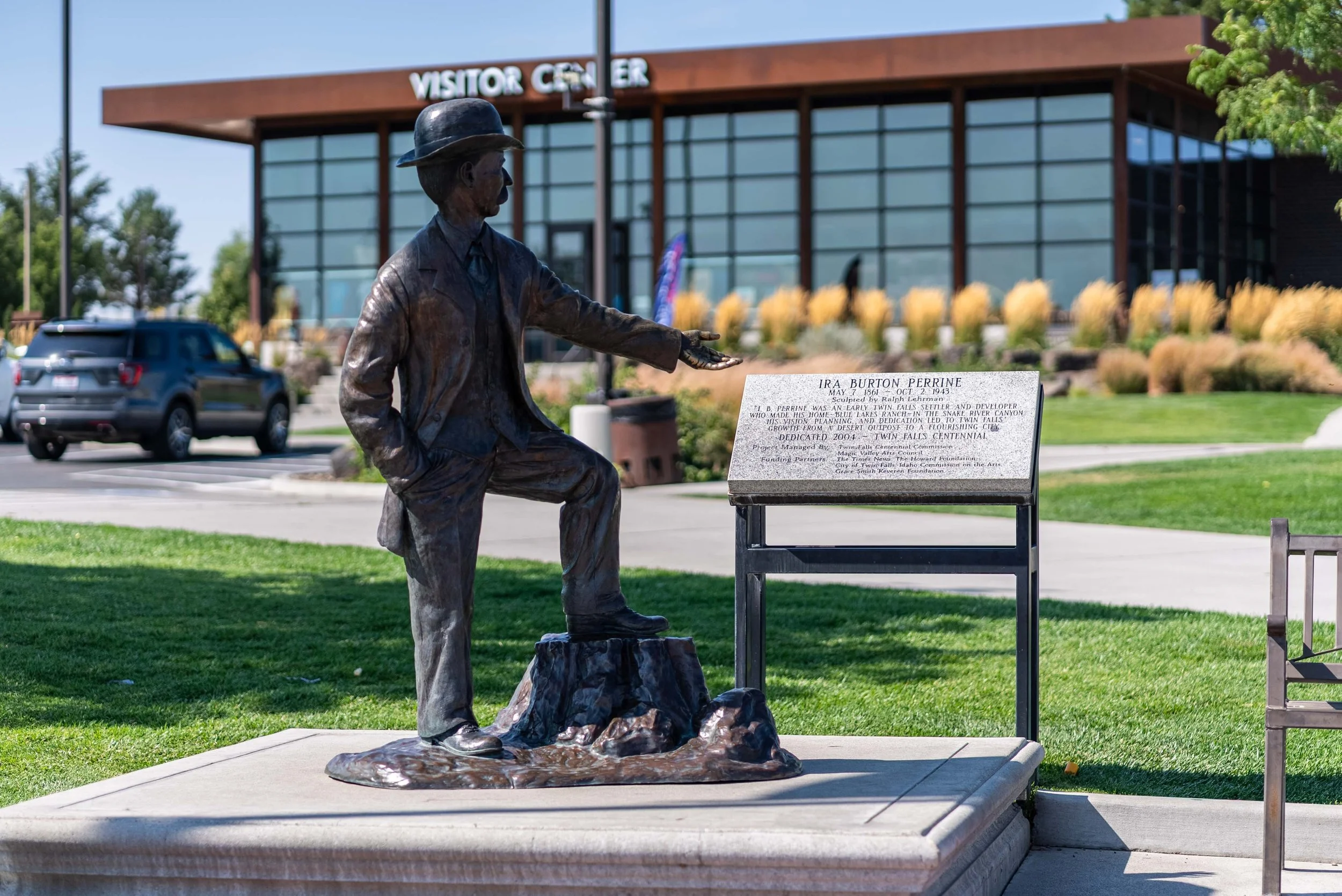
I. B. Perrine statue
And here's a fun piece of trivia: the legendary daredevil Evel Knievel attempted a famous mile-long canyon jump in this area back in 1974 at a location called the Snake River Canyon. While Knievel's steam-powered rocket didn't successfully cross the canyon, his attempt remains one of the most iconic moments in daredevil history.
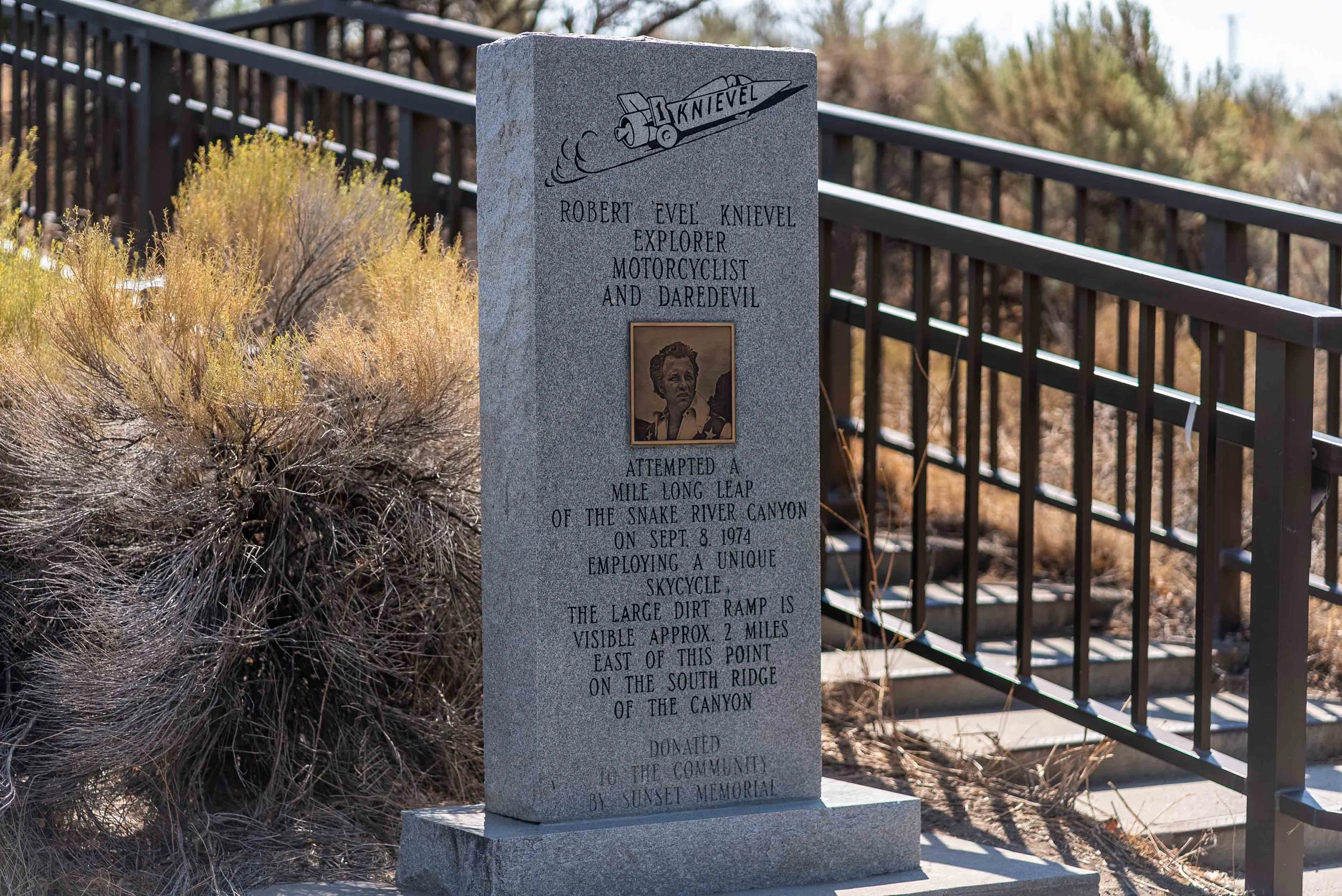
Dare devel Evel Knievel attempted a mile long leap over the canyon
Shoshone Falls: The Niagara of the West
After spending way more time at the bridge than planned, I headed to Shoshone Falls. I'll admit, I was hesitant at first. Some TripAdvisor reviews complained about the $5 entrance fee and said the falls weren't impressive. But John insisted I check it out, so I went.
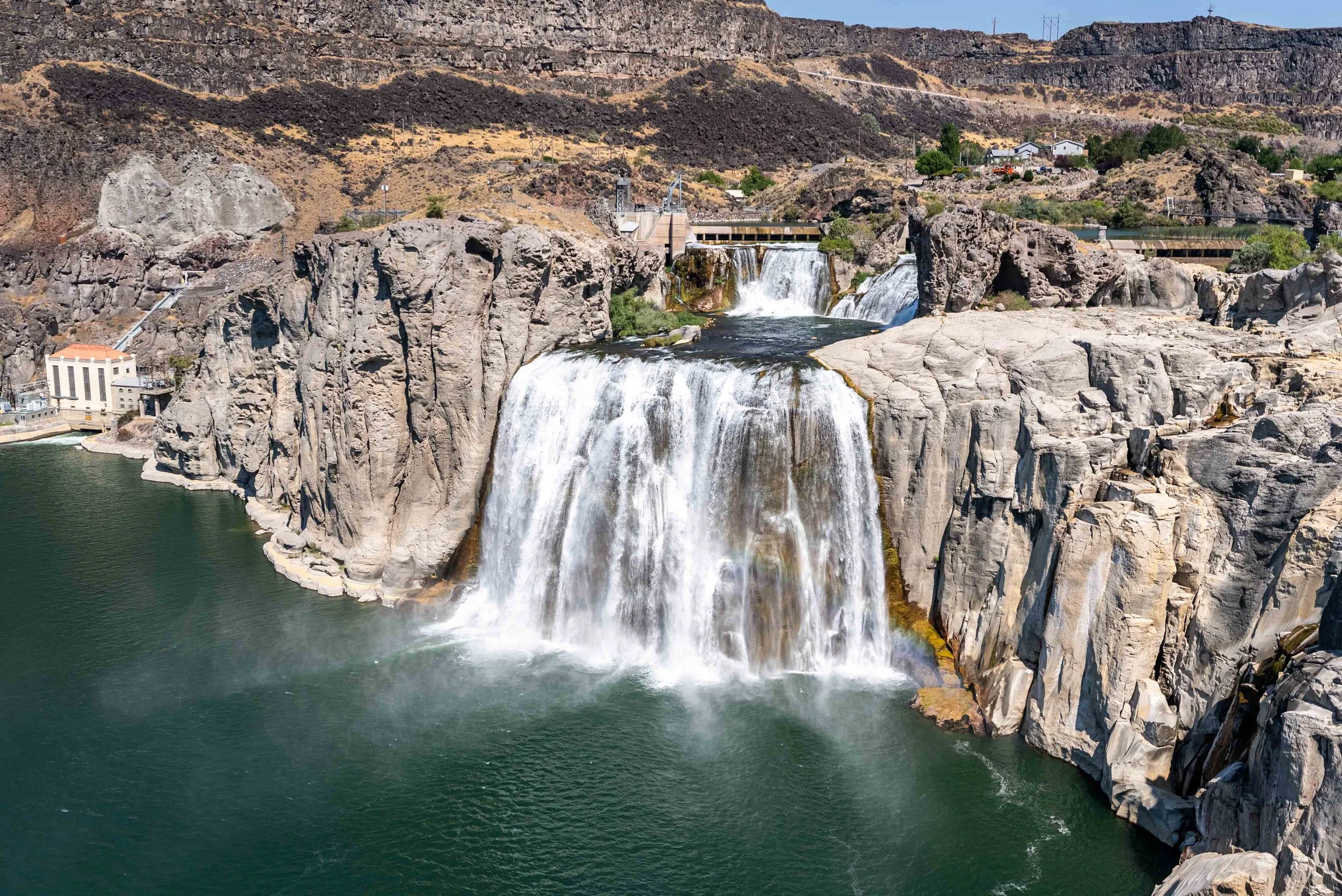
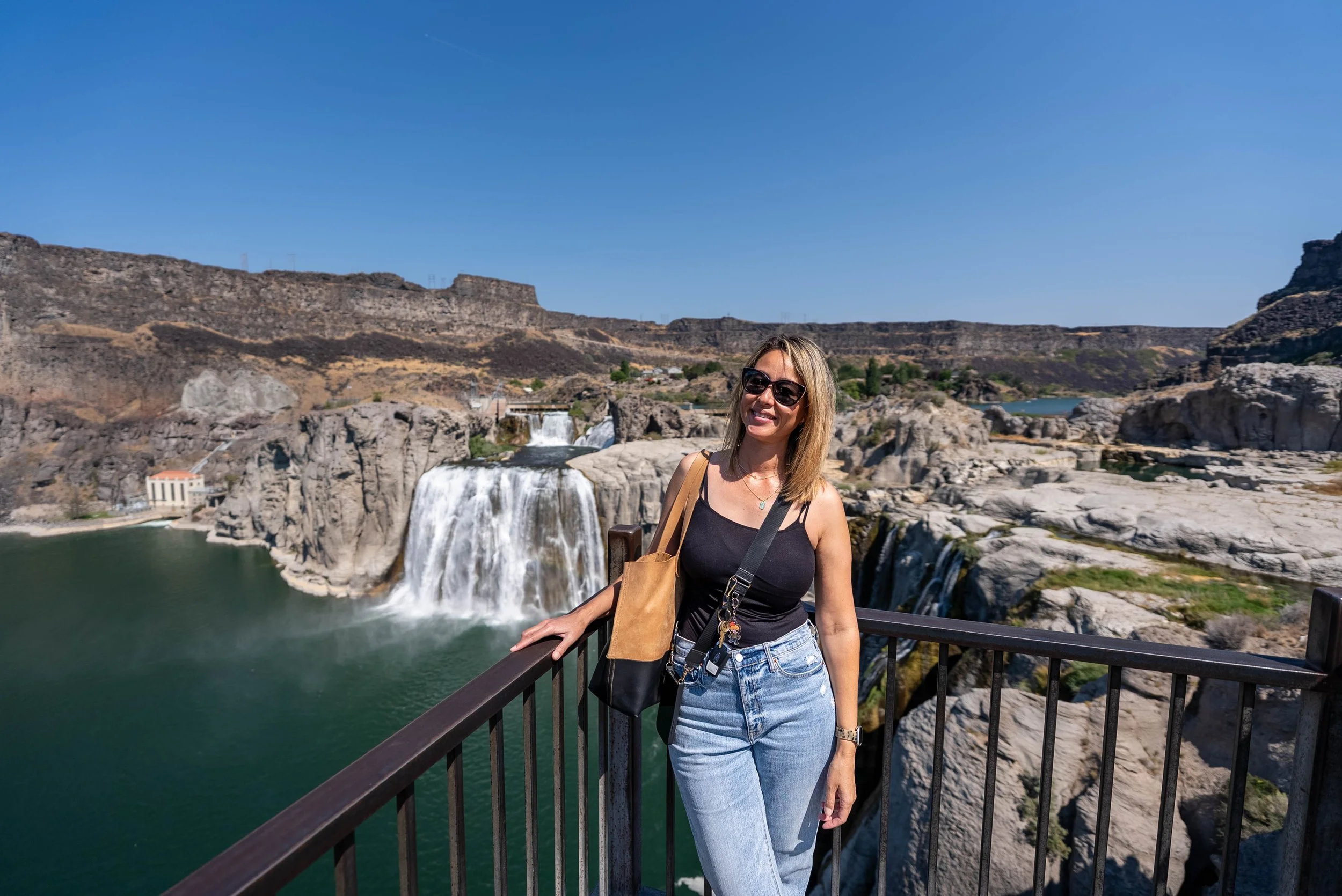
Shoshone Falls
A Grand Sight Worth Every Penny
I'm so glad I listened to John's advice. Shoshone Falls completely blew me away. They call it the "Niagara Falls of the West," and I had no idea it would be that big or that beautiful.
Shoshone Falls is truly spectacular. At 212 feet high and 900 feet wide, it's actually 45 feet taller than Niagara Falls! The falls are fed by the Snake River and are most impressive during spring runoff (typically April through July) when water flow is at its peak. I visited at the end of August when the flow was probably at its weakest but even then, the falls were still absolutely impressive and well worth the visit.
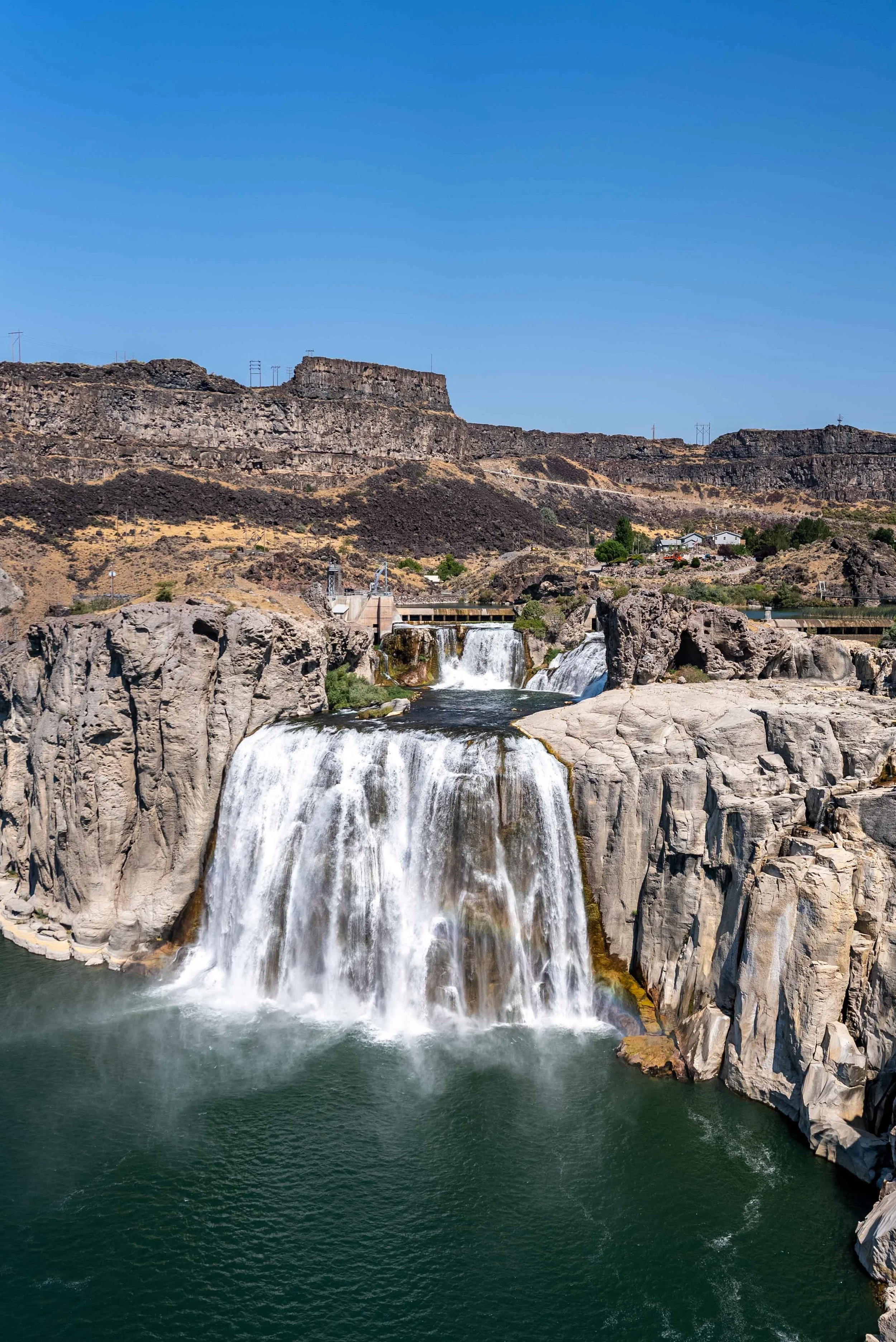
Shoshone Falls view from main deck
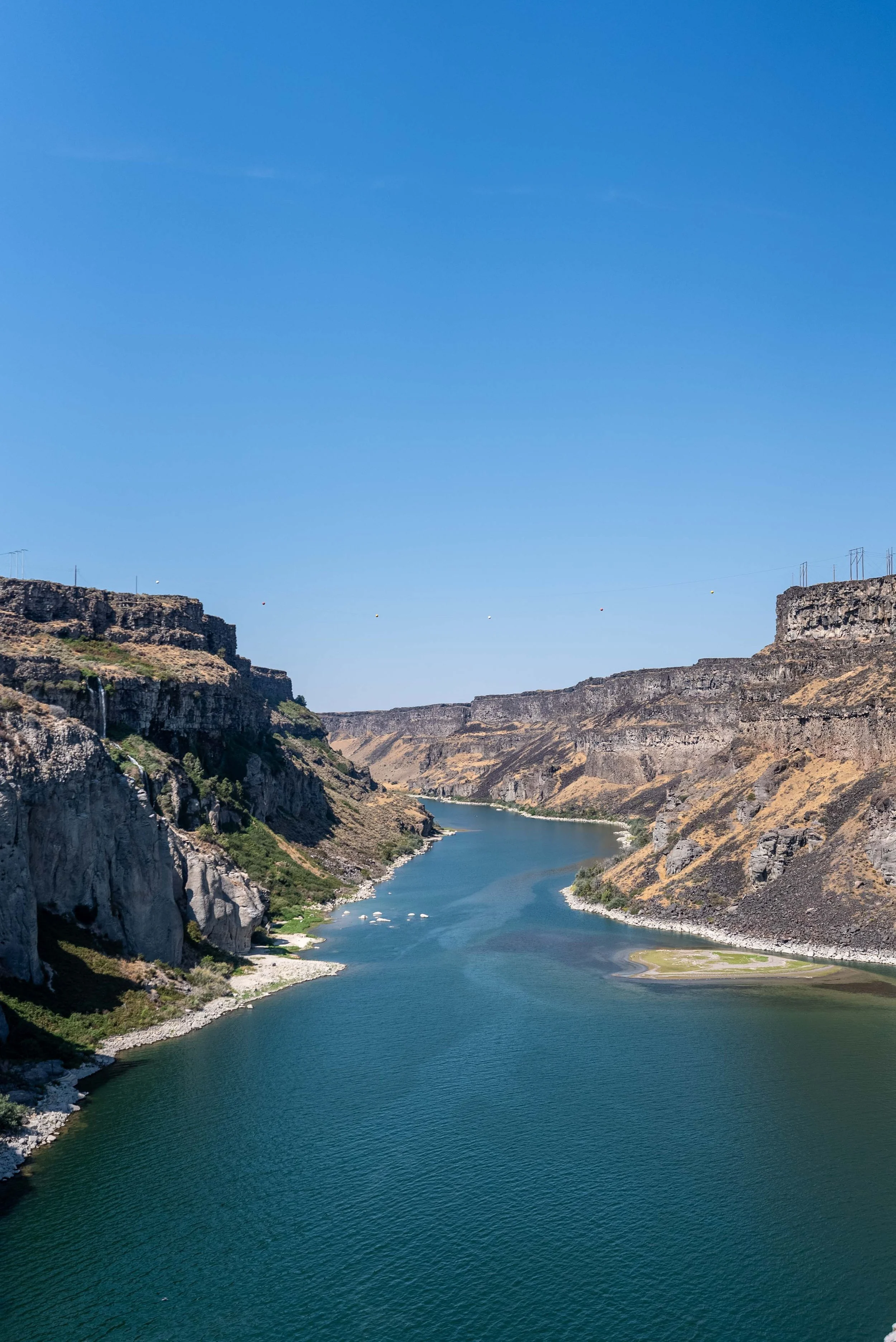
View of the river on the other side of the waterfall
The drive into the park takes you along impressive rock formations that reminded me of the Going-to-the-Sun Road in Glacier National Park. Then you arrive at this lush, green oasis with rolling hills perfect for picnics.
The falls themselves are absolutely stunning. On a sunny day like when I visited, you'll see a gorgeous rainbow arcing over the cascading water. The rainbow stayed there the entire time I was watching.
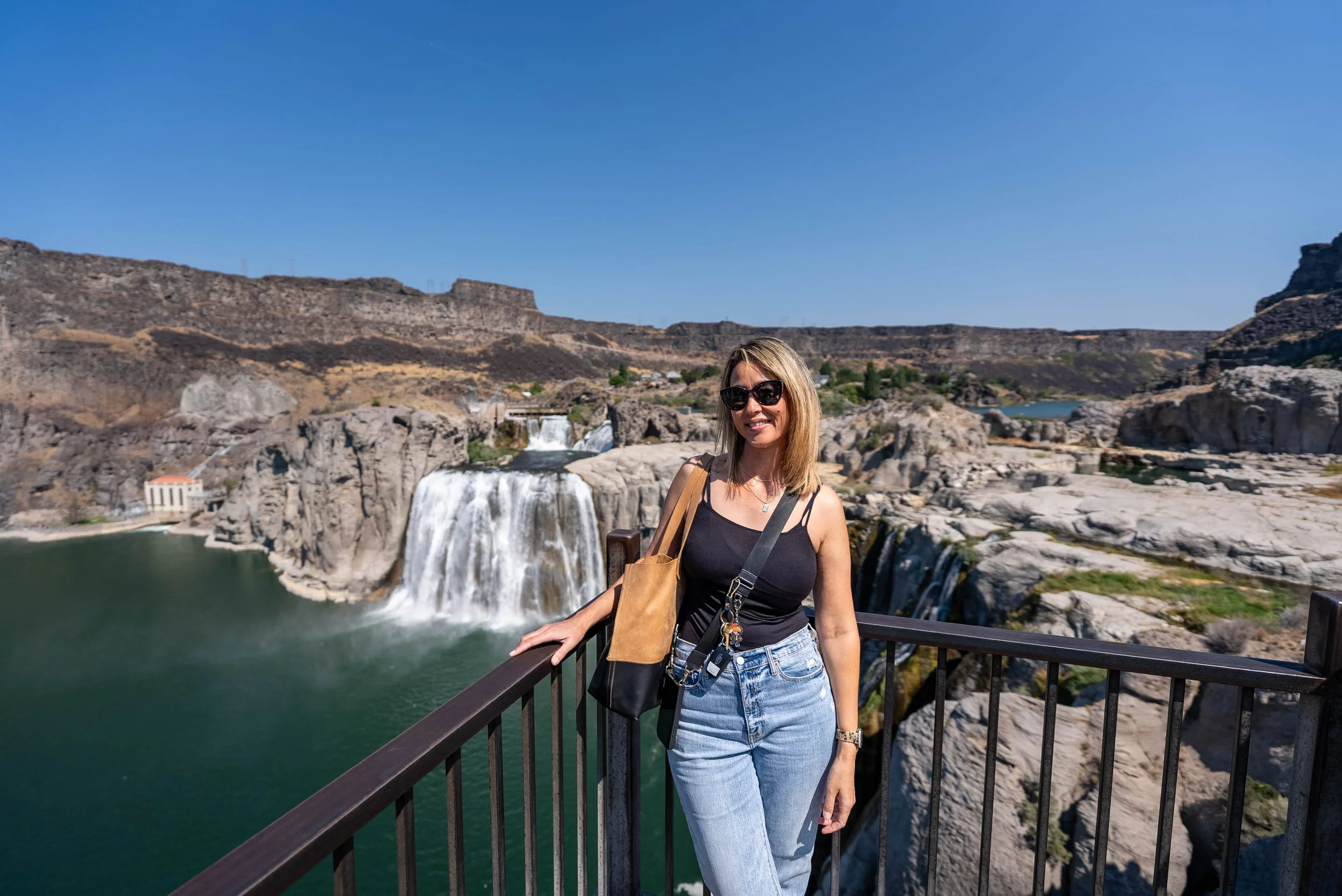
Main photo area at Shoshone Falls
Multiple Viewing Angles and Amenities
While there's one main viewing area that tends to get crowded, you can walk along trails to get completely different perspectives of the falls. I loved being able to see it from various angles.
The park is incredibly well-maintained with plenty of picnic tables, lush green grass, and a welcoming atmosphere. It's also extremely dog-friendly. In fact, that's something I noticed throughout Twin Falls: dogs everywhere, and everyone seemed totally comfortable with it. Even the BASE jumpers brought their dogs, who would just sleep on the grass waiting for their owners to finish jumping!
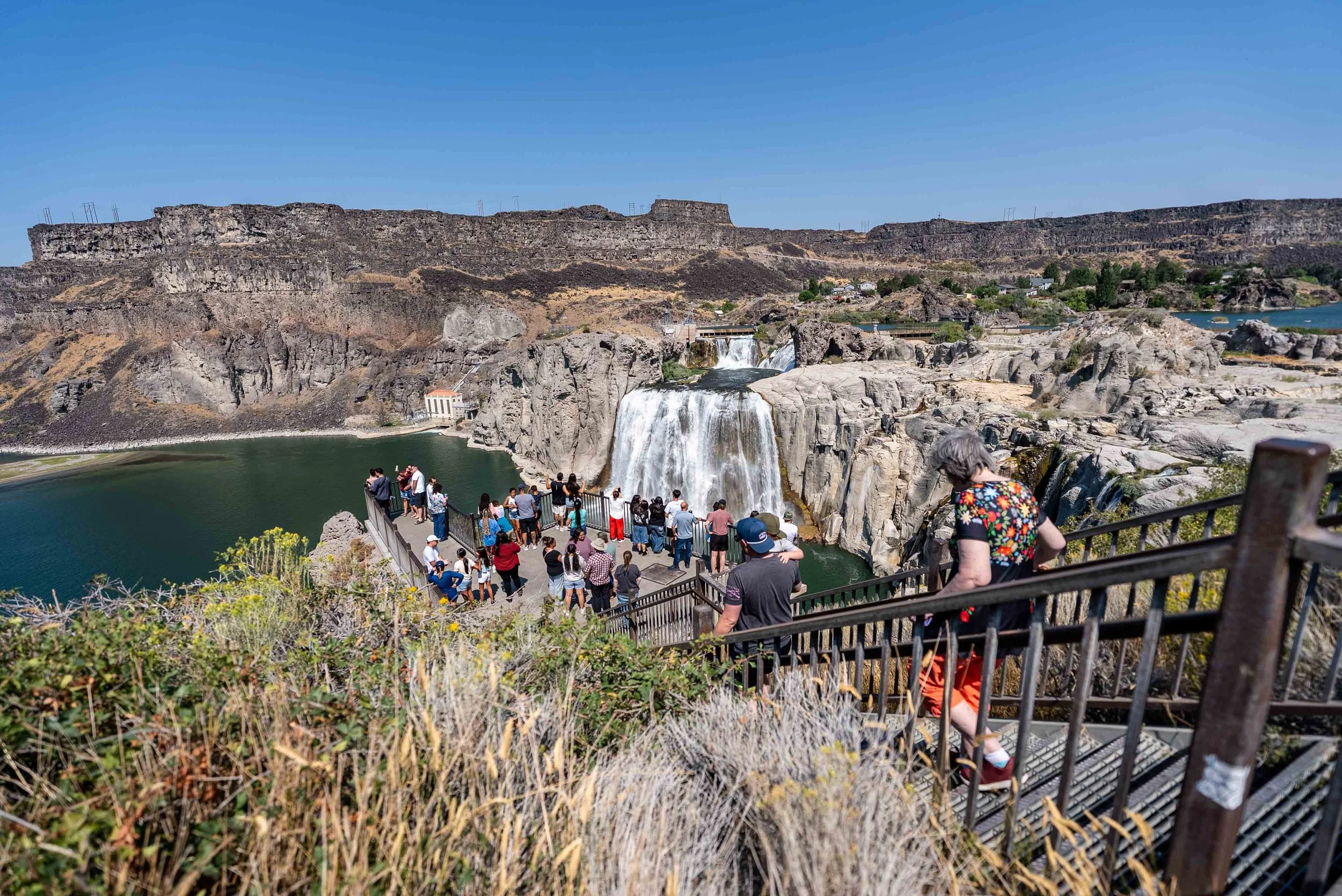
Huge crowd at the main viewing point
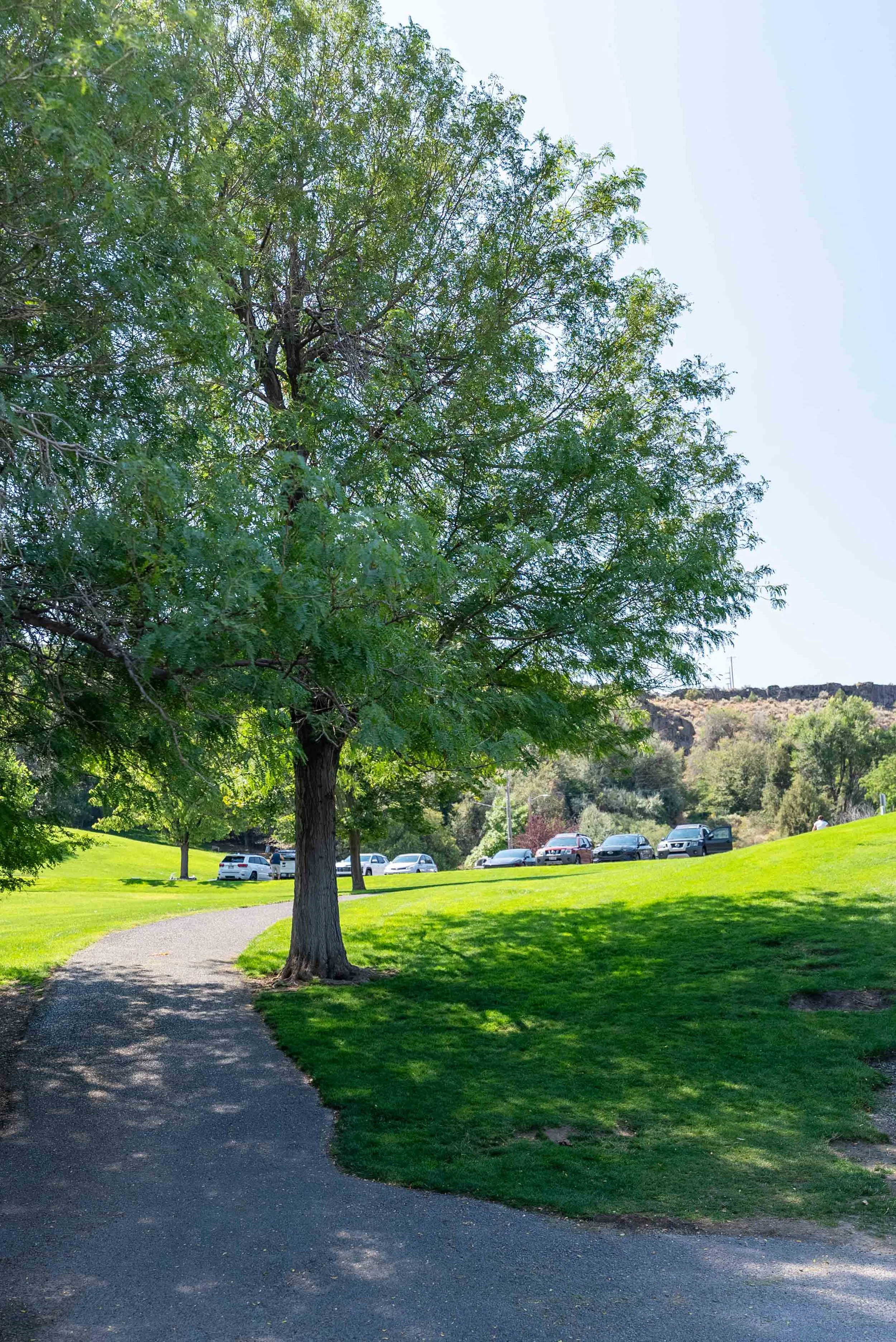
Lush greenery throughout Shoshone Falls Park
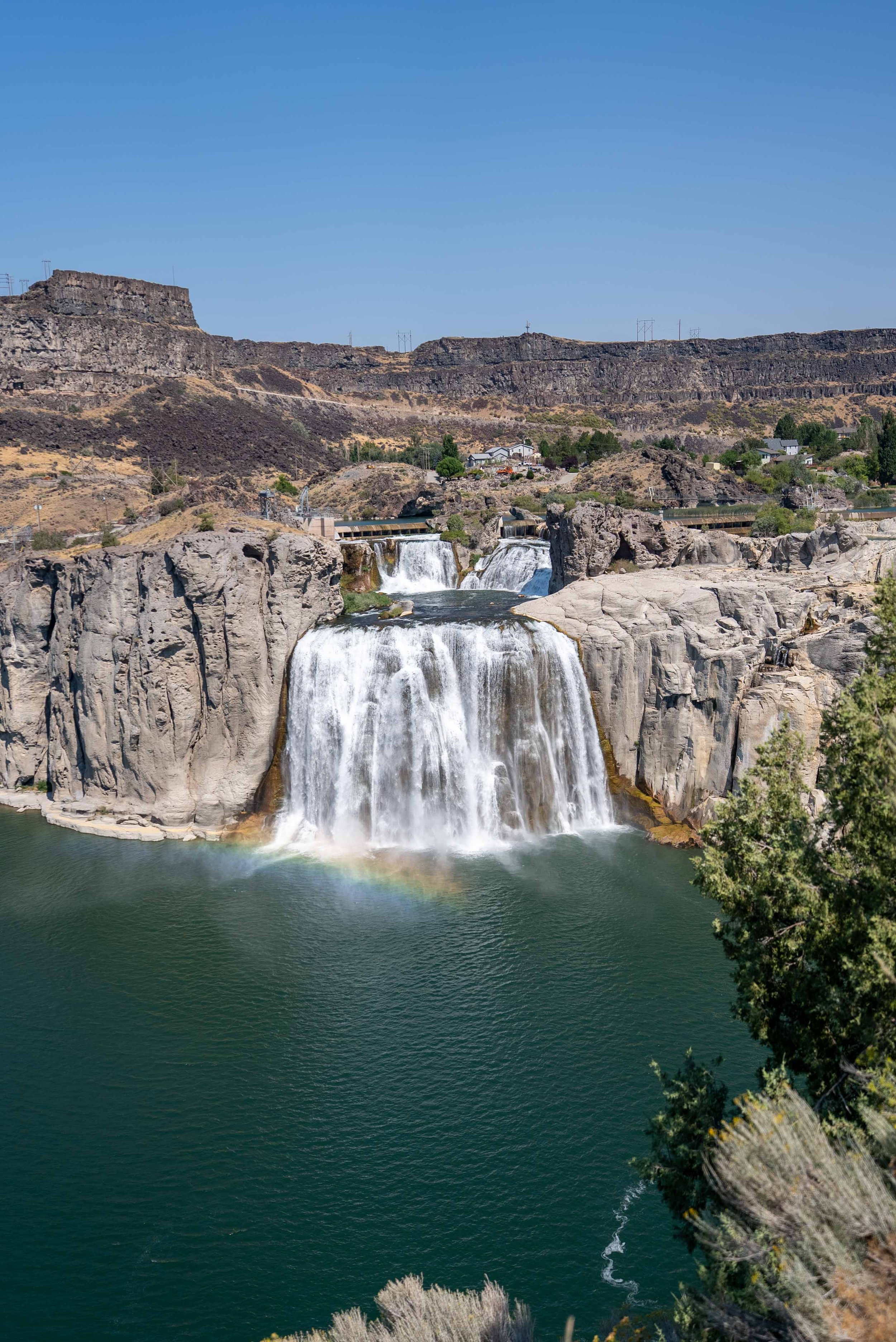
You will most likely see a rainbow in front of the waterfall
What Makes Twin Falls Special
Twin Falls transformed from a simple overnight stop into one of my favorite destinations. The town has a wonderful energy and the kind of authentic, unscripted experiences that make travel memorable. Twin Falls has so much character and so many unique attractions that I'm already planning to return.
If you're planning a road trip through Idaho or looking for an underrated destination in the Pacific Northwest, put Twin Falls on your list. Whether you're there to watch the BASE jumpers, marvel at Shoshone Falls, or simply enjoy the dog-friendly atmosphere and local charm, I think you'll love it as much as I did.
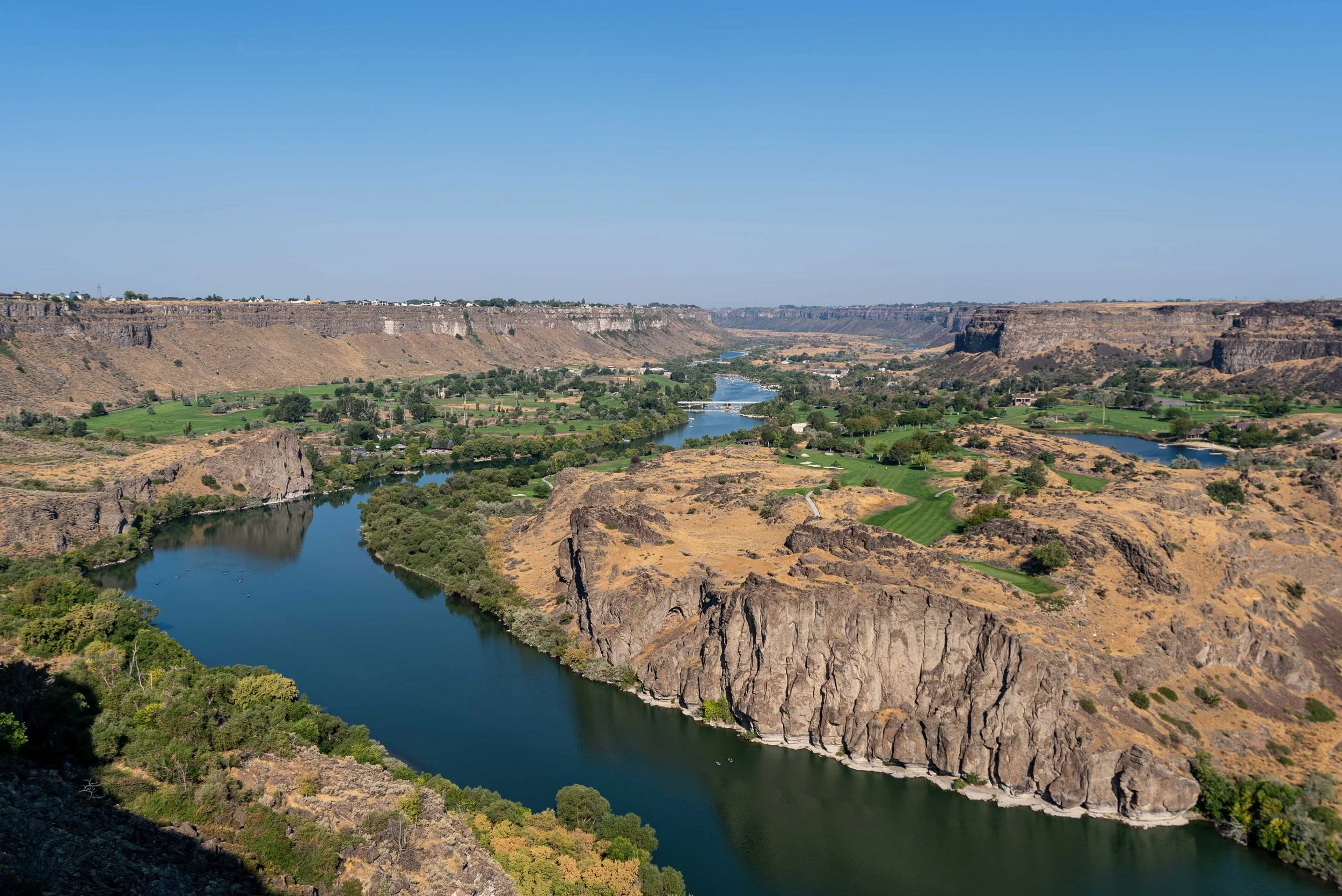
Snake River Canyon
Guided Tours in Twin Falls Worth Considering
If you want to experience Twin Falls beyond the viewpoints, these guided tours are great options for seeing the area from a different perspective, especially if you prefer local insight and a more structured experience.
Shoshone Falls Guided Kayak Tour
A unique adventure that blends hiking and kayaking near Shoshone Falls. This tour includes a scenic boat ride up the Snake River, a guided trek through rock formations and caves near Pillar Falls, and a solo kayak paddle offering a stunning water-level view of Shoshone Falls.
Twin Falls Shoshone Falls & City Half-Day Guided Tour
This half-day tour offers a great overview of Twin Falls, combining historic downtown areas with top natural sights. Stops typically include Shoshone Falls, the Snake River Canyon, the Twin Falls Waterfall and Dam, and the Perrine Memorial Bridge.
Scenic Boat Tour of the Snake River Canyon
A relaxing way to experience the Snake River Canyon from the water. This scenic cruise passes beneath the Perrine Memorial Bridge and often offers views of BASE jumpers, waterfalls, and hidden canyon features, all while learning about the area’s history and geology.
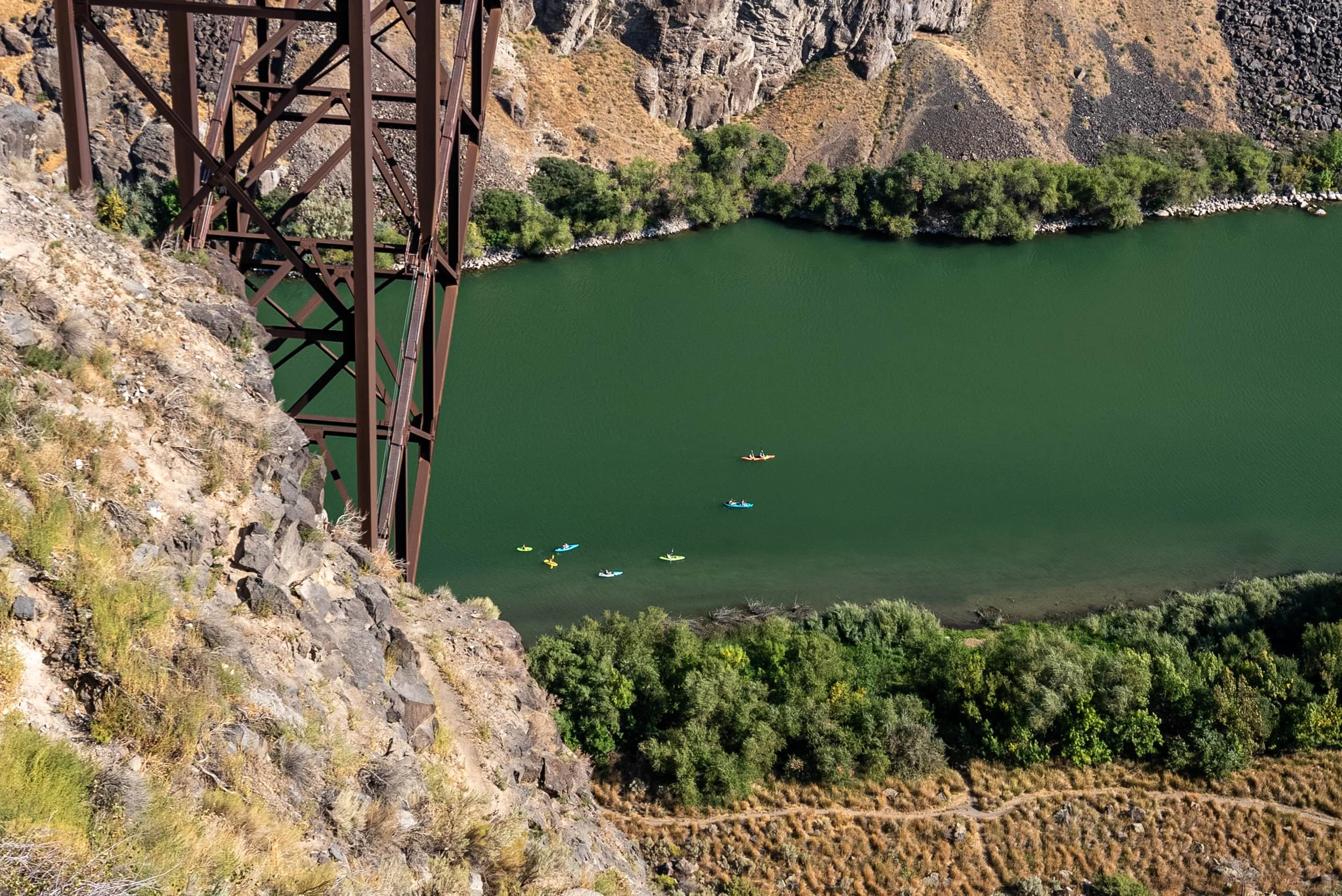
Kayaks drifting along the Snake River beneath the Perrine Bridge
Frequently Asked Questions
-
Yes. Twin Falls offers unique experiences you cannot easily replicate elsewhere, including year-round BASE jumping access and one of the largest waterfalls in the country.
-
Yes. BASE jumpers are active most days, weather permitting. Wind conditions determine how many jump.
-
Absolutely. The $5 per vehicle fee is minimal compared to the size, power, and accessibility of the falls.
-
Yes. Dogs are common at Perrine Bridge viewpoints and allowed at Shoshone Falls.



















Wondering if a three-day cross-country road trip is realistic? Here’s exactly how much our Vegas to Tampa drive cost, plus gas prices, food spending, hotel stays, and honest advice.