
Tokyo Tower Walking Itinerary: Shiba Park, Zojoji Temple, Atago Jinja, and More
/This post contains affiliate links, which means that at no additional cost to you, if you click on one of the product links, we may earn a commission.
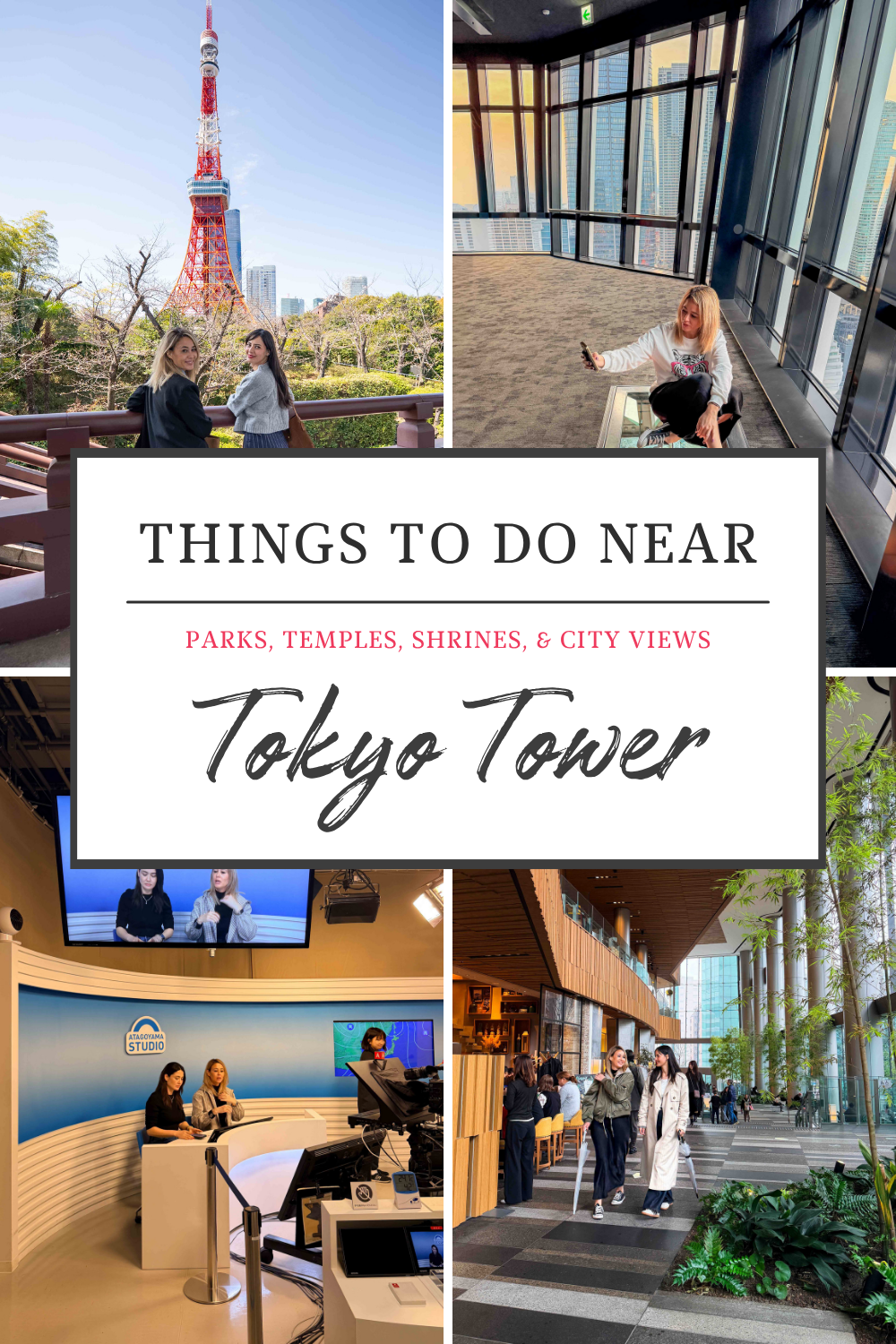
Tokyo Tower is one of those iconic landmarks you see in so many photos of Tokyo, but what we loved most about visiting this area was realizing how much there is to do nearby. Instead of only going straight to the tower, we explored the surrounding neighborhood through a relaxed walking route filled with parks, temples, shrines, museums, modern architecture, and plenty of Tokyo Tower views along the way.
We stayed at The Prince Park Tower Tokyo, which made this area especially easy to explore since Shiba Park and Tokyo Tower were right outside our hotel.
Note: We spread these stops out over more than one day, but they are all close enough to connect as a flexible walking route. You can do several of them in one day or choose a few based on your schedule.
You could turn this into a half-day or full-day Tokyo Tower walking itinerary, or spread it out like we did and enjoy the area at a slower pace. This route gives you such a nice mix of old and new Tokyo.
Tokyo Tower Area Walking Route Map
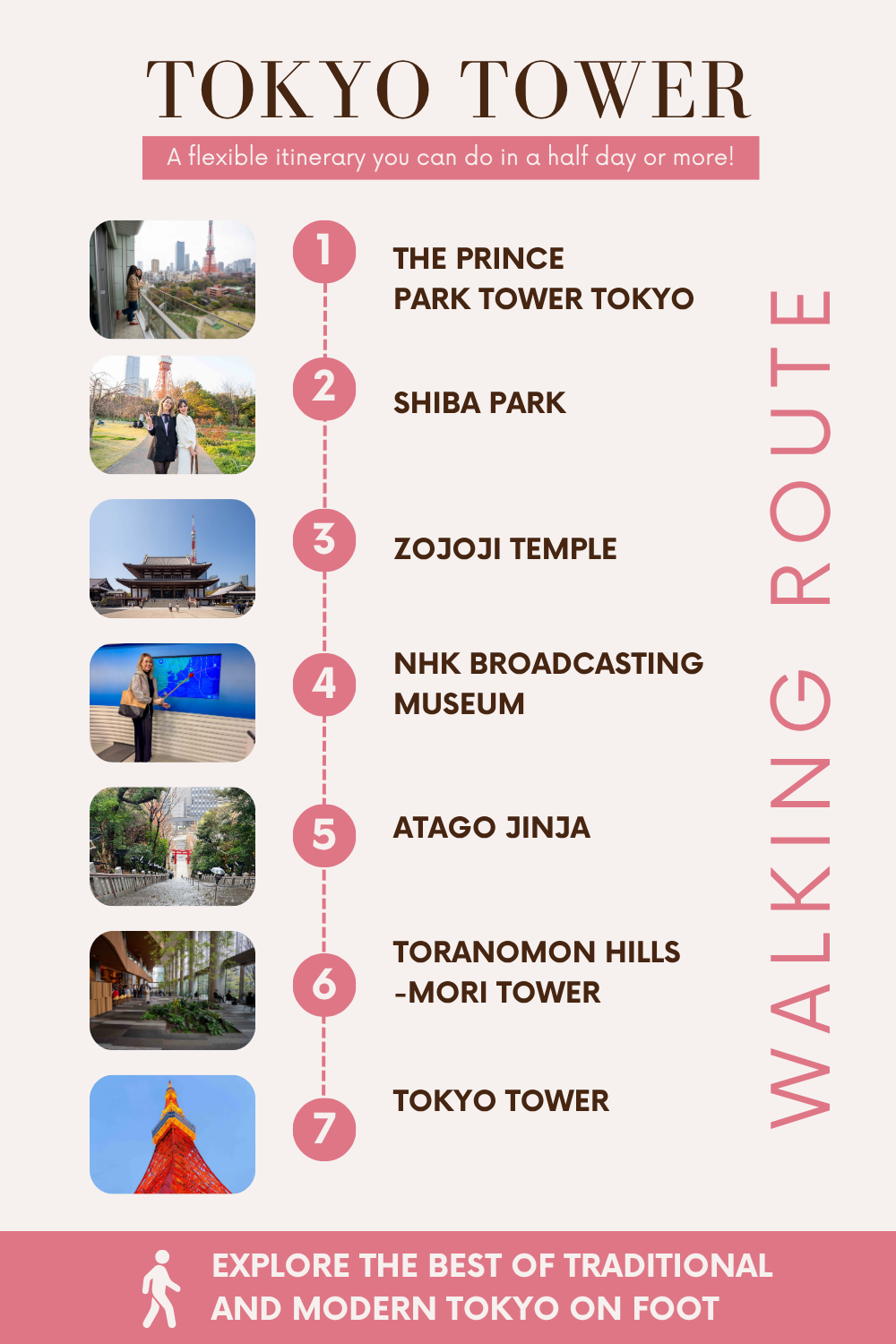
We spread these stops out over more than one day, but they are all close enough to connect as a flexible walking route around the Tokyo Tower area. You can follow the full route if you have enough time, or choose a few stops based on your schedule.
Suggested route:
The Prince Park Tower Tokyo → Shiba Park → Zojoji Temple → NHK Broadcasting Museum → Atago Jinja → Toranomon Hills - Mori Tower → Tokyo Tower
Shiba Park
Shiba Park is a peaceful, lush urban oasis nestled right in the shadow of the iconic Tokyo Tower. We booked our stay at The Prince Park Tower Tokyo, which is located along the southern edge of the park, and we were lucky enough to have a clear, amazing view of Tokyo Tower right from our hotel room.
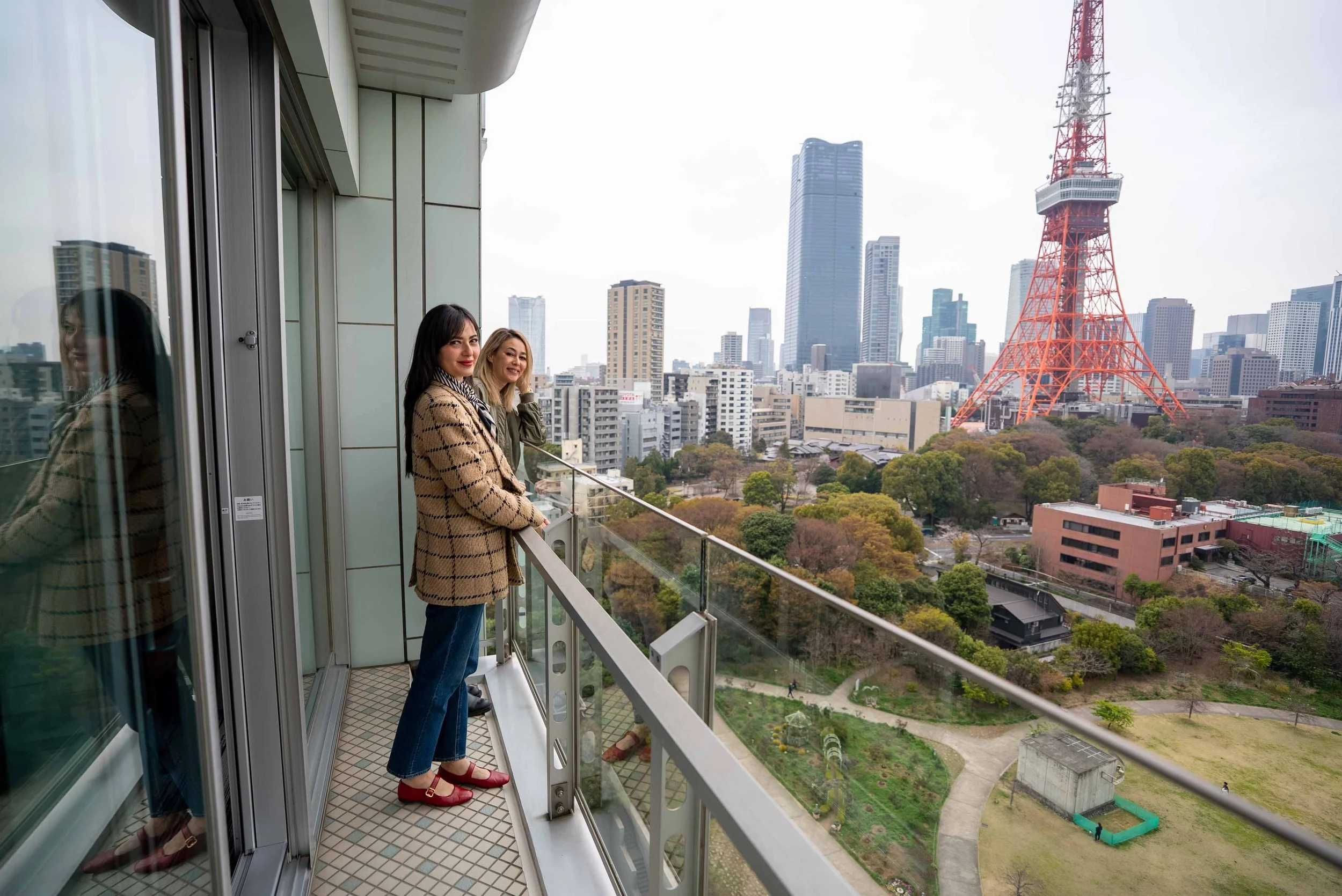
View of Tokyo Tower from our Hotel Room
The park itself is massive, but one of our favorite areas was the grassy lawn directly in front of the hotel. We saw so many people lounging, picnicking, and taking photos of Tokyo Tower from this spot. It is a great place to relax, slow down, and enjoy the view without feeling like you are in the middle of a busy city.
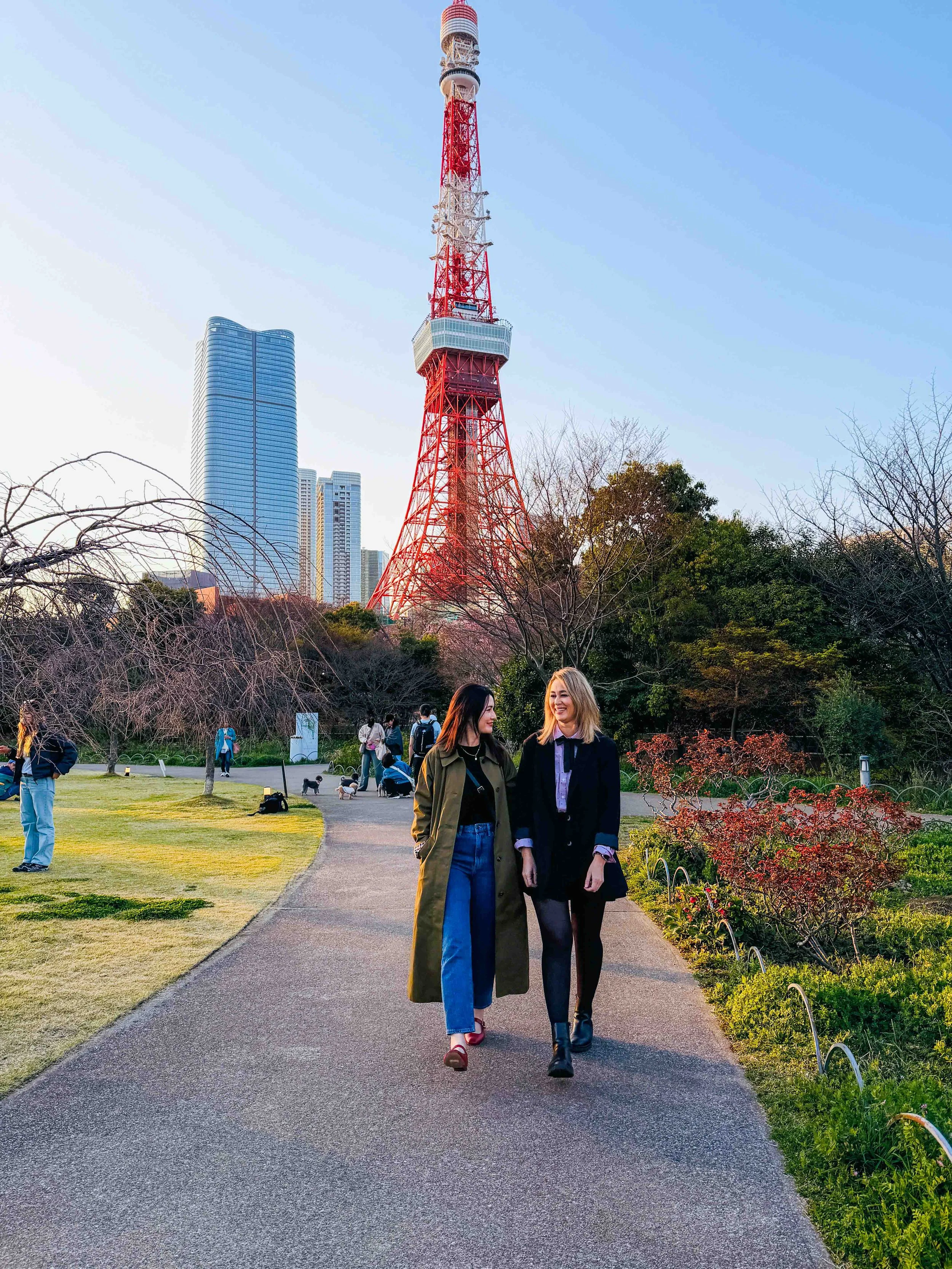
Shiba park
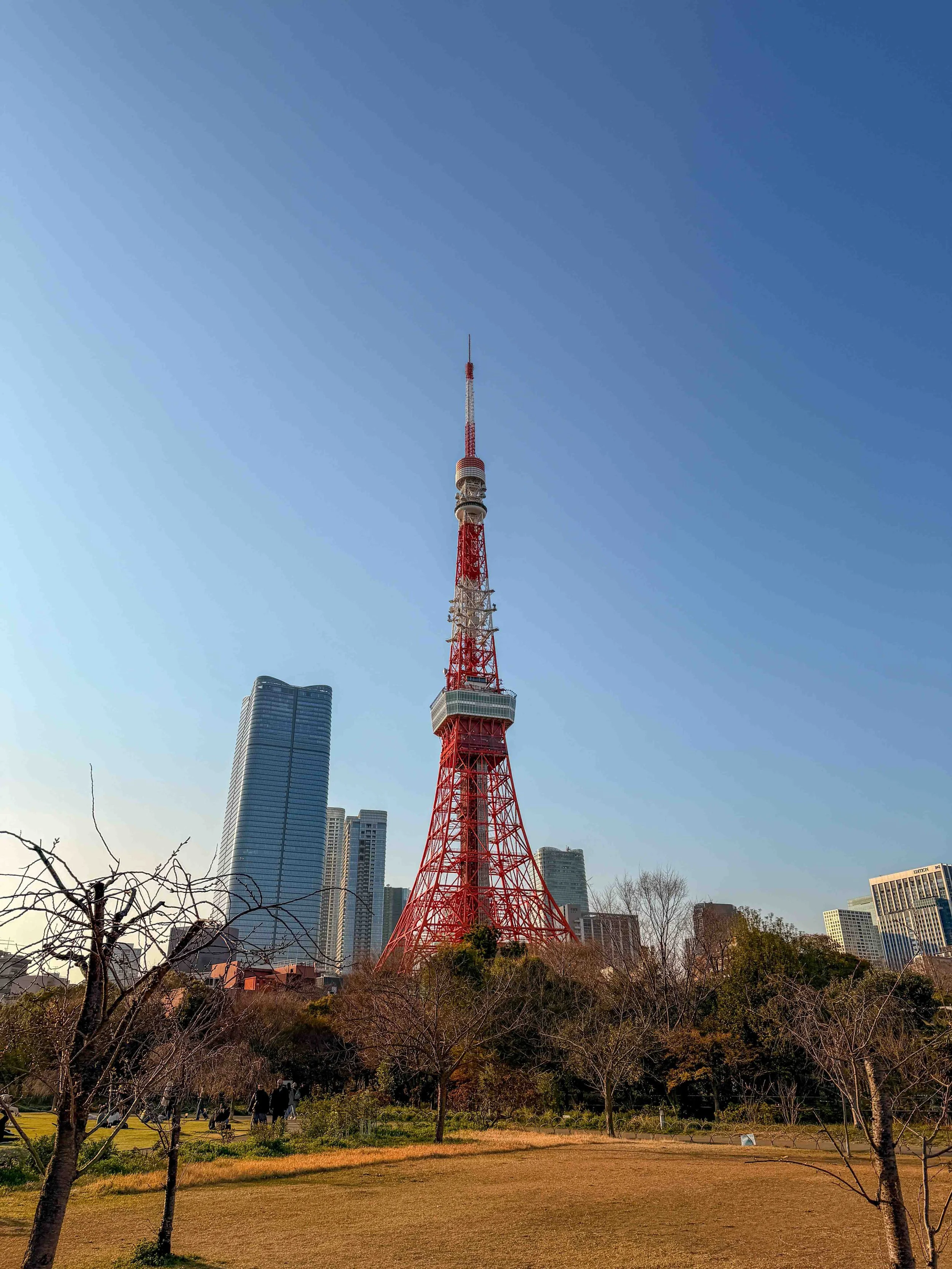
Tokyo Tower View at Shiba Park
If you want to add a historical landmark to your visit, you can also walk over to the Former Daitokuin Reibyo Somon Gate. This historic gateway once marked the entrance to Daitokuin Temple, an important cultural site connected to the Tokugawa family.
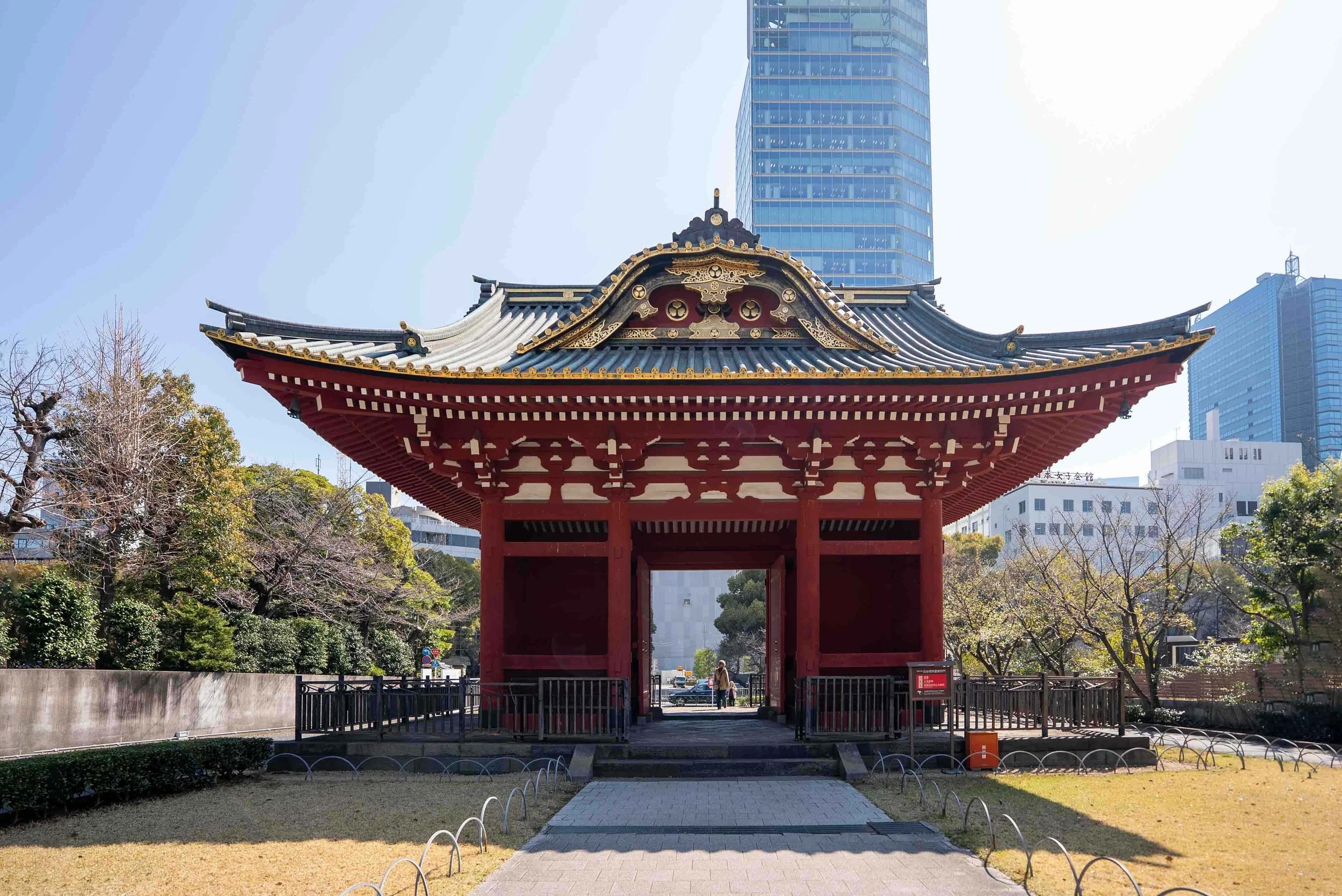
Former Daitokuin Reibyo Somon Gate
The Tokugawa family is significant because they ruled Japan for over 250 years, during a period known as the Edo period. This long era helped shape much of Japan’s culture, politics, and society, making this small gate an interesting historical stop within Shiba Park.
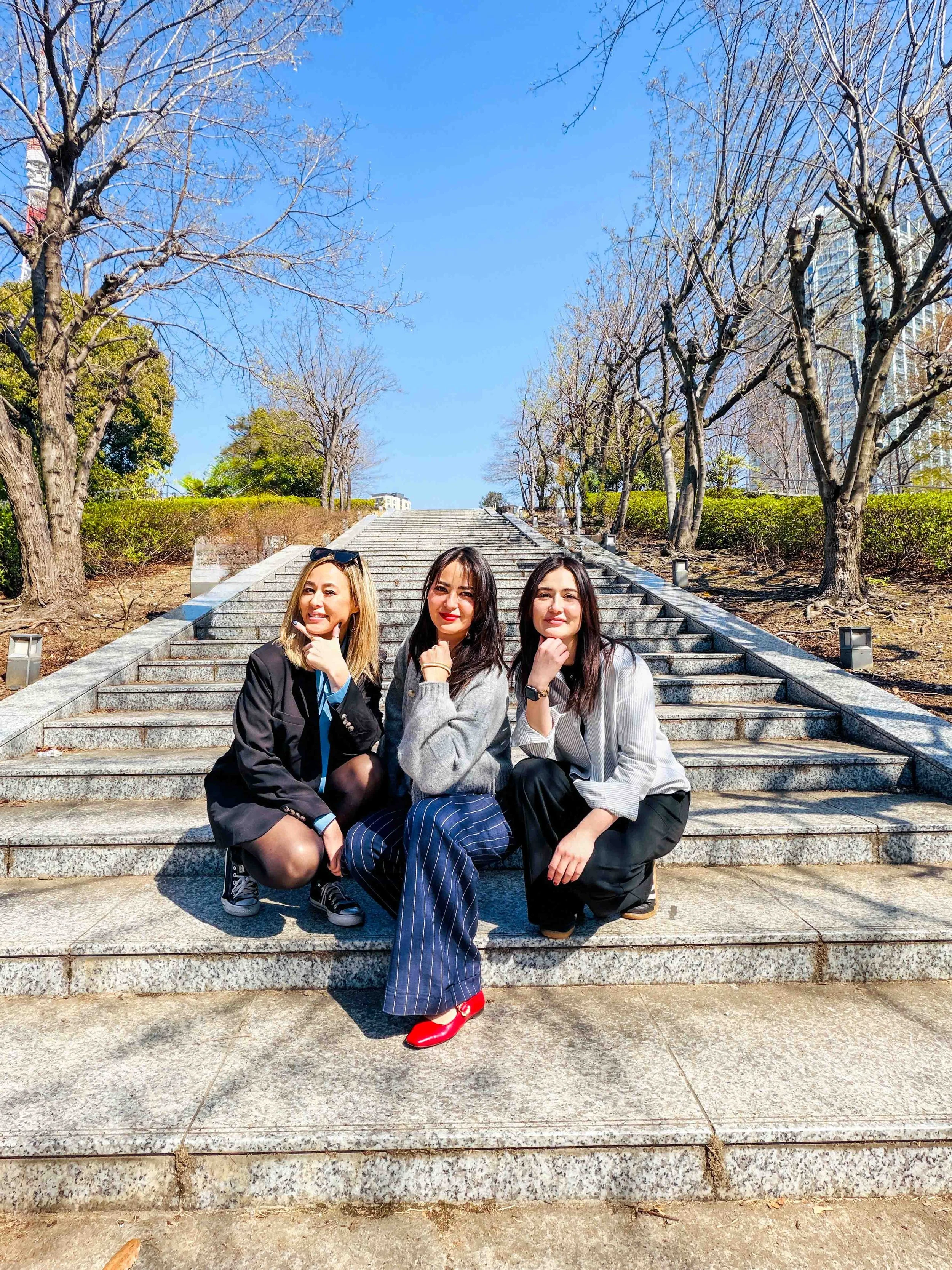
Acting Natural on the steps
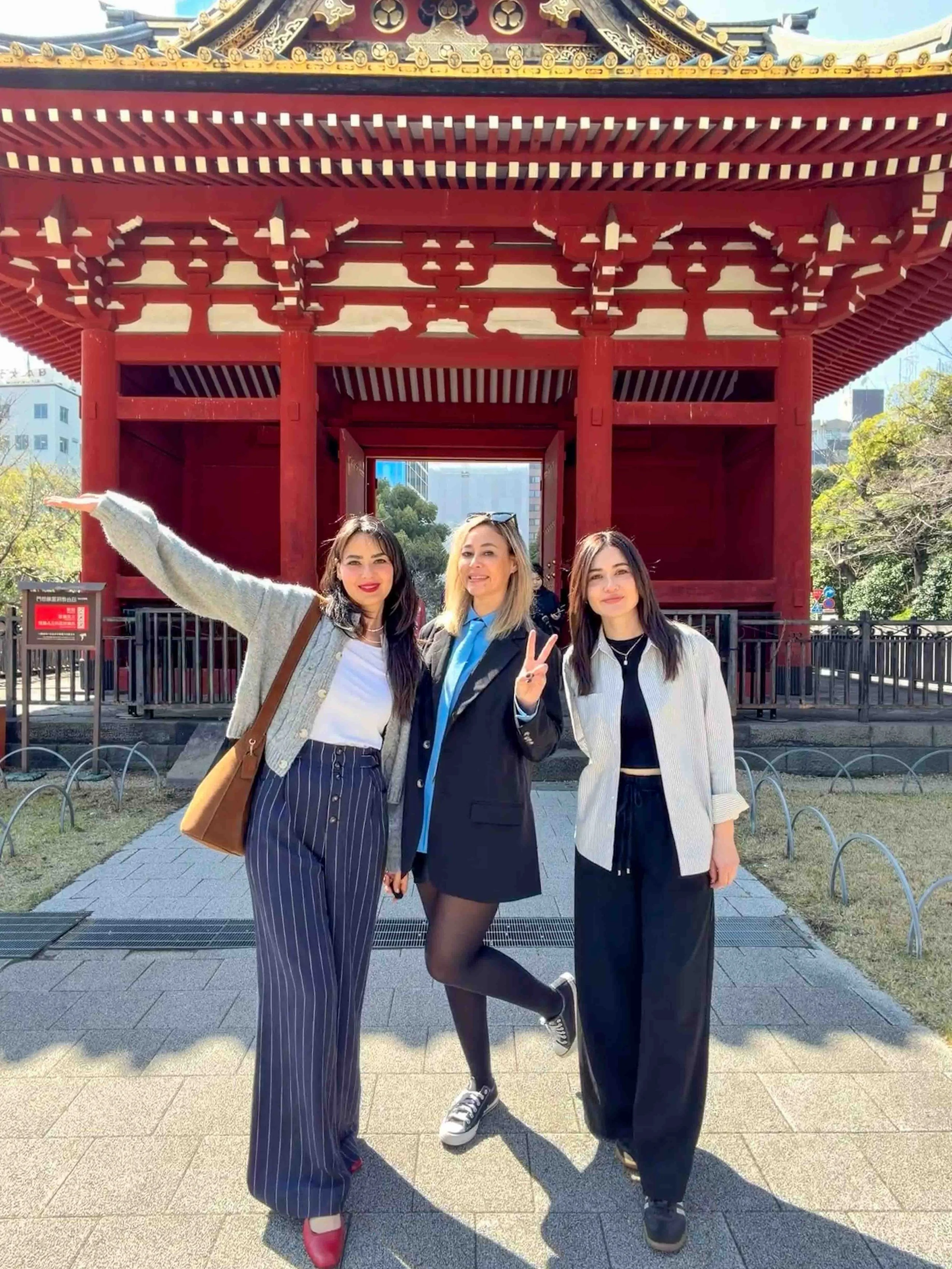
Gatekeepers of the good vibes
Zojoji Temple
You can’t miss Zojoji Temple when visiting Shiba Park. It took us a while to actually make our way to the temple grounds from our hotel, not because it was a long walk, but because we kept stopping along the way. We grabbed breakfast at Le Pain Quotidien, took photos around the park, and kept getting distracted by all the beautiful views of Tokyo Tower.
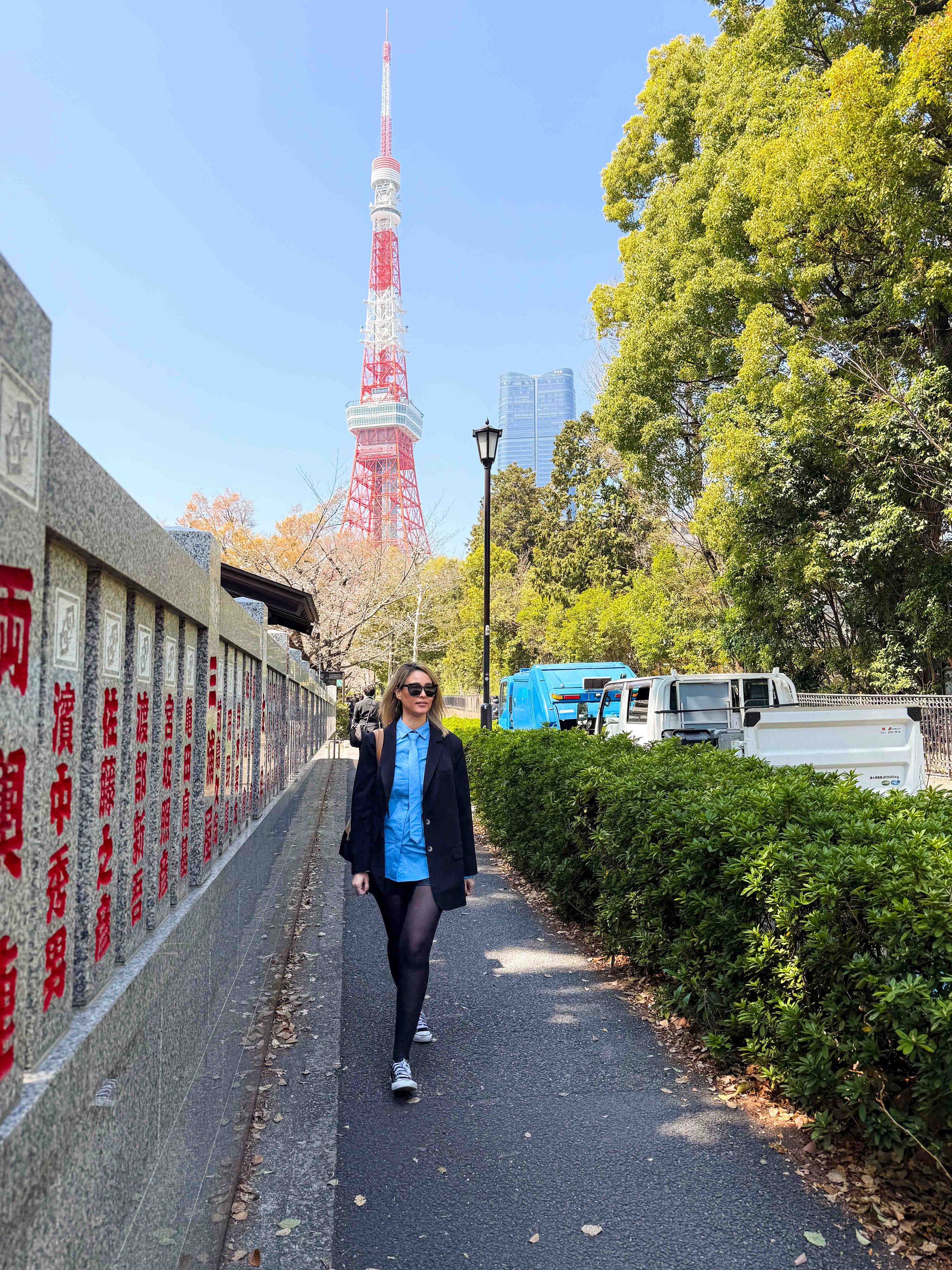
Walking towards Zojoji Temple
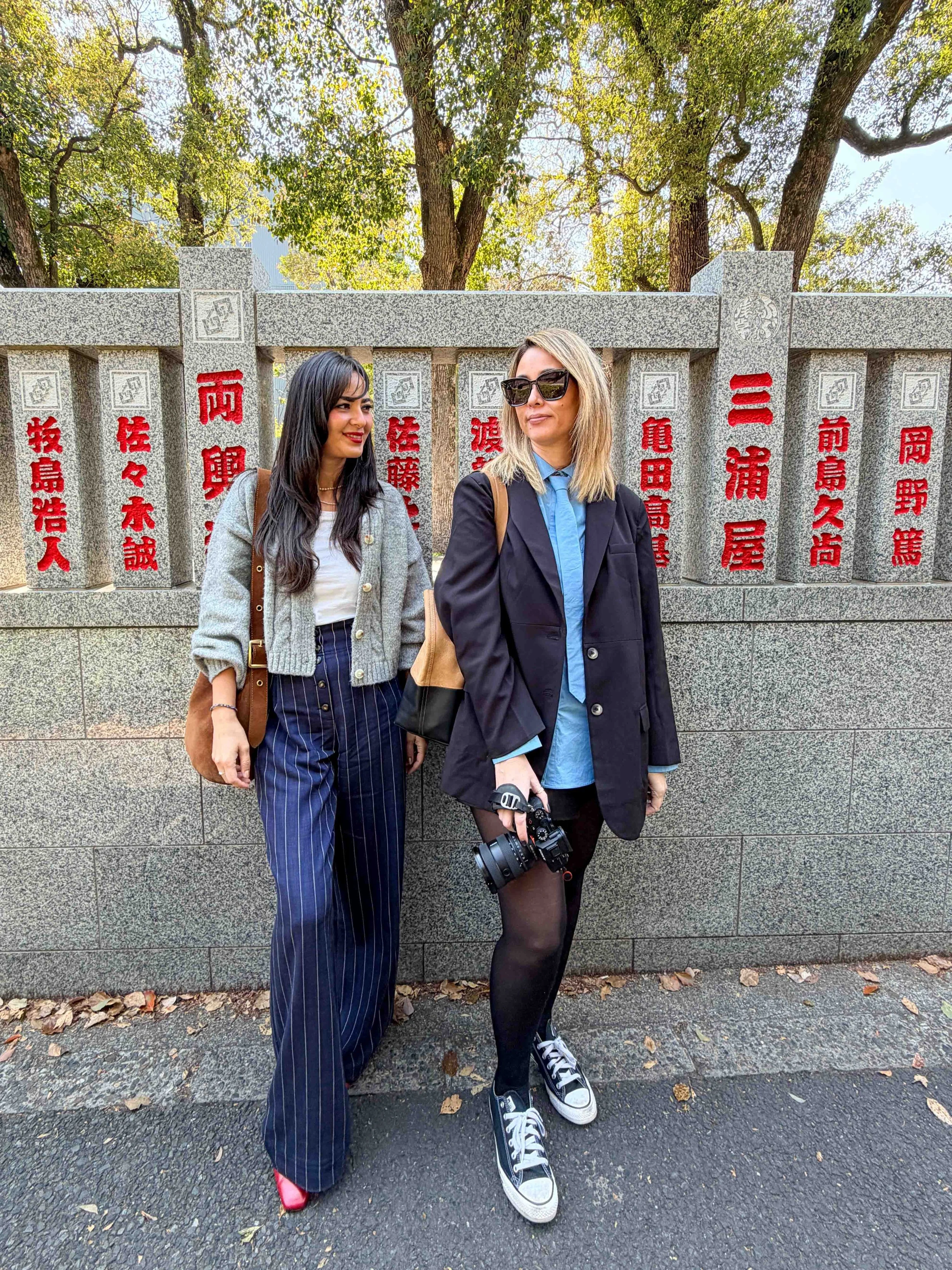
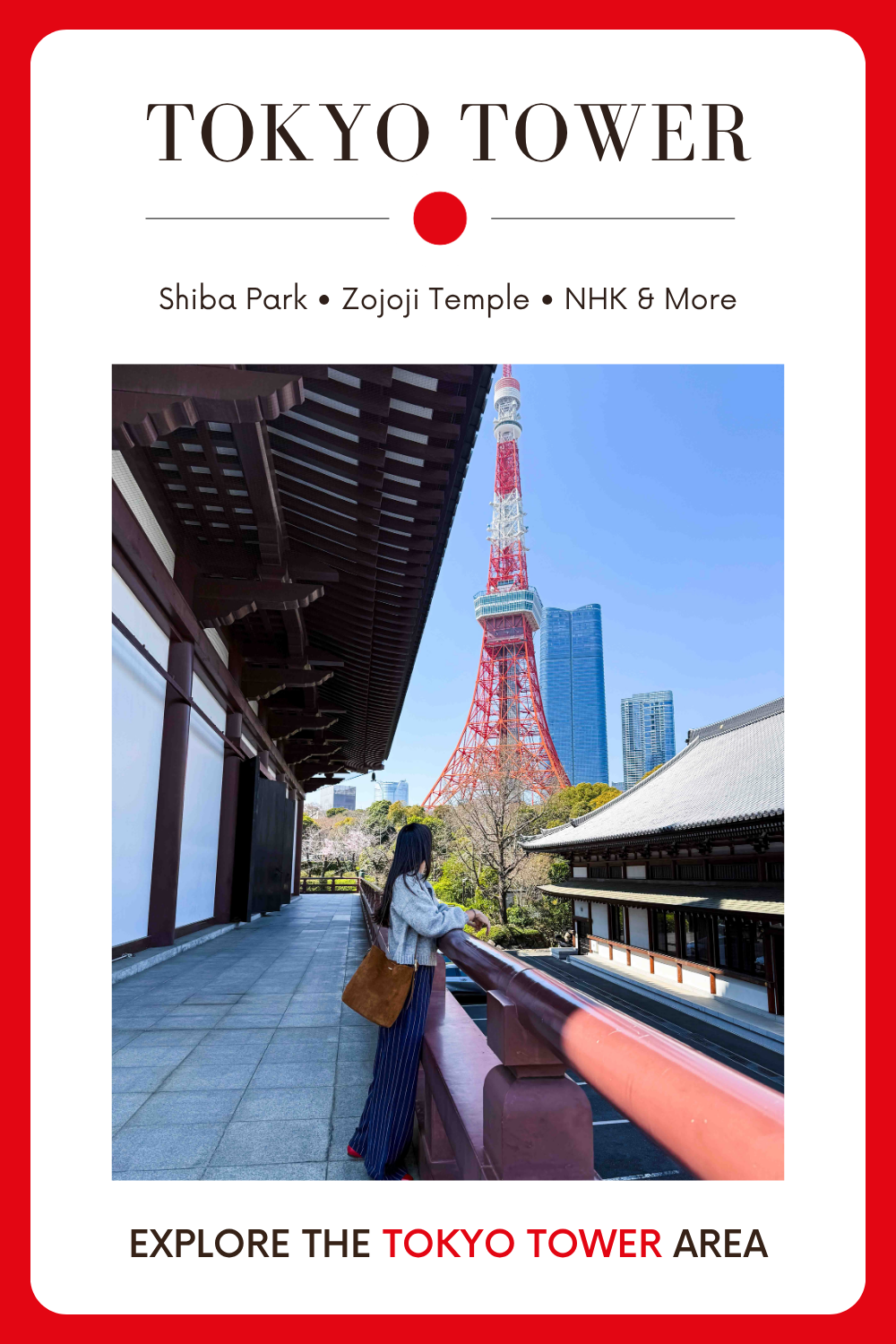
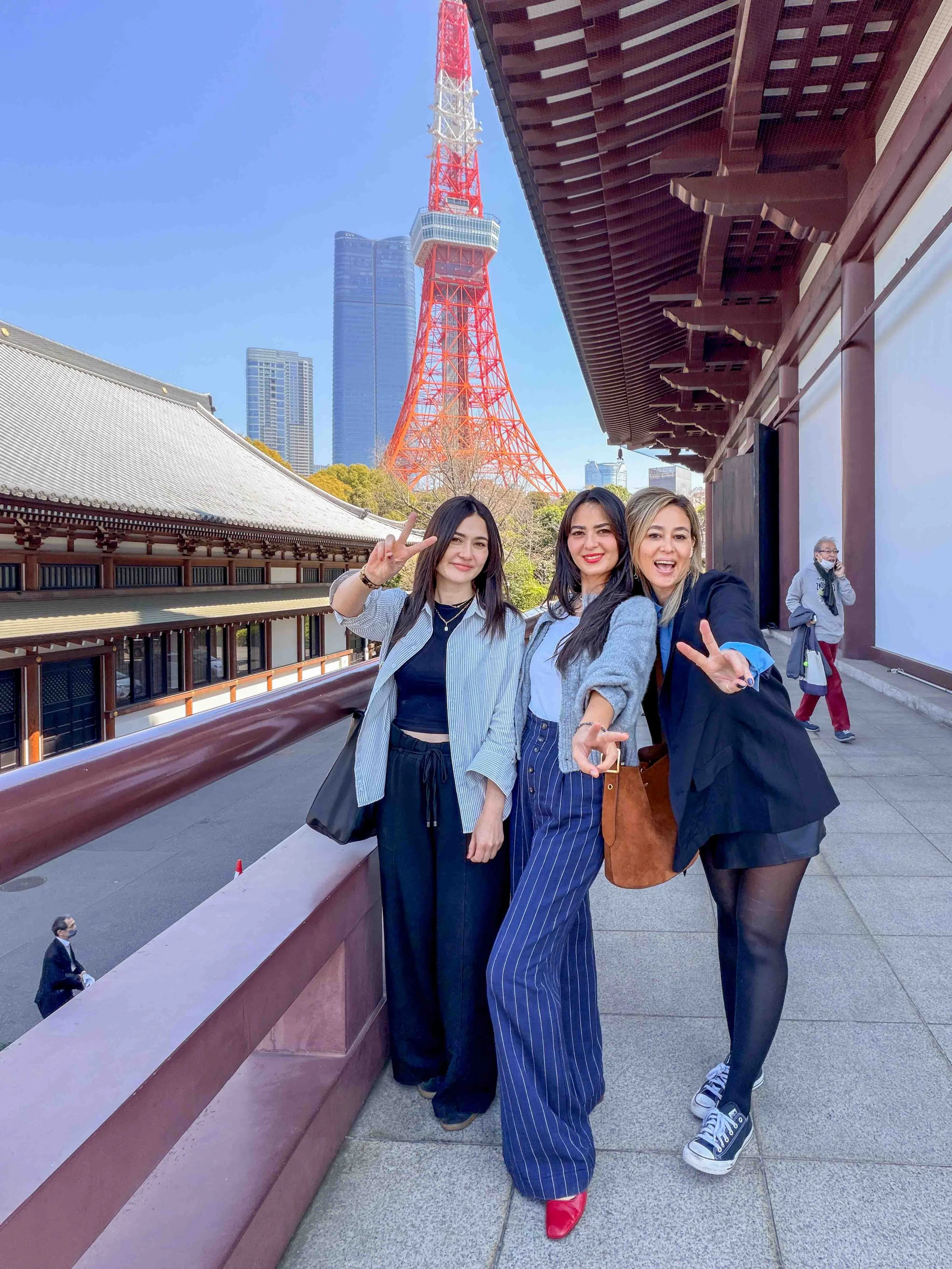
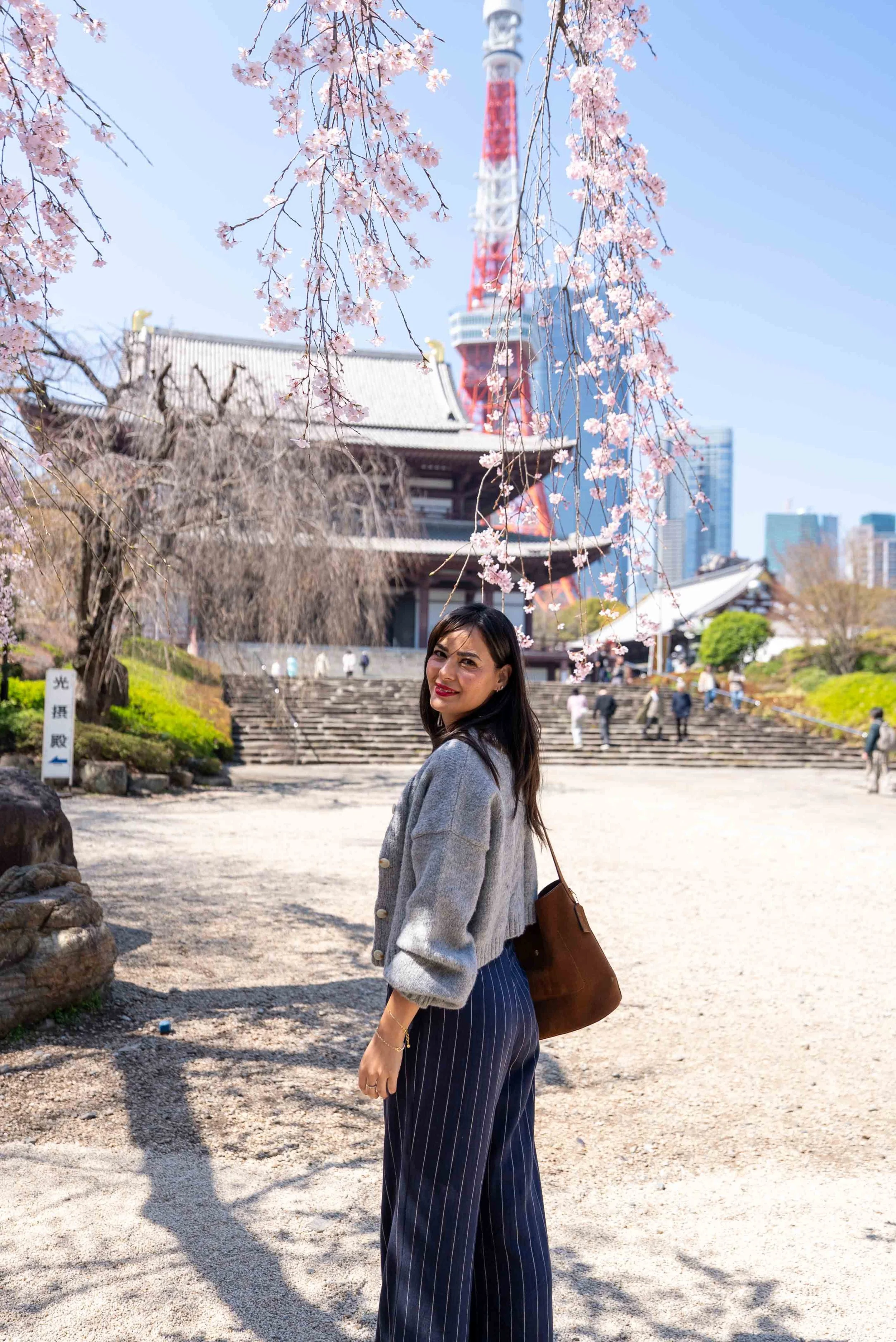
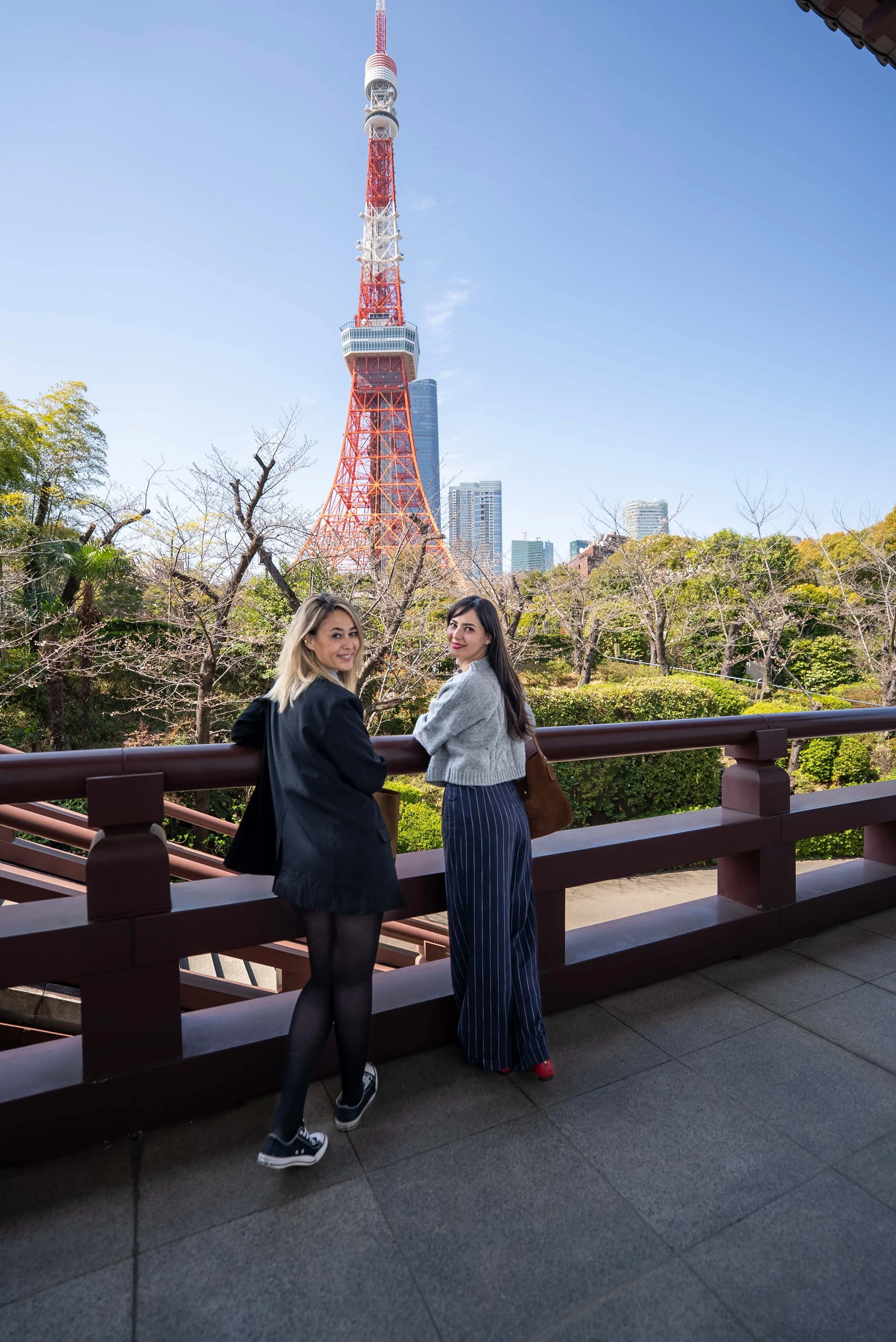
Once we reached the temple grounds, it felt peaceful and spacious. Right behind the temple, Tokyo Tower stands tall in the background, creating one of the most iconic views in the area.
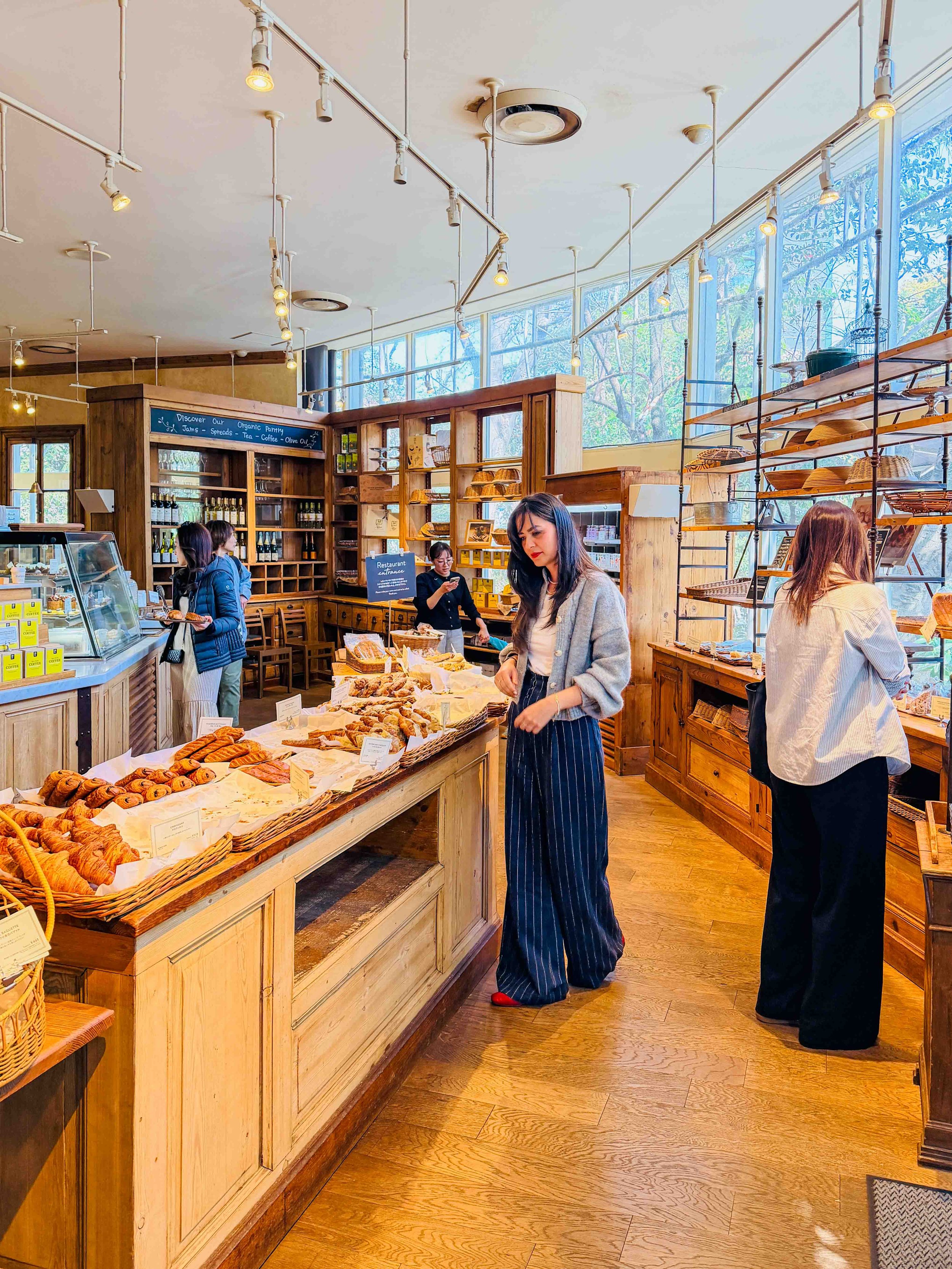
Bakery Inside Le Pain Quotidien
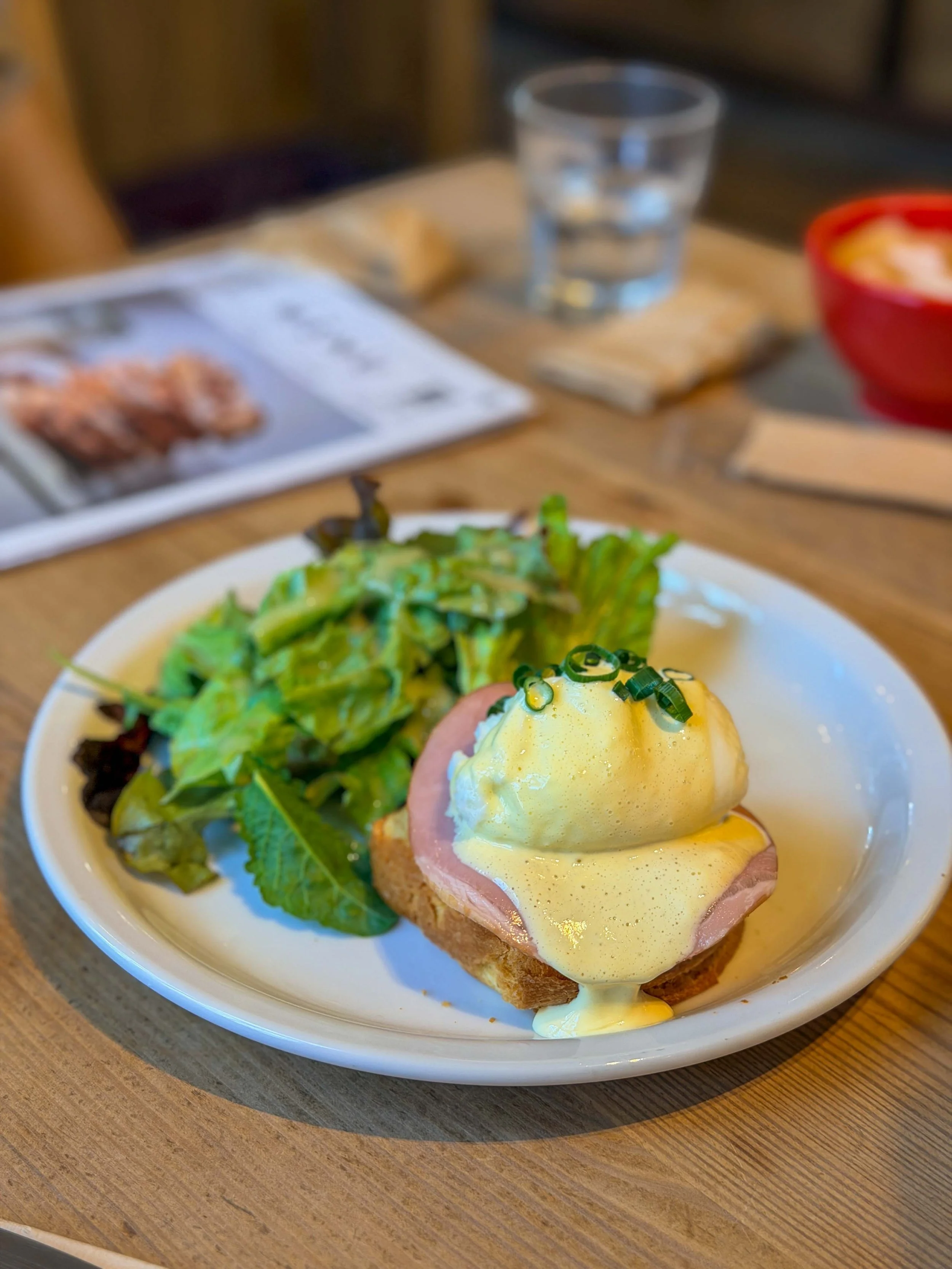
Eggs Benedict
It is such a great photo spot, especially if you love capturing traditional architecture with the modern Tokyo skyline. We also visited right around cherry blossom season, so we were lucky enough to see some of the trees just starting to bloom.
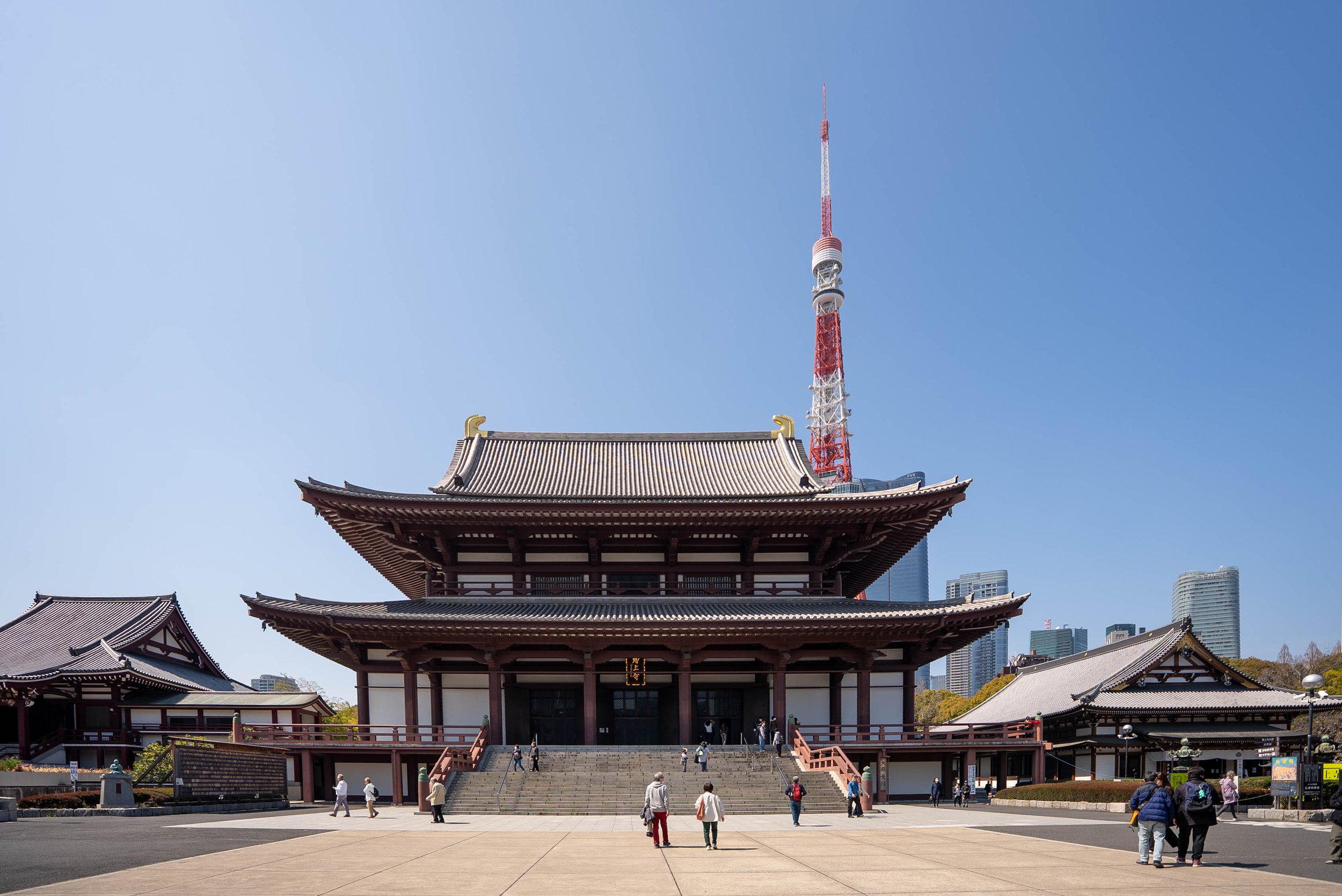
Zojoji Temple
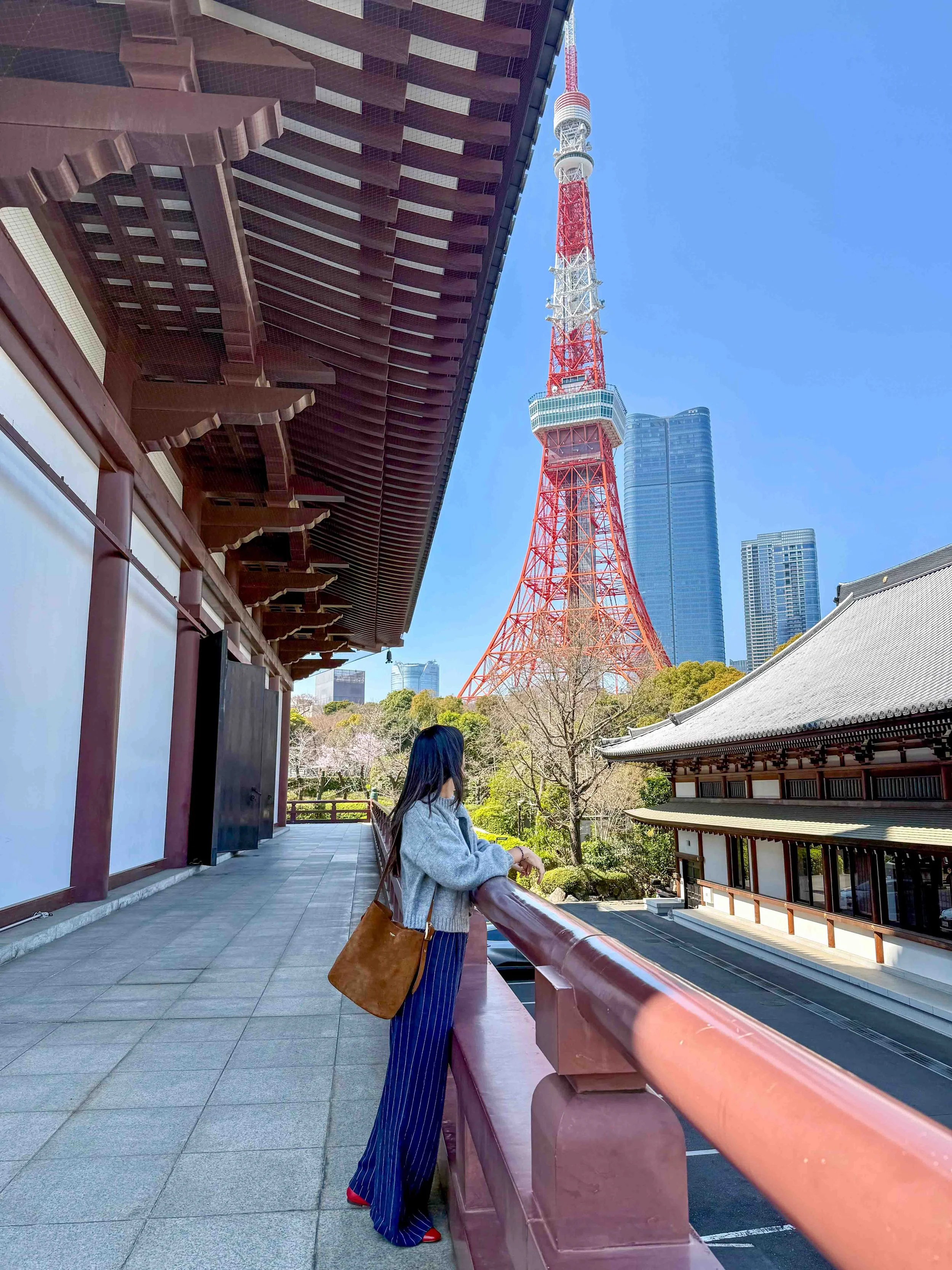
The temple itself has a long history and is an important Buddhist temple in Tokyo. We enjoyed walking around slowly, taking in the details, and seeing the rows of small Jizo statues dressed in colorful hats and bibs at the Garden of Unborn Children.
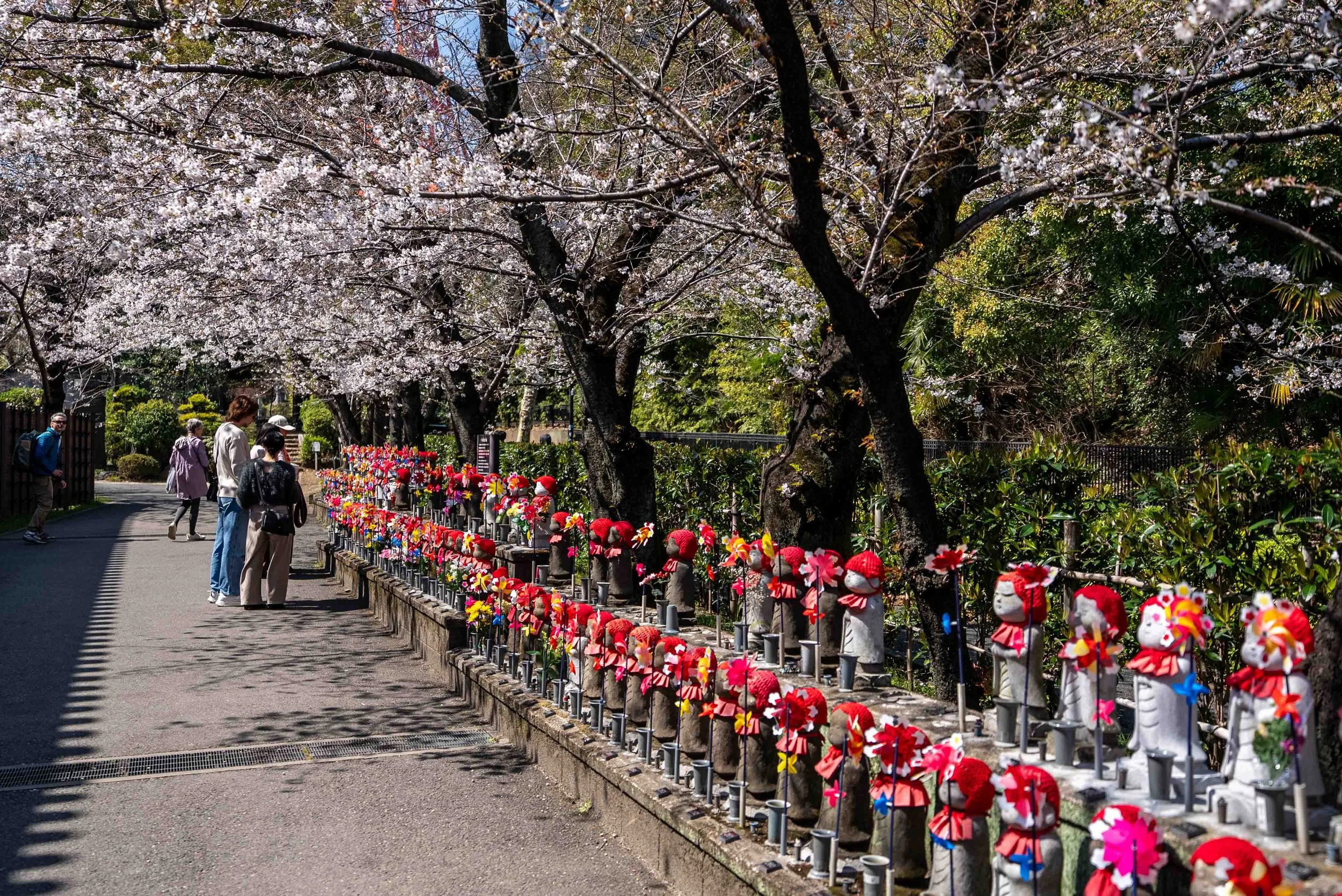
Garden of Unborn Children
Since Zojoji Temple is right next to Shiba Park, it is an easy stop to visit before or after exploring the park. It also adds a meaningful cultural stop to a Tokyo Tower walking itinerary, especially because you get that beautiful mix of old and new Tokyo in one place.
NHK Broadcasting Museum
The NHK Broadcasting Museum was such a fun stop for us, and we actually decided to go here on a whim while we were eating breakfast and discussing our plan for the day. The museum focuses on the history of broadcasting in Japan, including radio, television, and NHK’s role in Japanese media.
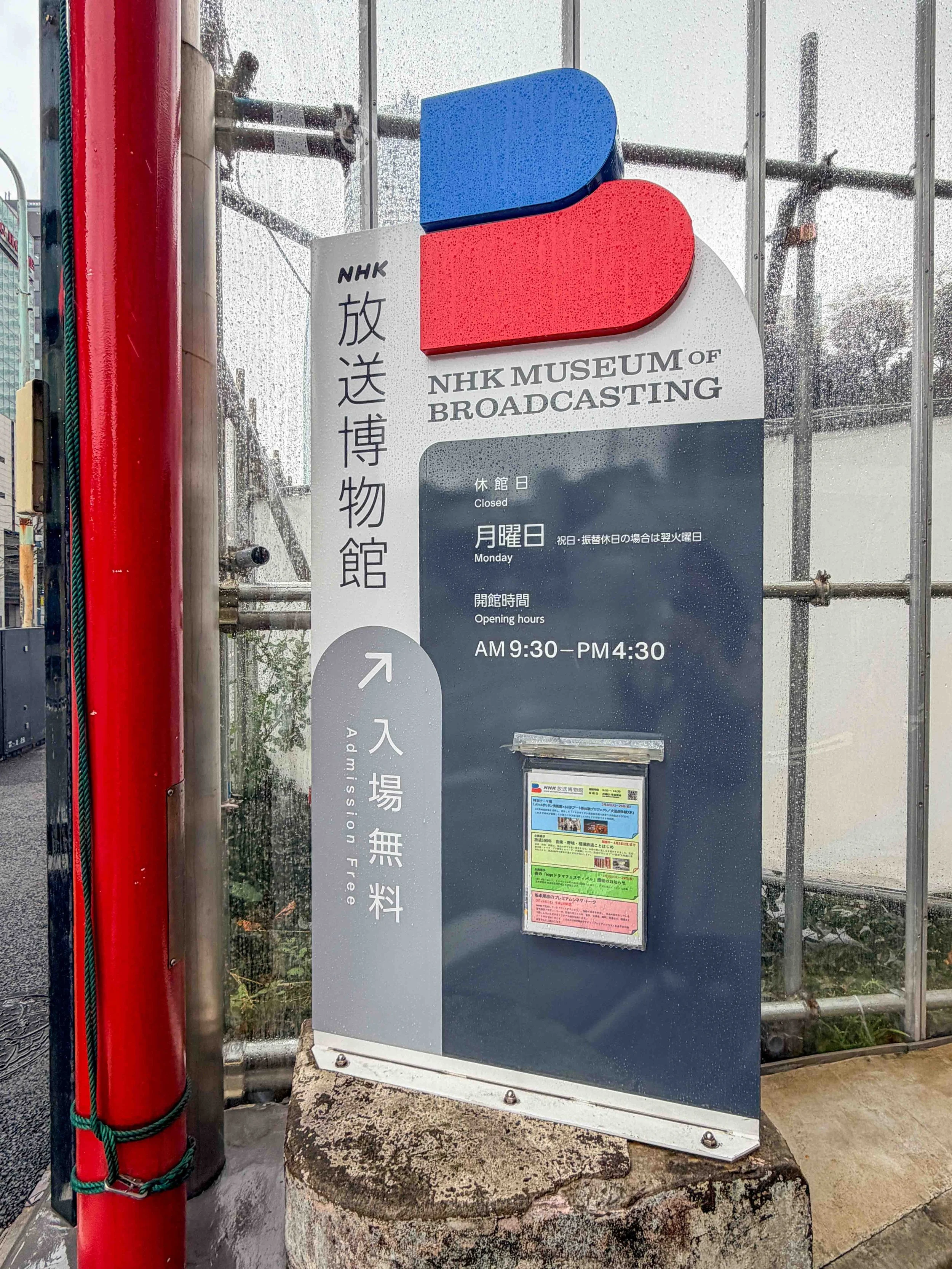
Signs to the Museum
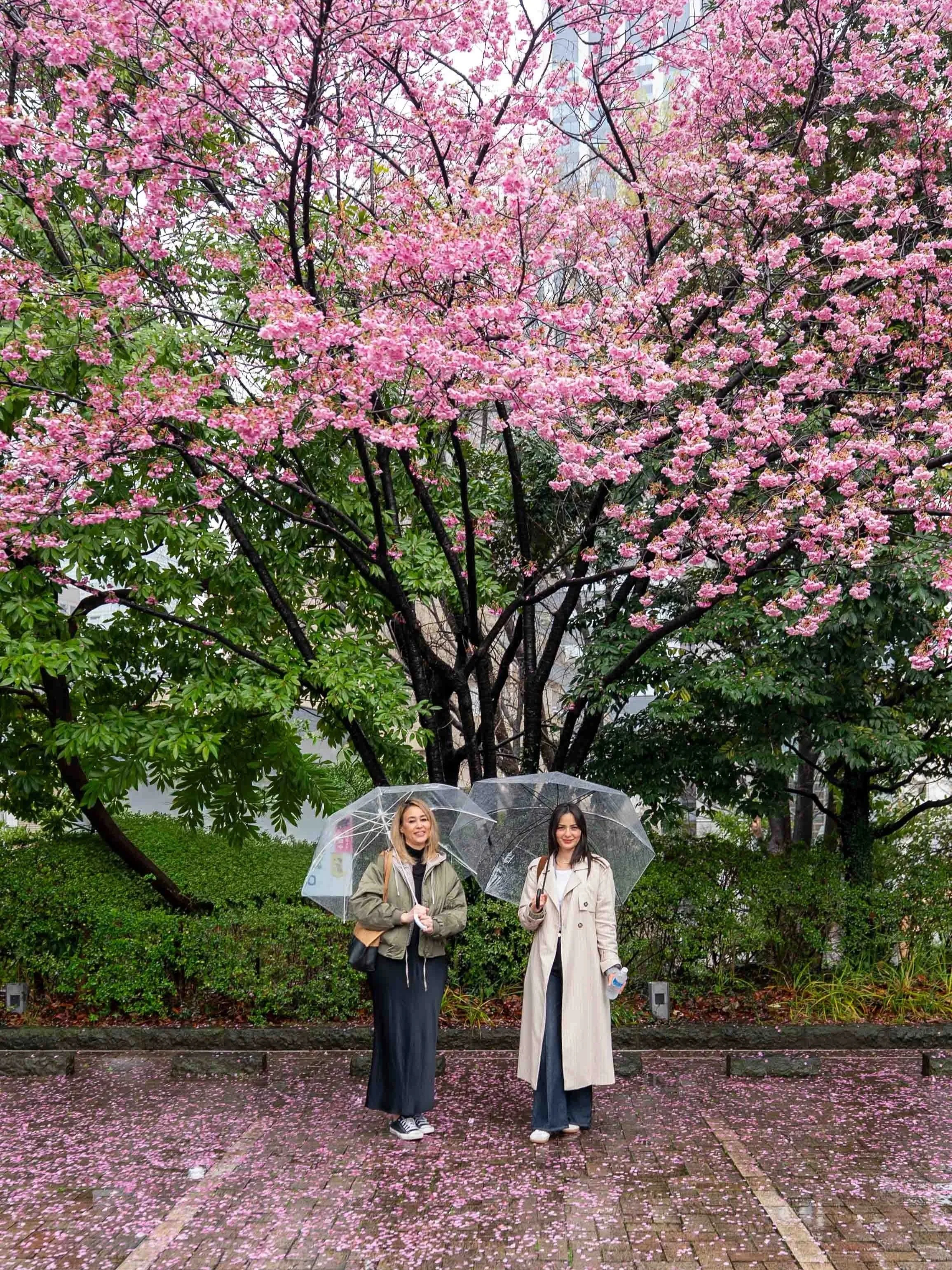
Blooming Cherry Blossoms at the Entrance
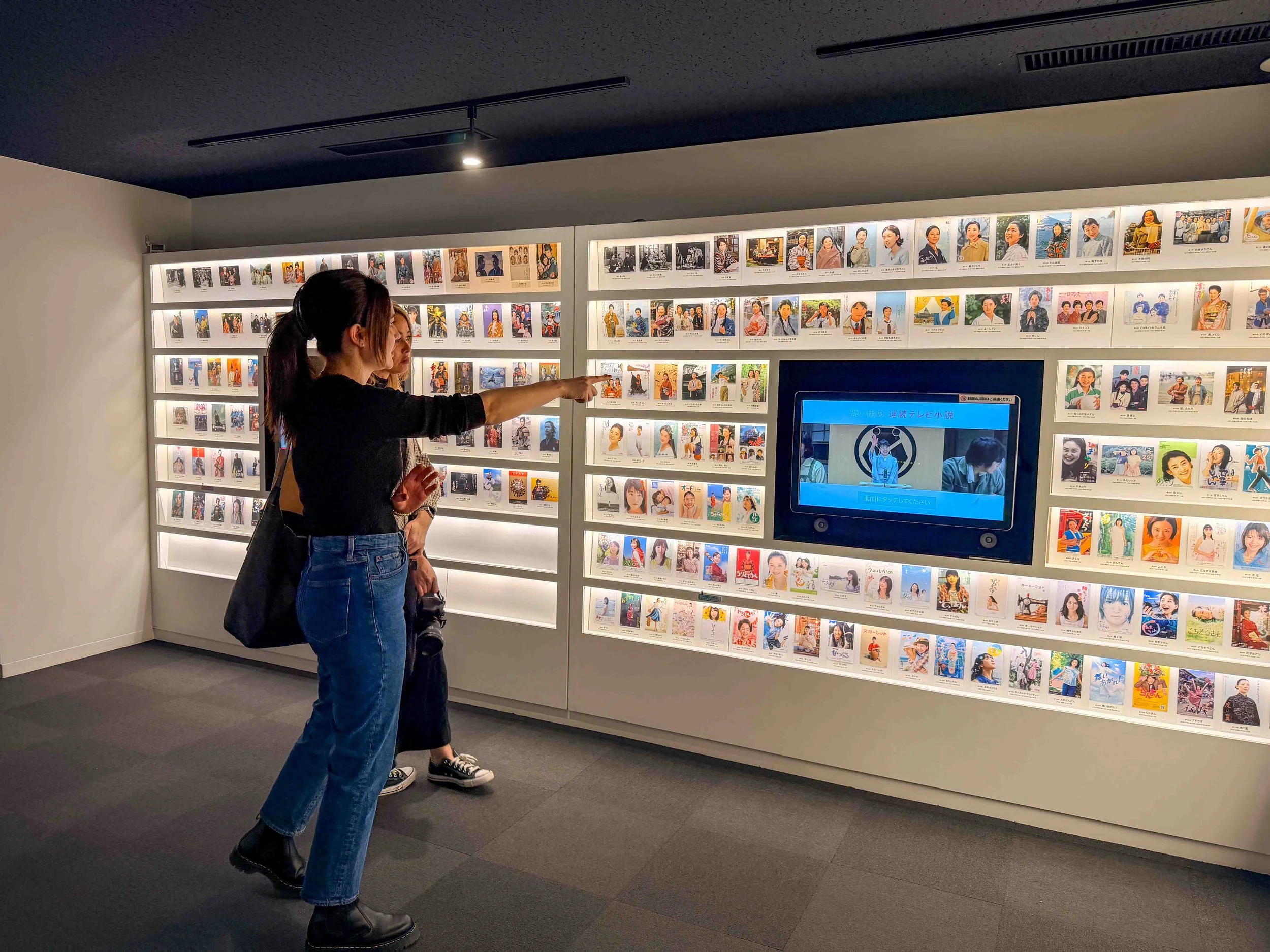
Looking at the different NHK shows throughout the years
Since we grew up in Japan, we watched a ton of shows on NHK when we were kids. Our mom even got us on a famous children’s educational program called Okaasan to Issho (Together with Mama), which was super popular at the time. Visiting this museum definitely brought back so many memories, and the best part is that it is completely free.

These characters bring back so much childhood memories
Even if you are not familiar with any of the shows broadcast on NHK, it is still a fun and interactive museum. There were sections where you could act like a real news broadcaster or weather reporter, complete with a teleprompter, lights, cameras, and a full studio setup. We spent so much time here pretending to be news anchors and had the best time.

being a newscaster is not easy
This is not one of those super touristy Tokyo attractions, which made it feel a little more local and low-key. We enjoyed browsing the exhibits and seeing vintage broadcasting equipment, old televisions, cameras, and displays related to Japanese TV history. It is also a nice indoor stop if you want a short break from walking, especially on a rainy day or hot afternoon.

Crystal reporting the weather forecast

news anchor Crystal and Cindy
Atago Jinja
Atago Jinja wasn’t initially on our itinerary, but when we exited the NHK Broadcasting Museum, we realized it was located right across the way. Since it was so close, we thought we should give it a quick visit before heading toward Toranomon Hills, Tokyo Tower, or another nearby stop.
It definitely ended up being a quick stop since the shrine area is fairly small, and it was also raining, so we didn’t want to wander around outside for too long.
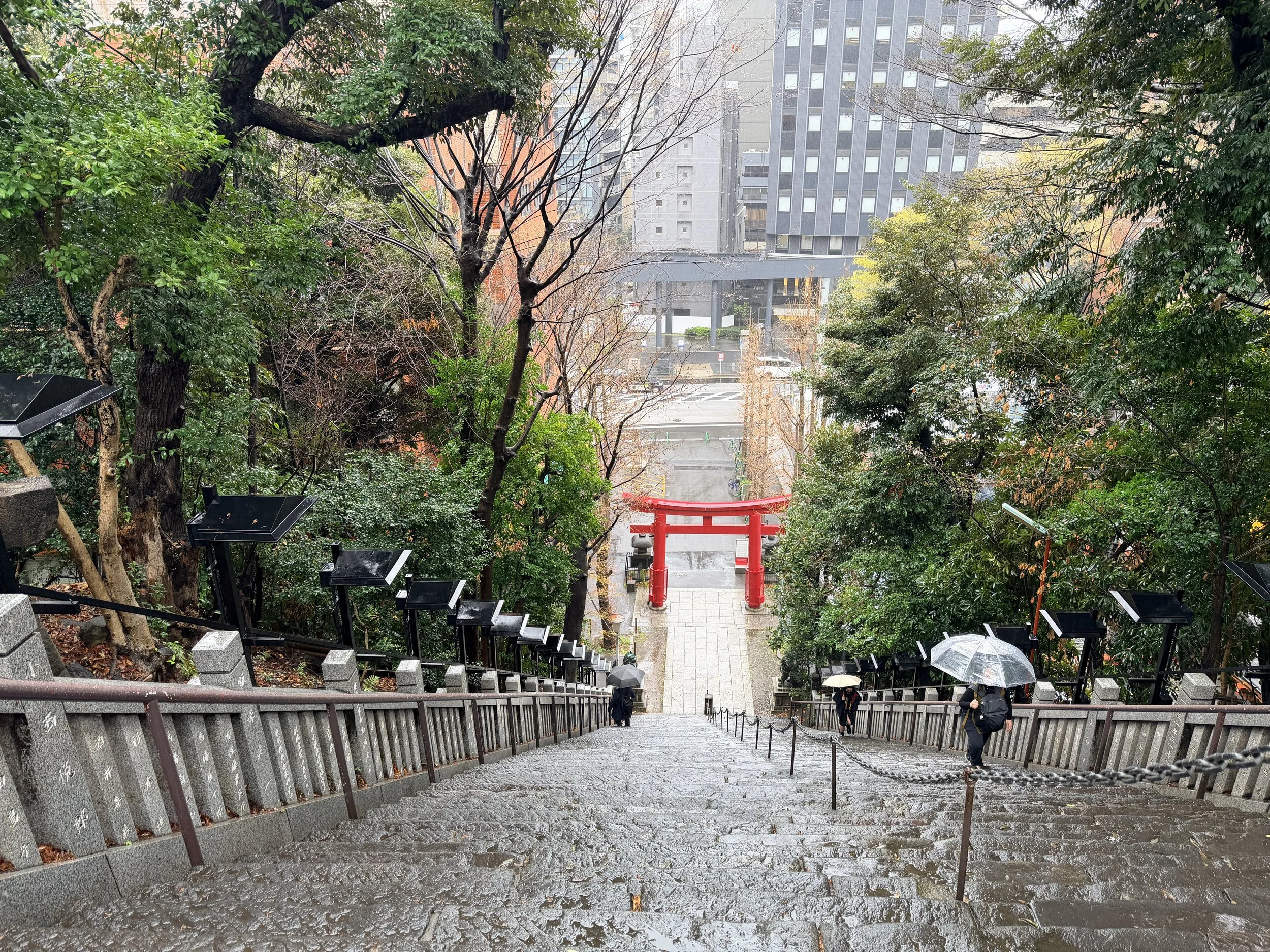
Steps to Success
Even though our visit was brief, Atago Jinja ended up being a memorable stop because it feels so tucked away from the busy streets, despite being right in the middle of Tokyo. The shrine is known for its steep stone staircase, often called the “Steps to Success.” Luckily, we were already at the top of the stairs when we arrived because it is definitely a bit of a climb. The view from the top of the staircase is gorgeous, with the city stretching out below.
The shrine grounds have a serene atmosphere, and it is a great place to slow down for a few minutes before continuing on to Toranomon Hills or Tokyo Tower. If you are putting together a walking itinerary in this area, Atago Jinja is a beautiful little detour to include.
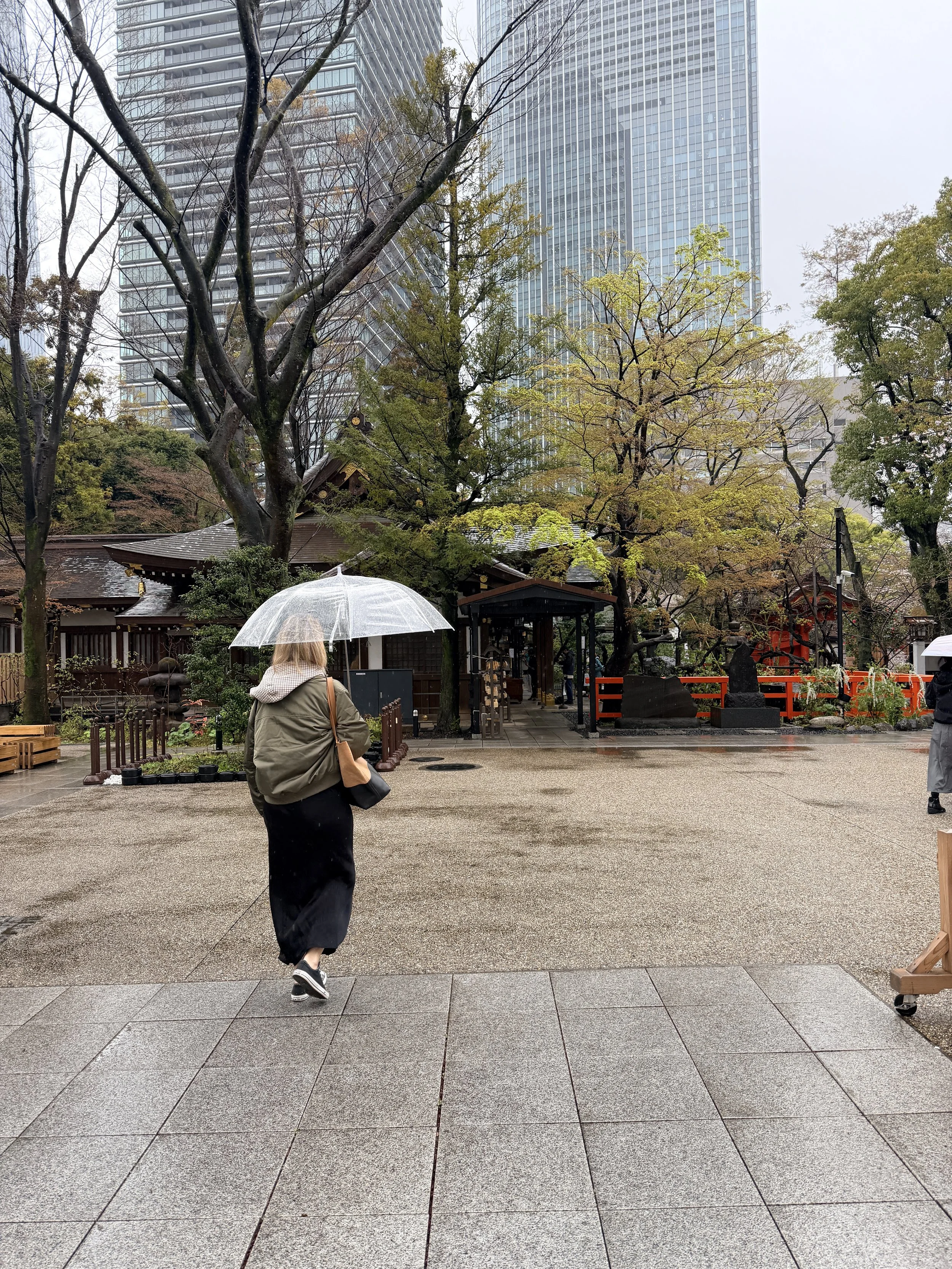
Atago Jinja entrance from NHK Museum
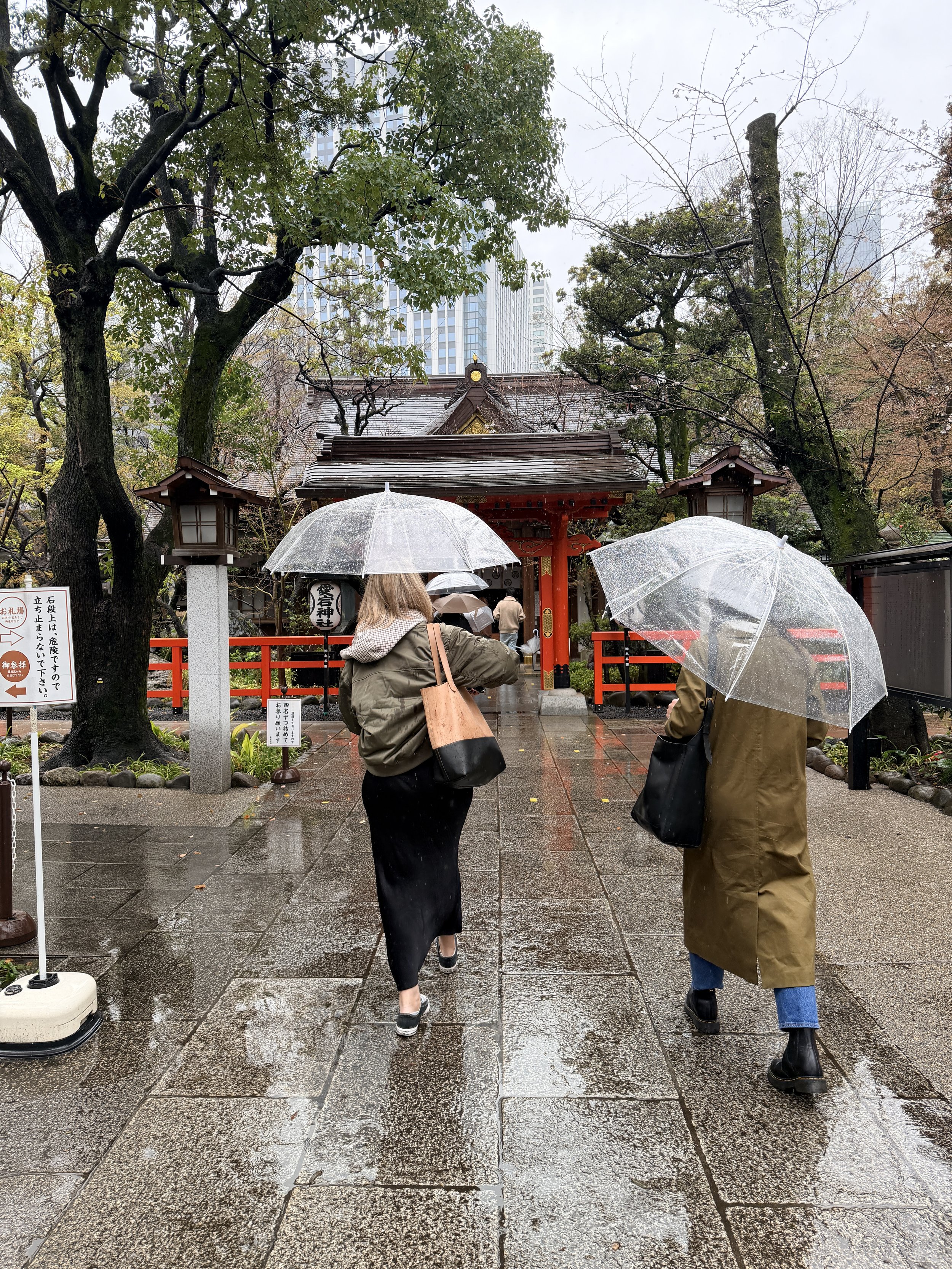
Rainy day at Atago Jinja
Toranomon Hills - Mori Tower
Mori Tower gave us a completely different feel from the temples, shrines, and parks we visited around the Tokyo Tower area. After spending time around Shiba Park, Zojoji Temple, and Atago Jinja, it was interesting to step into such a sleek and modern side of Tokyo. The area is filled with tall buildings, restaurants, shops, office spaces, and polished outdoor plazas, giving it a very upscale, contemporary energy.
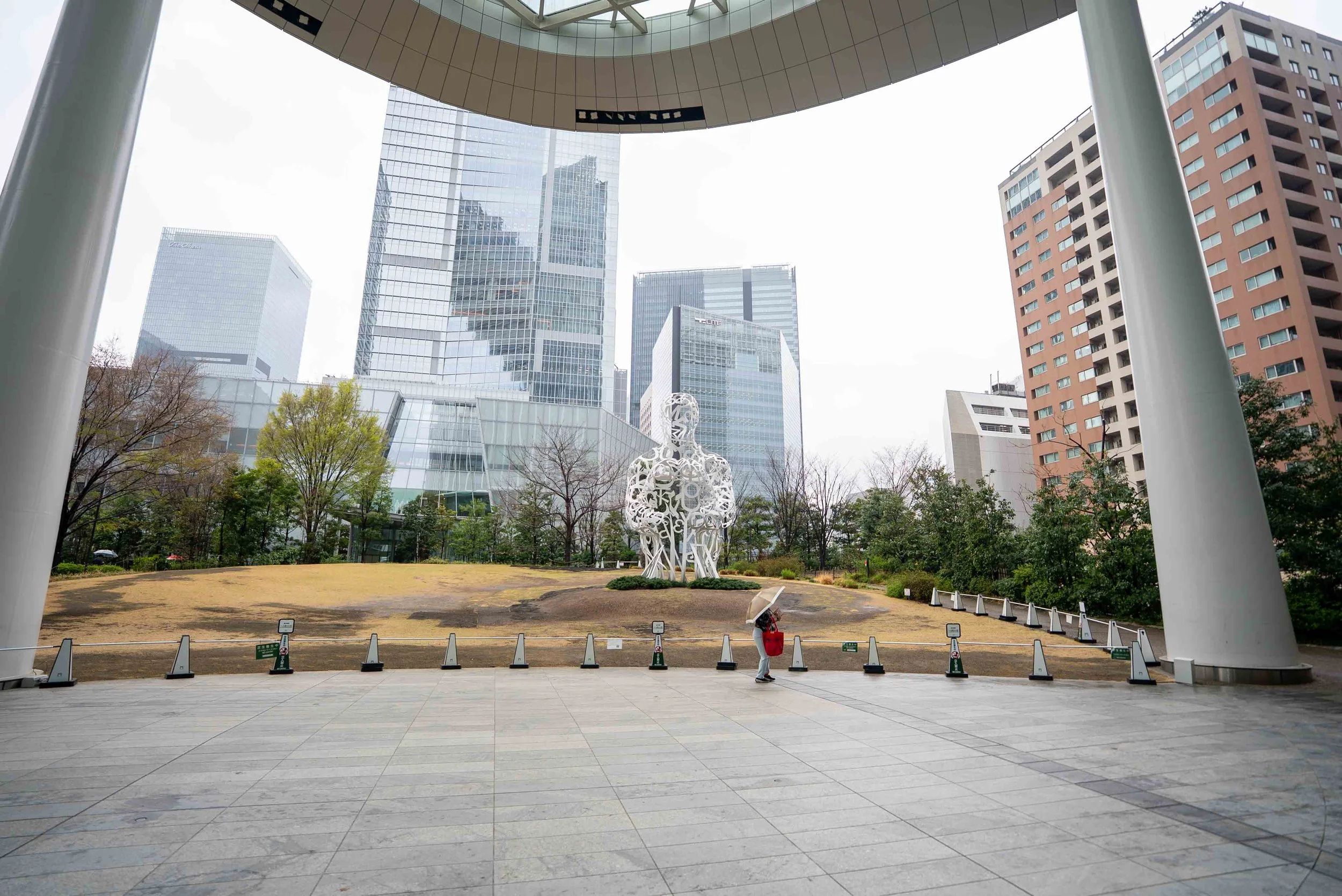
Roots Sculpture
One of the standout features outside in Oval Plaza is “Roots,” a striking 10-meter-tall sculpture of a seated figure. The sculpture is made up of letters and characters from eight different languages, symbolizing global diversity, peaceful coexistence, and cultural connection. It fits perfectly with the international and forward-thinking feel of the Toranomon area.
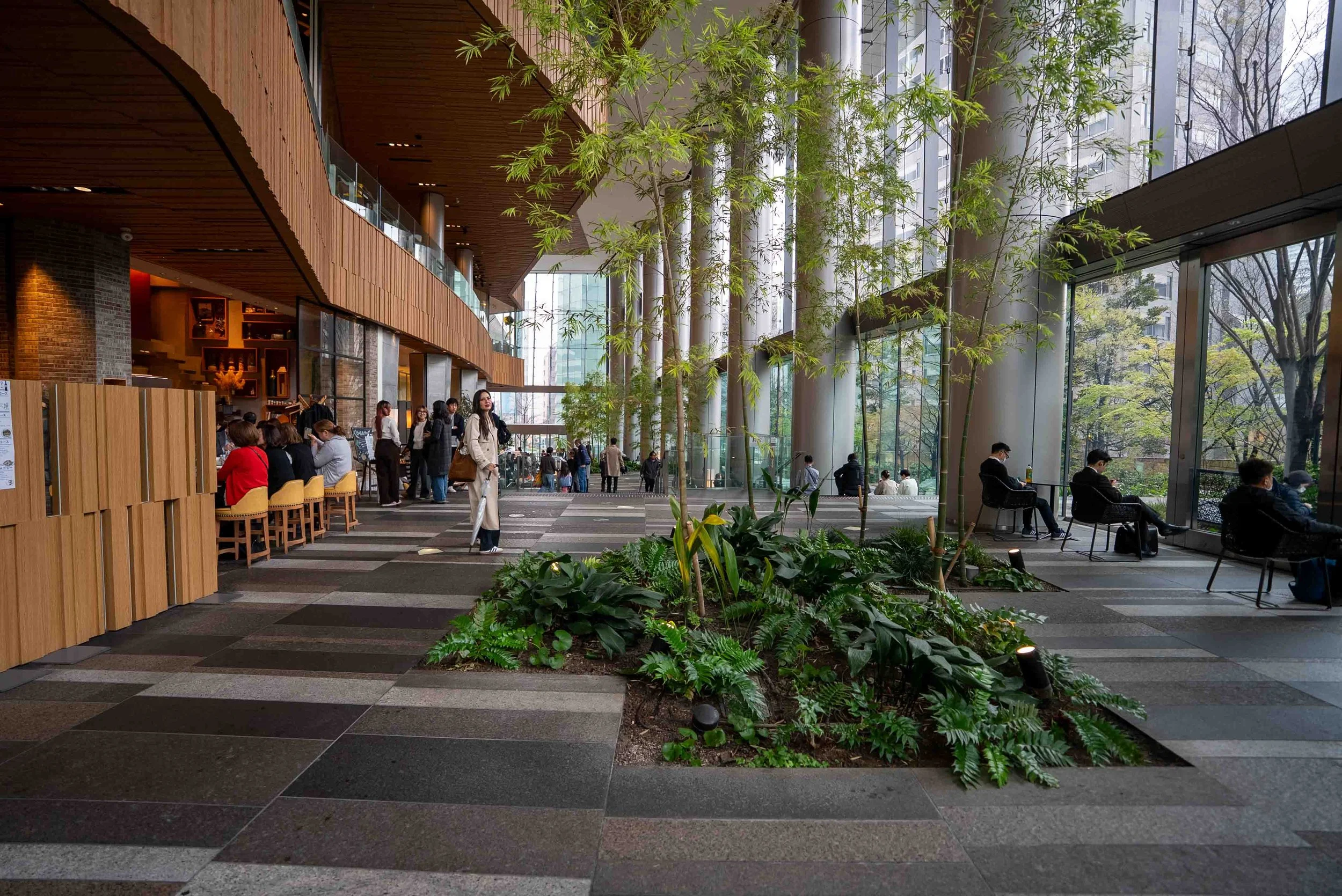
Inside Toranomon Hills - Mori Tower
There are also plenty of dining options here, which makes it a great place to stop for a meal, coffee, or a quick break. The choices can feel a little overwhelming because there are so many restaurants, with cuisine ranging from Japanese to Thai and more.
What we loved most about the interior of Mori Tower was how beautifully it blurred the line between indoors and outdoors. With towering glass walls, lush garden beds, and warm wood-paneled terraces overhead, the space felt bright, airy, and open, almost like an urban oasis, but with all the comfort of being inside.
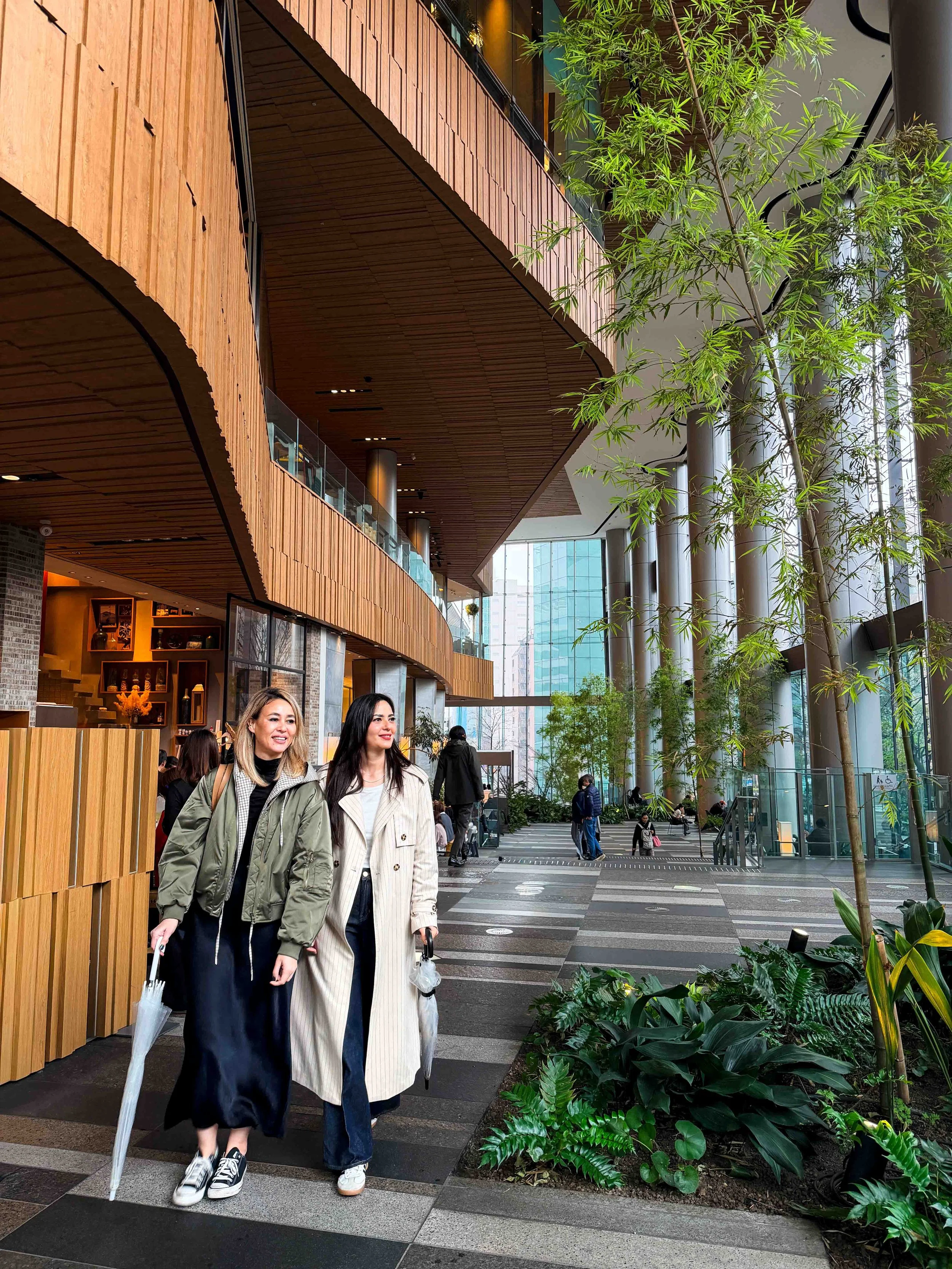
Trying to decide where to eat lunch
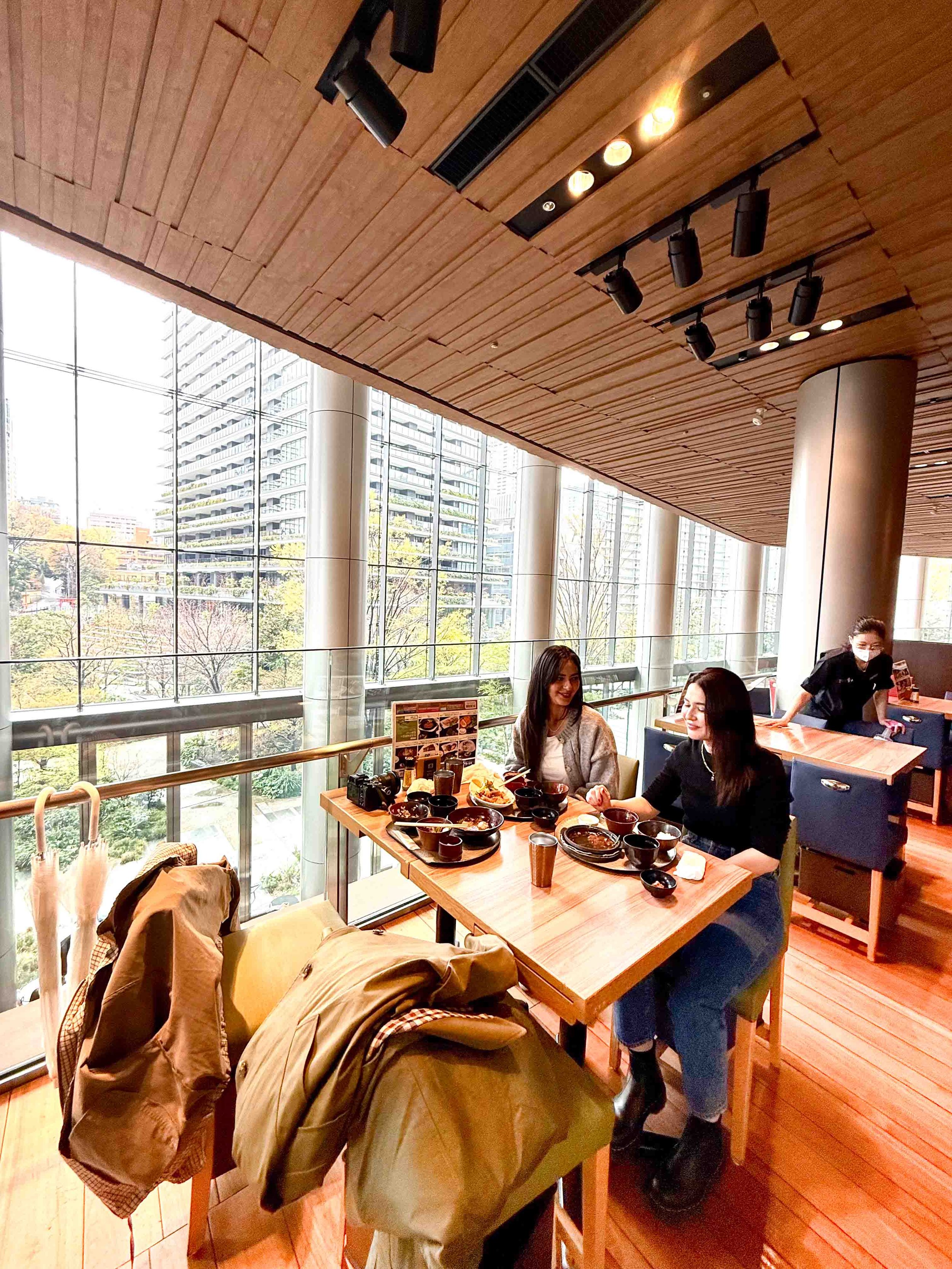
Lunch at oto Oto - Japanese Cuisine
If you enjoy seeing both the traditional and modern sides of Tokyo in one day, adding Toranomon Hills to your Tokyo Tower walking itinerary makes the route feel more complete. It is a nice contrast to the quieter temples and shrines nearby and gives you a glimpse of Tokyo’s more polished, contemporary side.
Tokyo Tower: The Perfect Final Stop
We saved Tokyo Tower as the final stop in this guide, and it made the perfect ending to our time exploring the area. We grew up in Japan, so we could not believe that we had never actually gone inside Tokyo Tower before. It is funny how sometimes the places you live near, or see all the time, are the ones you end up not visiting for some reason.
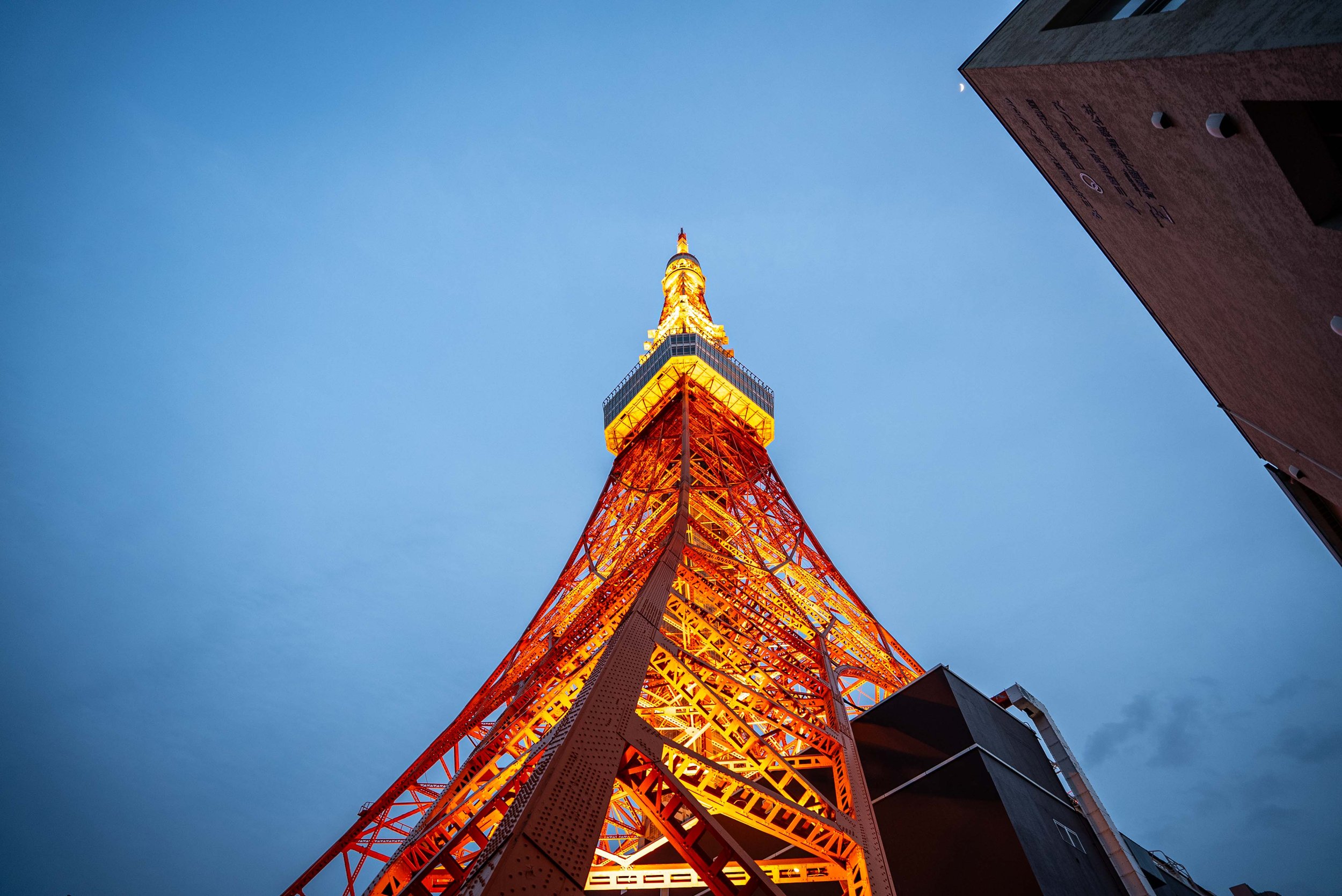
Tokyo Tower
After taking in the sweeping views of the Tokyo Tower from the outside, it was finally time to explore its interior up close. There are a few different ticket options when visiting Tokyo Tower, and we purchased tickets that included access to both the Main Deck and the Top Deck. The Main Deck was spacious and did not feel overly crowded at all. There was plenty of room to take in the views without feeling rushed.
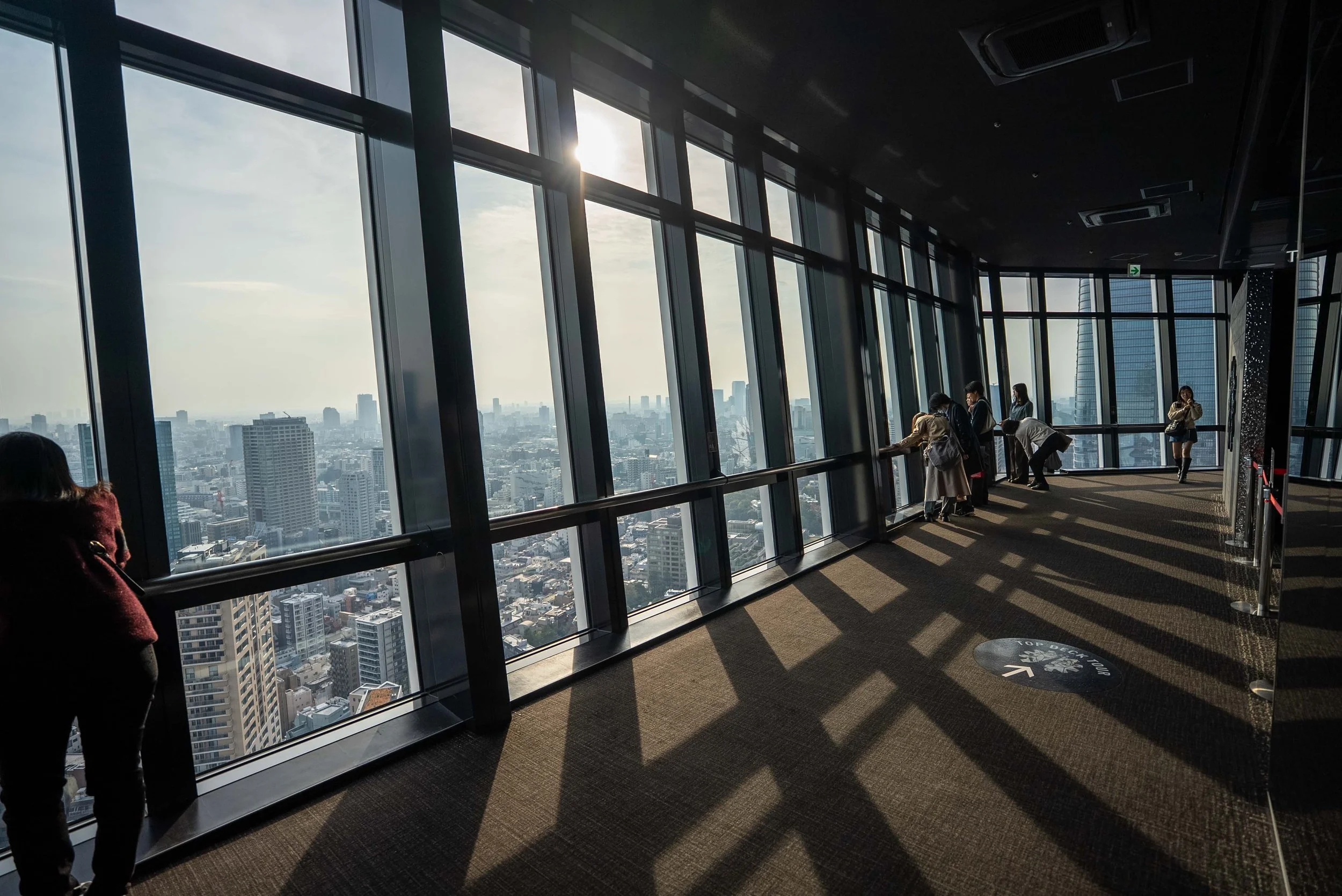
Tokyo Tower Main Deck
Even though we spent a little extra to get access to the Top Deck, we actually enjoyed the Main Deck much more. The Top Deck was fairly small and the views didn’t feel that much better than what we had on the Main Deck. They try to make the trip up there feel special by offering a complimentary drink and a quick photo-op, but that part passes so quickly it hardly seems worth it.
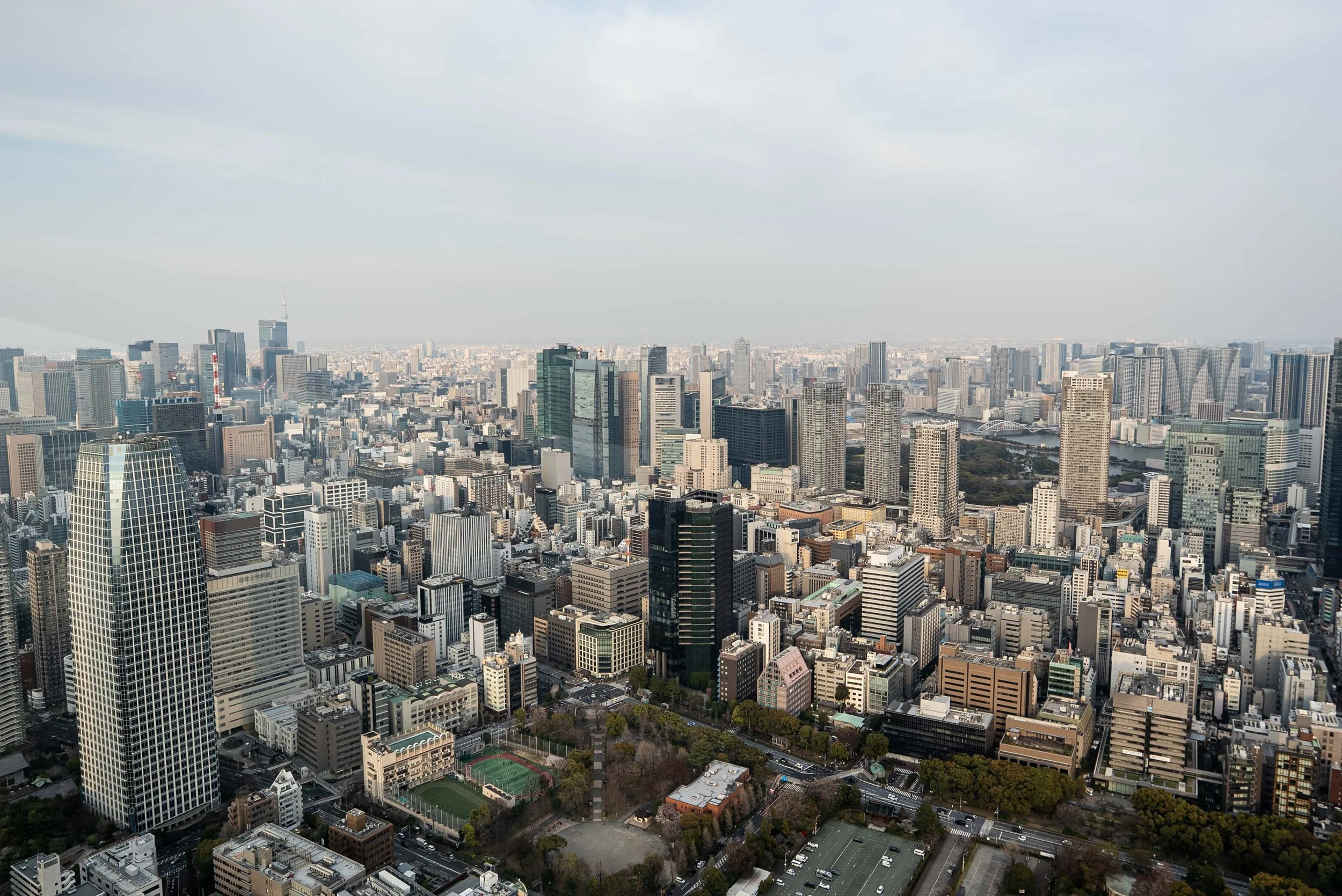
View of Tokyo from the Main Deck
We received a card with instructions on how to obtain a digital copy of the photo that had been taken, but for some reason the QR code wouldn’t scan when I tried. I should have given it another go, but when you’re traveling, small things like that often slip my mind because my brain is so exhausted and drained by the end of the day.
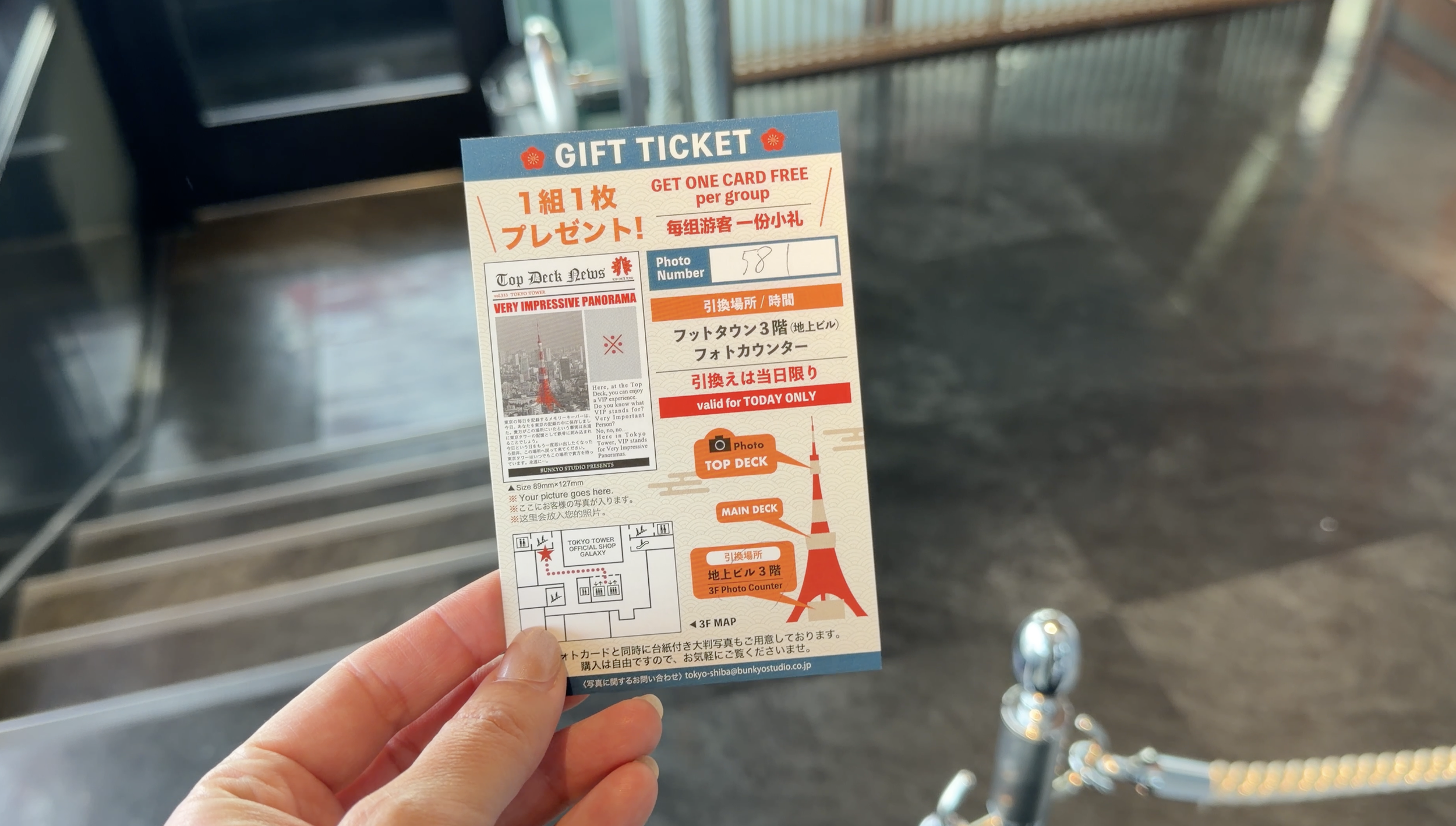
Top Deck Exclusive Photo Gift Ticket
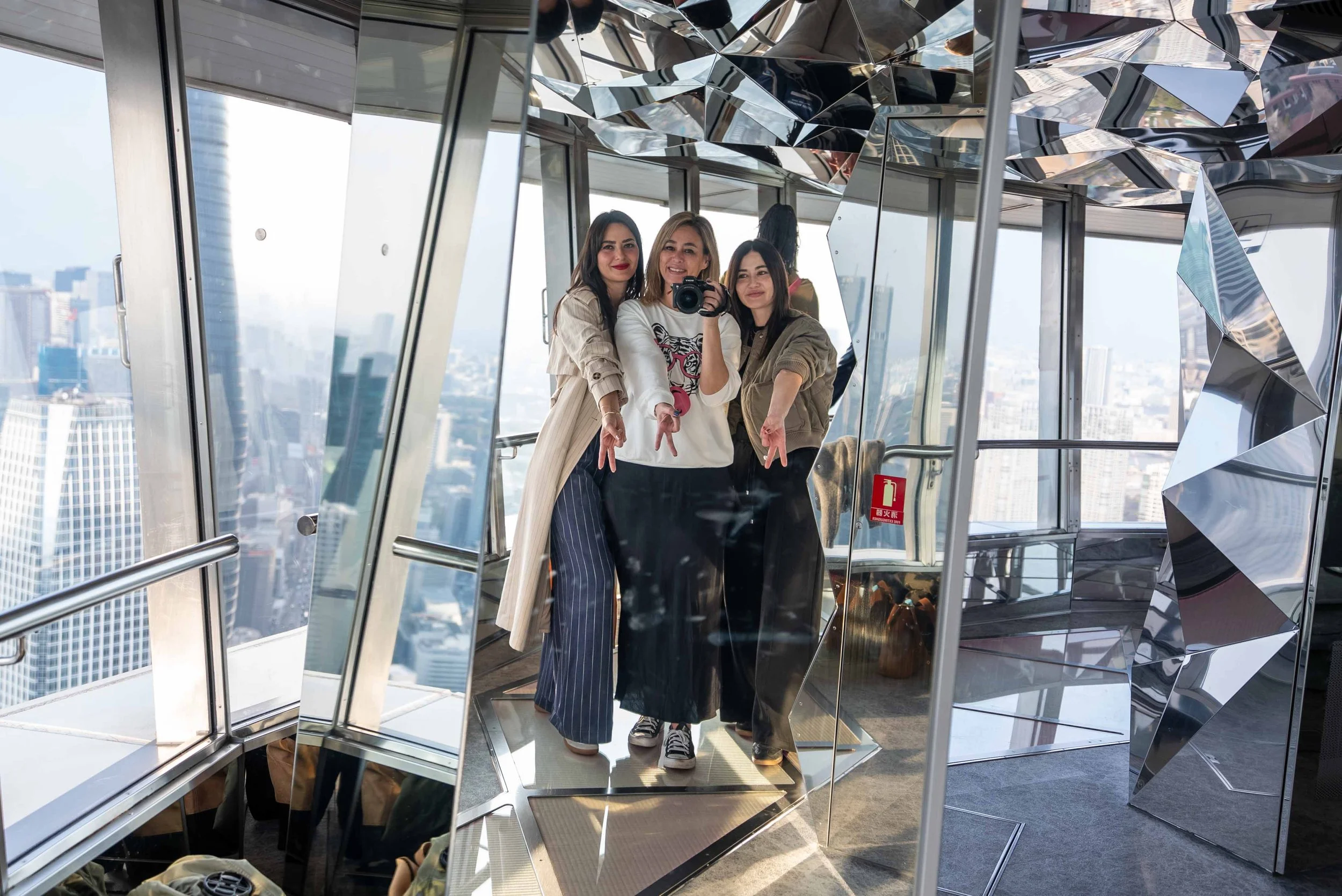
Tokyo Tower Top Deck
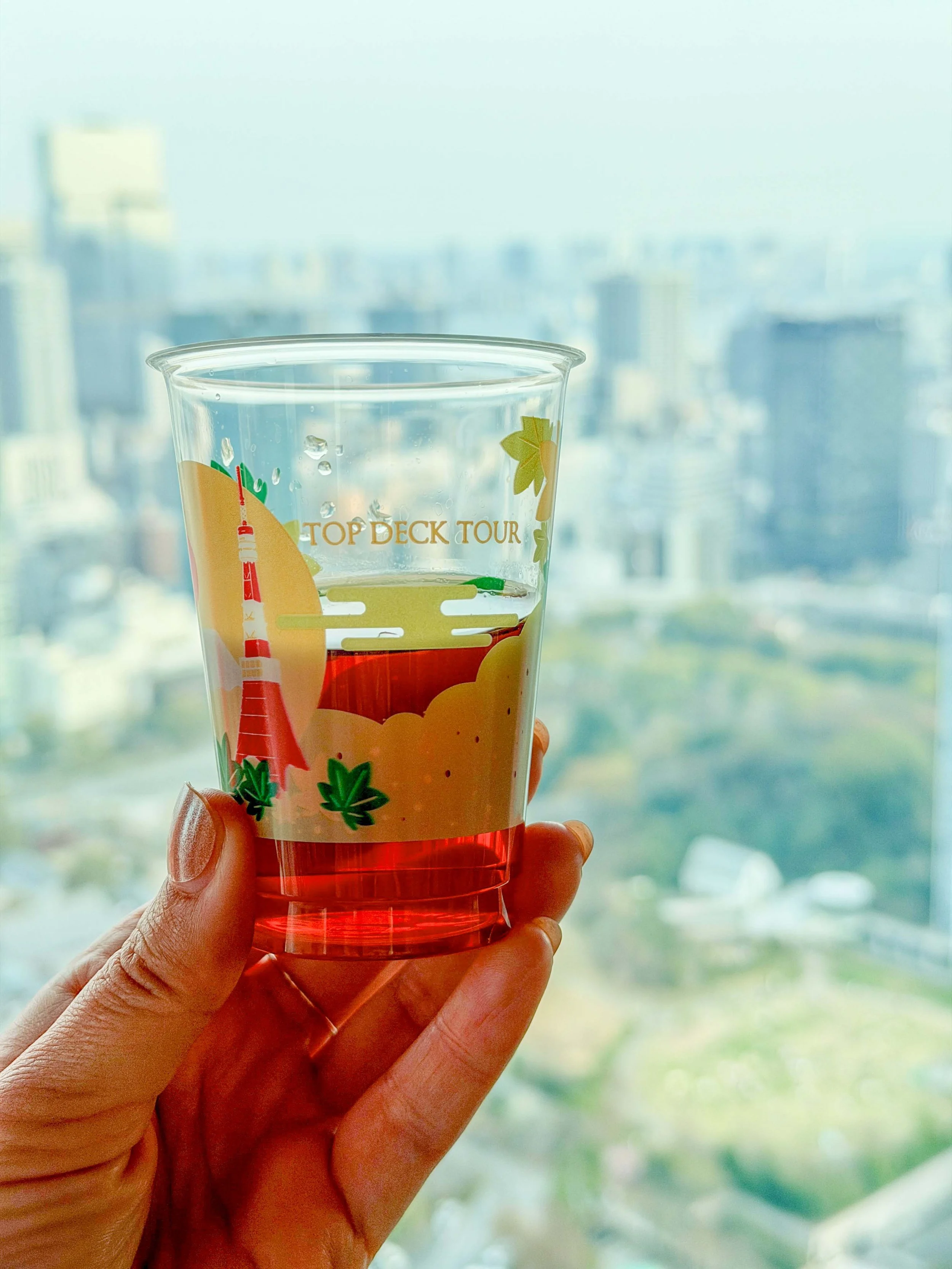
Complimentary Drink
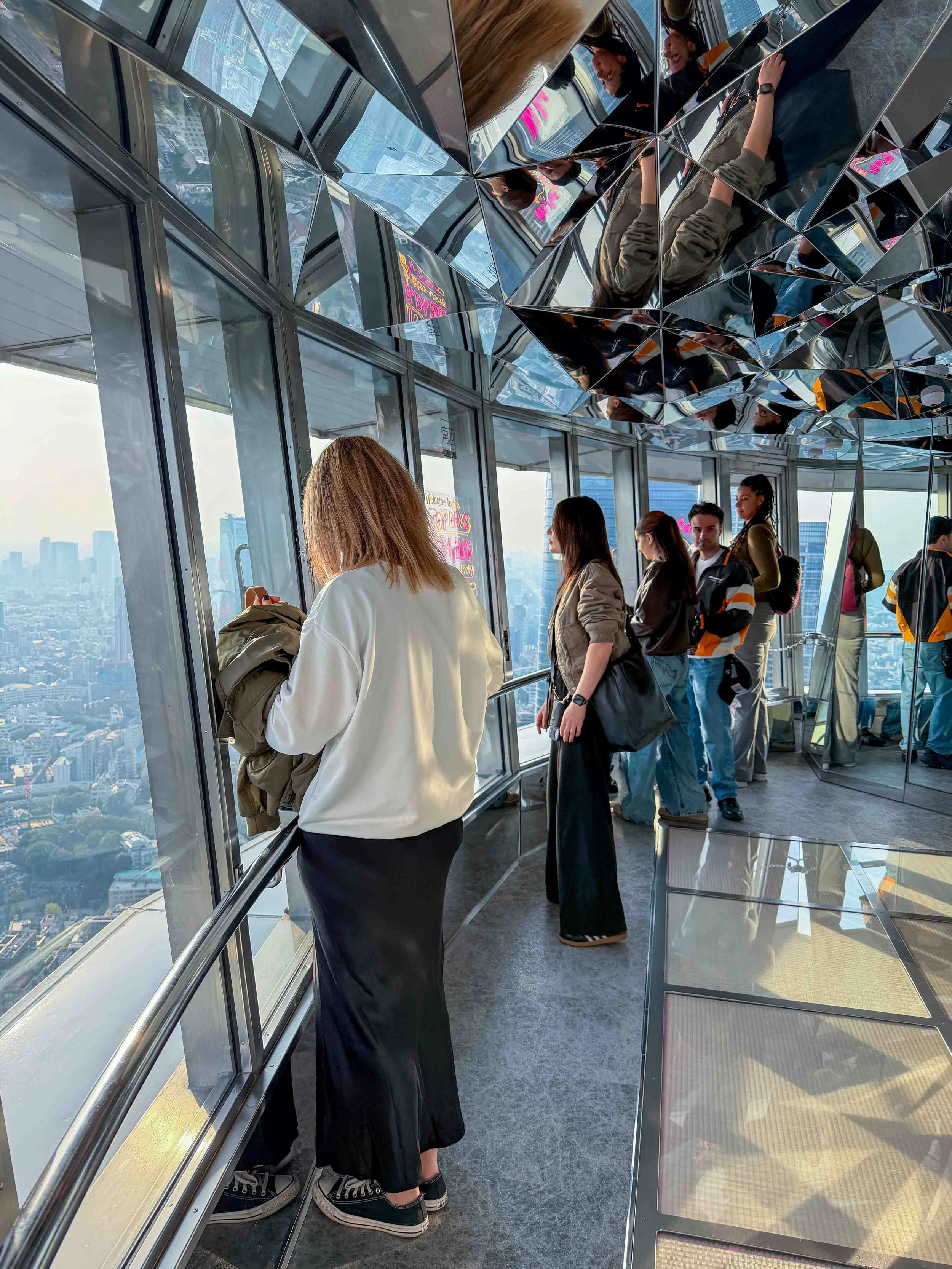
Top Deck Views
After enjoying the views, we headed back downstairs where there were a variety of shops and eateries. We also came across a fun machine that printed out a newspaper front page from the day you were born. We thought this was such a cute idea and decided to give it a try. Of course, it was all written in Japanese, but with Google Translate, it was easy to read the headlines and see what was happening on our birthdays.
Once we exited Tokyo Tower, the tower was glowing in its bright red-orange color against the evening sky. It was such a beautiful sight as we walked back to our hotel. After finally going inside and learning more about it during our visit, we definitely left with a greater appreciation for Tokyo Tower.
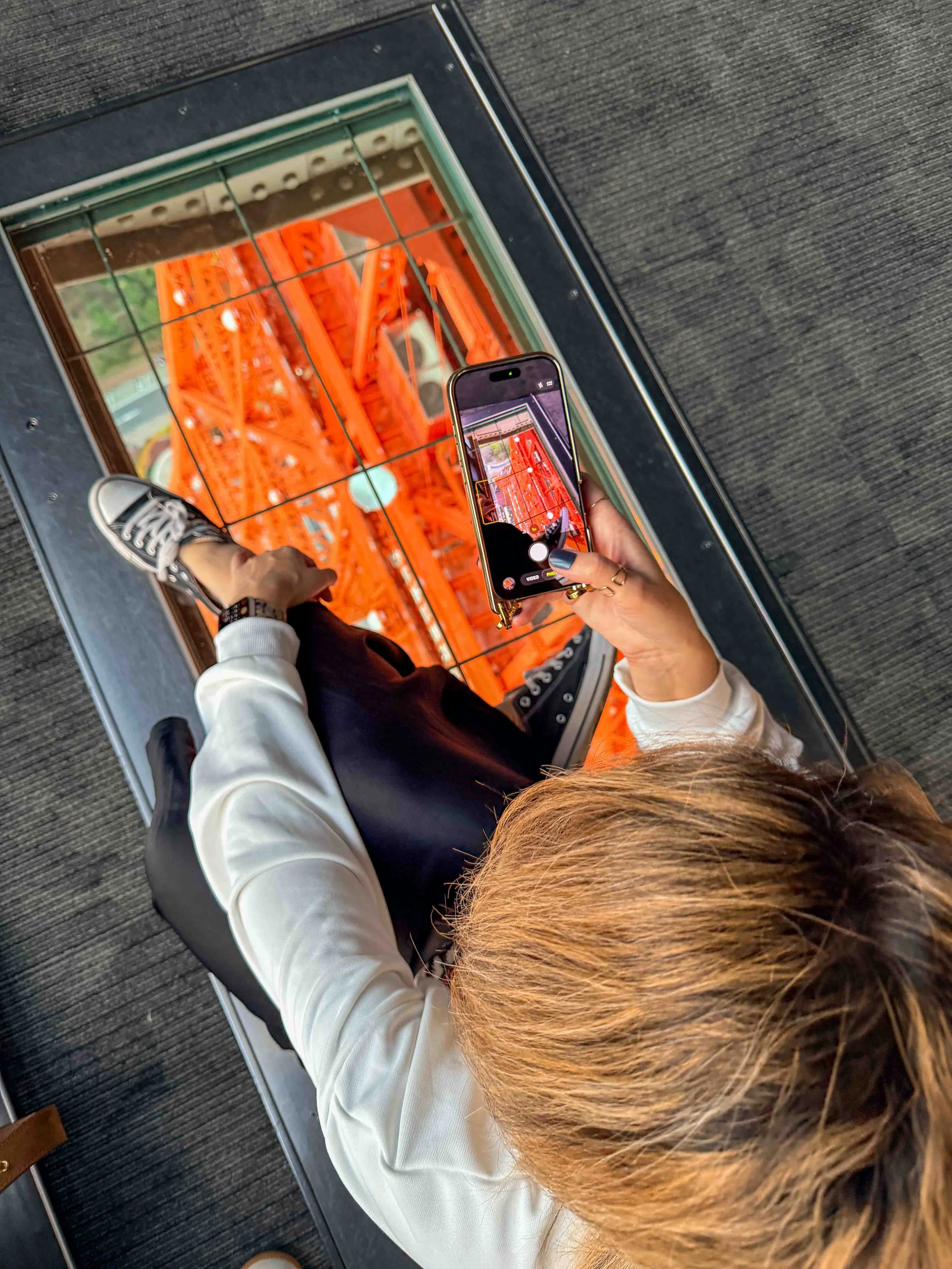
skywalk window on the Main Deck
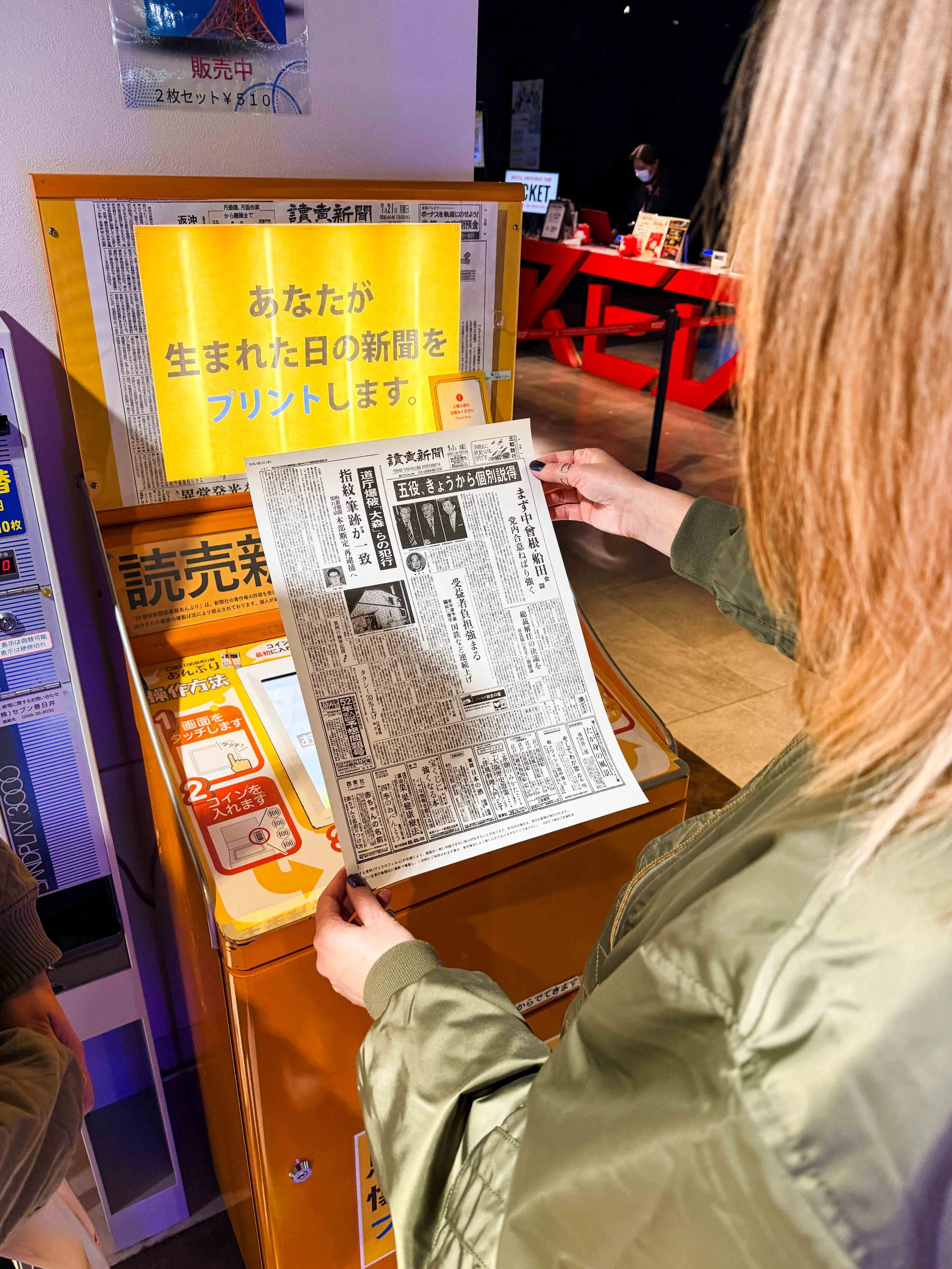
Japan’s newspaper front page from the day you were born
Final Thoughts on Exploring the Tokyo Tower Area
This ended up being such a fun and easy area of Tokyo to explore, especially because there was such a nice mix of nature, history, modern architecture, and classic Tokyo Tower views. We visited peaceful temples and shrines, stopped by the NHK Broadcasting Museum, walked through the sleek and modern Toranomon Hills area, and finally went inside Tokyo Tower.
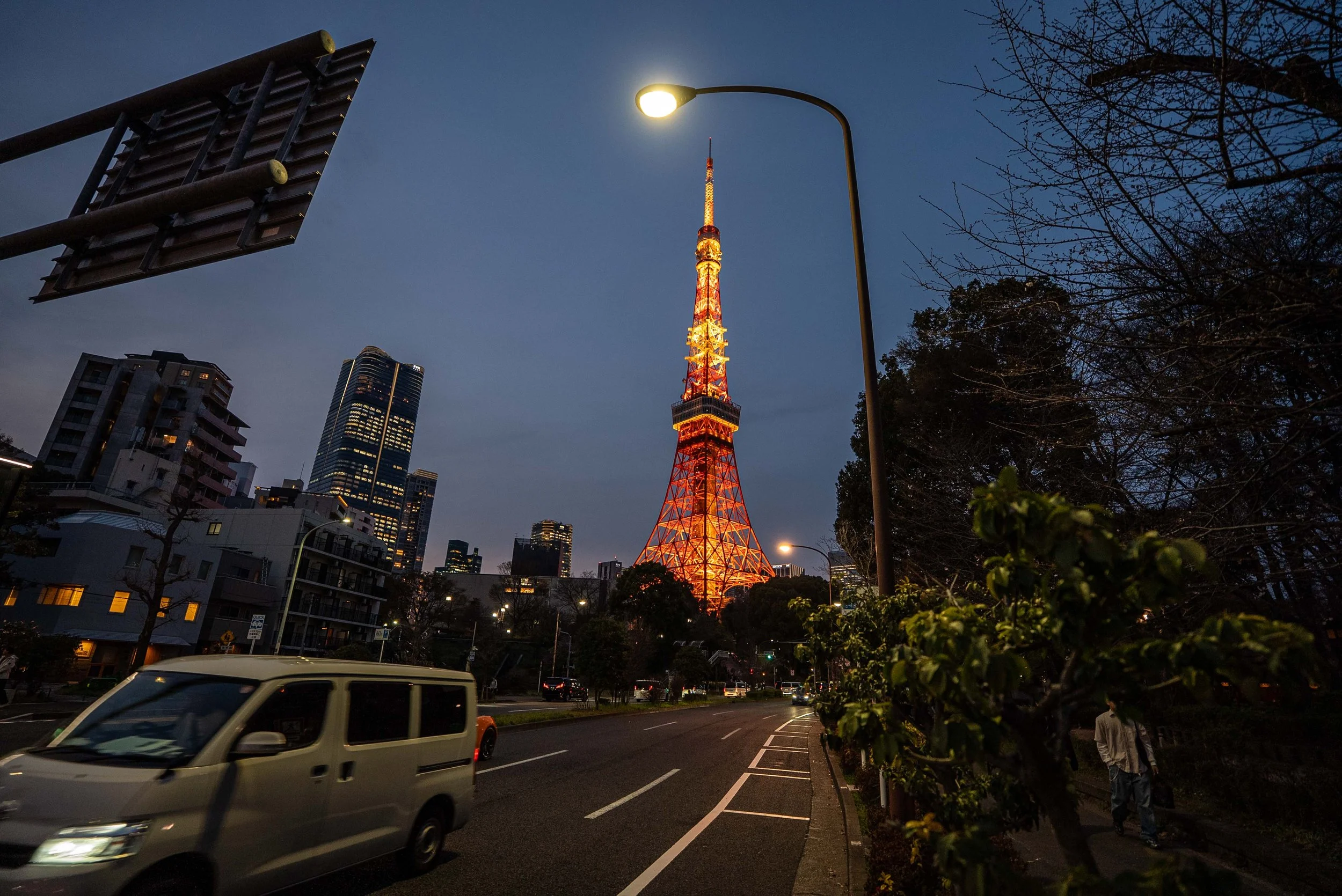
Night views of Tokyo Tower
What we loved most about this area was how much variety there was without having to travel very far. You can see a quieter, more traditional side of Tokyo at places like Zojoji Temple and Atago Jinja, then walk a short distance and be surrounded by the polished, modern energy of Toranomon Hills.
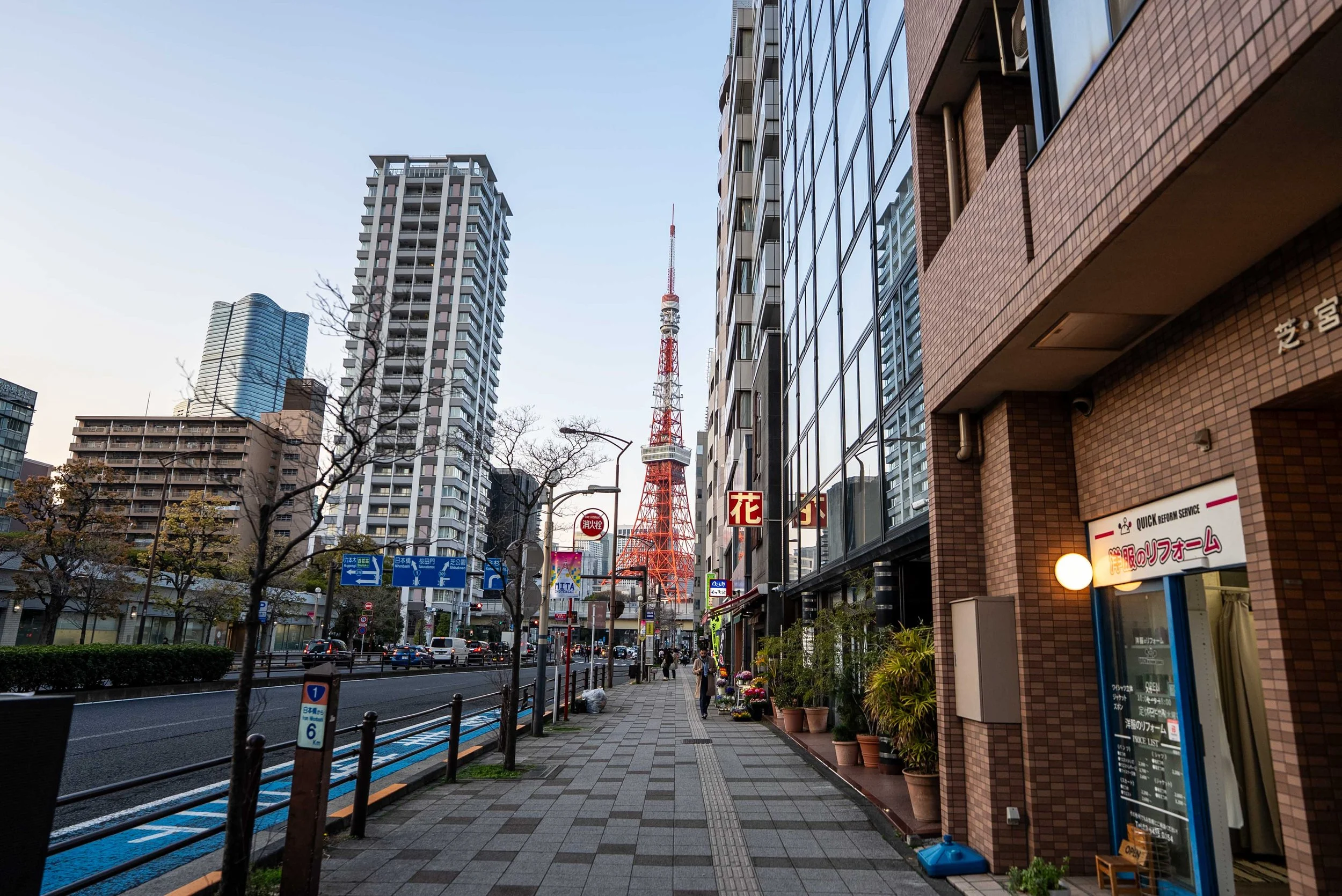
View of the tower from our walk to 7-11
Even though you could visit many of these spots in one day, we personally spread them out and enjoyed the area at a slower pace. That made it feel less rushed and gave us more time to take photos, stop for food, explore indoors when it rained, and appreciate the views of Tokyo Tower from different angles.
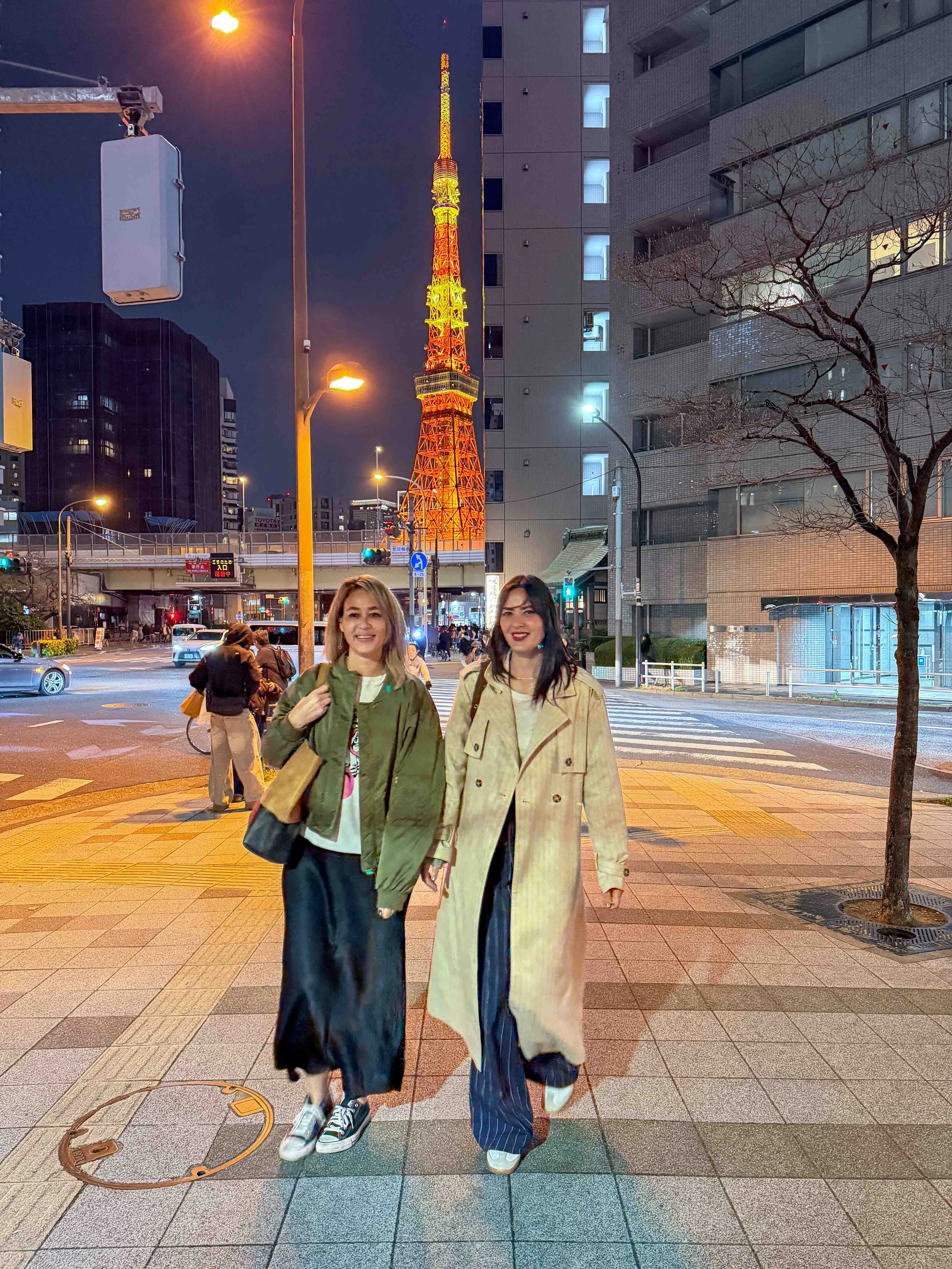
Walking Back to our Hotel
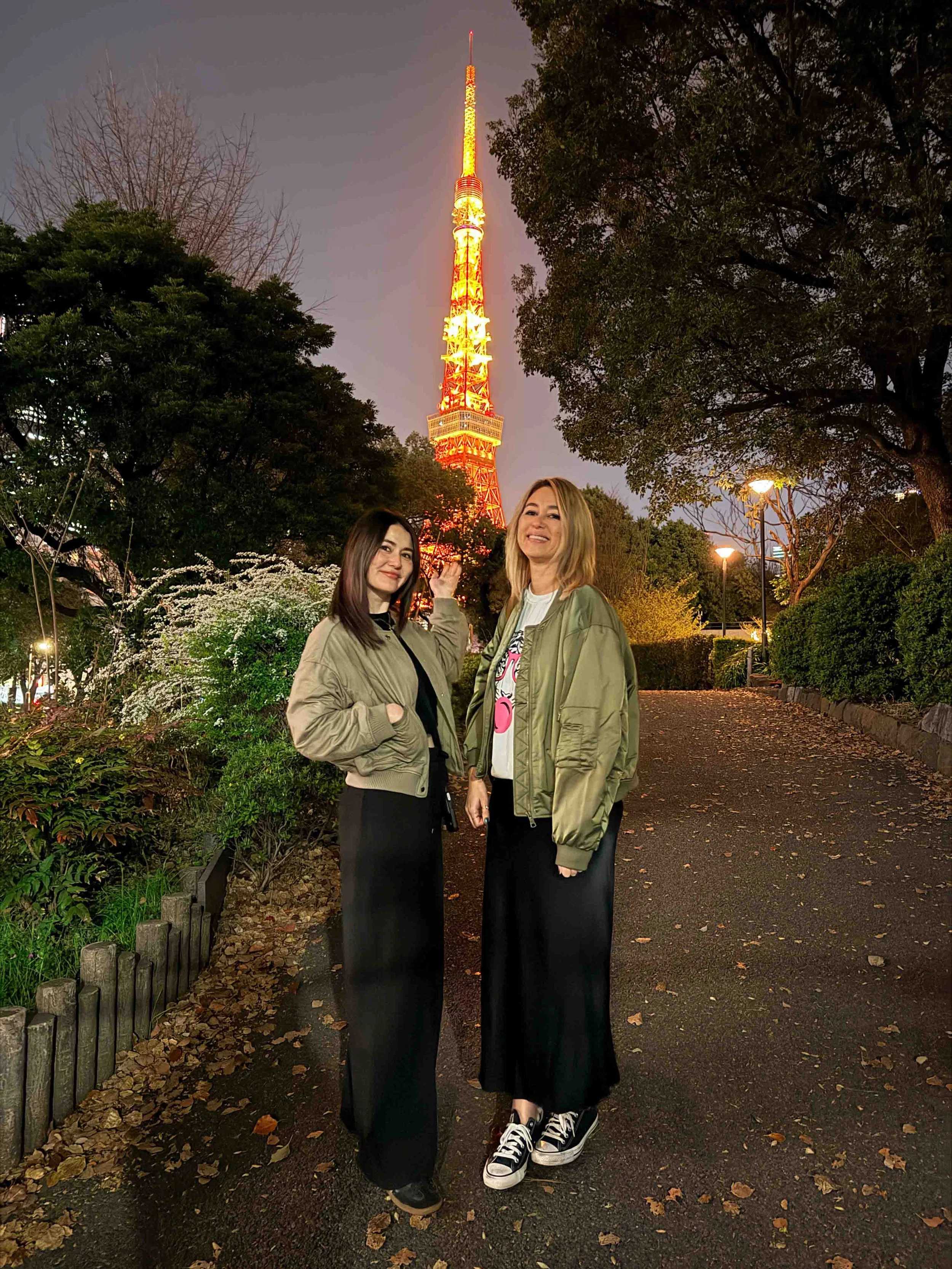
One more photo with the tower right next to our hotel
If you are planning to visit Tokyo Tower, we definitely recommend giving yourself extra time to explore the surrounding area instead of only going to the tower itself. There is so much to see nearby, and this route is a great way to experience both the nostalgic and modern sides of Tokyo.
Frequently Asked Questions
-
Yes. These spots are all close enough to connect as a walking route around the Tokyo Tower area. Depending on your pace, you can visit several in one day or spread them out like we did.
-
Zojoji Temple is best described as being right next to Shiba Park or in the Shiba Park area. The two are very close, making them easy to visit together.
-
We are glad we experienced it, but we actually enjoyed the Main Deck more. The Main Deck felt spacious, relaxed, and gave us plenty of room to enjoy the views.
-
The area has a nice mix of parks, history, shrines, museums, restaurants, and modern architecture.